Yazılar

China Announces Measures Against Google, U.S. Firms Amid Escalating Trade Tensions

China announced a series of new measures on Tuesday targeting U.S. businesses, including tech giant Google, farm equipment manufacturers, and the owner of Calvin Klein, as trade tensions between the U.S. and China escalate. These actions followed the implementation of new U.S. tariffs on Chinese goods, with Beijing responding by imposing its own tariffs on U.S. products, such as coal, oil, and certain autos.

China’s State Administration for Market Regulation launched an investigation into Google, suspecting the company of violating the country’s anti-monopoly laws. While the details of the investigation remain unclear, it marks the latest development in the strained relationship between China and the U.S. Google, whose search engine and other services are blocked in China, derives only about 1% of its global revenue from the country. Despite this, it continues to collaborate with Chinese partners, particularly in advertising.

Alongside the Google probe, China’s Commerce Ministry added two U.S. companies to its “unreliable entity” list: PVH Corp, which owns brands like Calvin Klein and Tommy Hilfiger, and biotech firm Illumina. China accused both companies of taking actions that harmed Chinese enterprises and violated their rights. Being placed on this blacklist subjects companies to fines, trade restrictions, and other sanctions, such as the revocation of work permits for foreign employees. PVH expressed surprise at the decision, emphasizing its compliance with Chinese laws, while Illumina did not respond to media inquiries.

In addition to these measures, China also introduced 10% tariffs on U.S. farm equipment imports, potentially impacting firms such as Caterpillar, Deere & Co, and AGCO. The tariffs could also affect Tesla’s Cybertruck, as China may apply tariffs to this electric truck, pending regulatory approval. Tesla did not immediately comment on the development.

These actions intensify the ongoing trade conflict between the U.S. and China, particularly in sectors like technology and agriculture. Experts suggest that these measures are intended to signal China’s willingness to retaliate against U.S. interests while leaving room for de-escalation. The new tariffs will take effect on February 10, 2025.
 

Ontario Pauses Retaliatory Measures, Including Starlink Contract, After U.S. Tariffs Delay

Ontario has temporarily halted several planned retaliatory actions against the United States, including the cancellation of a C$100 million ($68.12 million) contract with Elon Musk’s Starlink. Premier Doug Ford announced the decision following U.S. President Donald Trump’s move to delay the imposition of tariffs on Canadian imports by 30 days.

Ford had previously threatened to sever the Starlink deal, which would have seen Starlink provide high-speed internet to 15,000 remote homes and businesses in Ontario. The Premier also planned to bar U.S. companies from provincial contracts and remove American products from the shelves of Ontario’s liquor board.

“We have some good news today. We have temporarily averted tariffs that would have severely damaged our economy, giving time for more negotiation and time for cooler heads to prevail,” Ford posted on X, referring to the tariff reprieve.

Ontario, the most populous and industrially significant province in Canada, had prepared the retaliatory measures after Trump proposed a 25% tariff on most Canadian imports, excluding oil. The proposed tariffs sparked concerns about a potential recession if the measures remained in place for long.

Prime Minister Justin Trudeau announced Canada’s response on Saturday, which included imposing 25% tariffs on C$155 billion worth of U.S. goods. While Ford acknowledged that the ongoing trade tensions could delay or freeze various projects, he emphasized the temporary nature of the reprieve.


China’s Export Ban to Push Antimony Prices to Record Highs

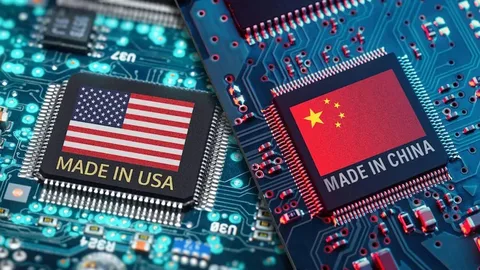
China’s recent export ban on critical minerals, including antimony, has caused significant price increases and is expected to push antimony prices to new all-time highs. The ban, which also includes gallium and germanium, is part of China’s strategy to restrict the flow of these crucial materials, especially to the United States, amid growing trade tensions between the two nations.

Antimony, widely used in semiconductors and military applications, has seen its price surge by about 250% in 2024. As of December 31, prices were already trading between $39,500 and $40,000 per metric ton in Rotterdam, and traders expect the price to exceed $40,000 per ton following the export restrictions. These prices are significantly higher than in previous years, with some traders already selling small quantities at the $40,000 mark. Non-Chinese suppliers are also expected to raise their prices to capitalize on the growing demand.

China is the world’s dominant producer of antimony, contributing nearly 50% of global supplies, which were estimated at 83,000 tons in 2024, according to the U.S. Geological Survey. As a result, the country’s export ban has prompted concerns over a global supply shortage. While the U.S. has made efforts to diversify its supply chains away from China by sourcing more materials from Southeast Asia, the immediate gap left by the ban remains a challenge.

China’s ban is part of a broader trend where it has restricted exports of several critical minerals, signaling a shift toward internal consolidation of mineral production. The U.S. has already adjusted its sourcing strategies for minerals like gallium and germanium, but these curbs have minimal impact since the U.S. has reduced its reliance on Chinese supplies of these materials. However, the market’s response to these bans has been to drive up prices, with traders exploiting the situation to push prices higher.

Experts have raised concerns about China’s growing influence over global mineral markets, prompting speculation that other metals, such as bismuth and manganese, could be targeted for future export restrictions. As the U.S. and other nations seek to reduce their dependence on China for critical minerals, self-sufficiency has become a priority for governments.