Yazılar

China, Trump Signal Cautious Optimism for Renewed US-China Cooperation Amid Tough Rhetoric

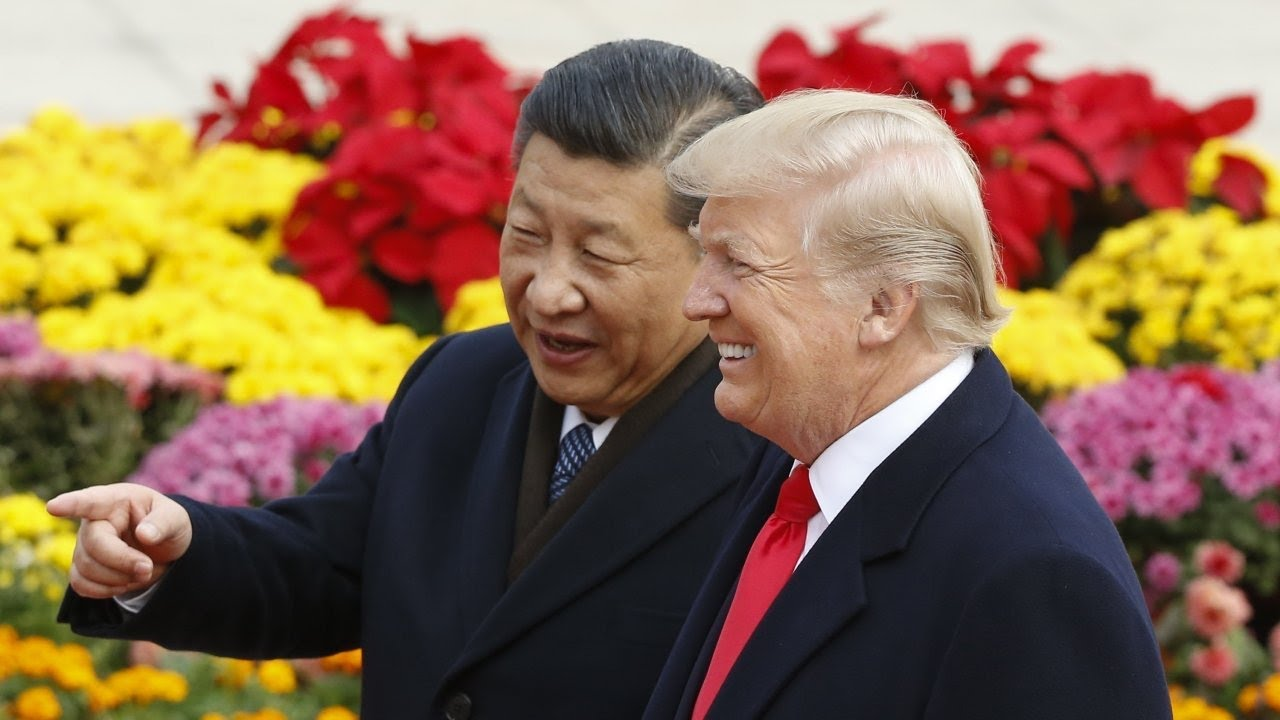
China’s top diplomat, Foreign Minister Wang Yi, expressed hope on Tuesday that the incoming Trump administration would collaborate with Beijing “in a mutually beneficial manner” despite ongoing tensions. Wang’s comments came hours after Donald Trump remarked that the COVID-19 pandemic had strained his relationship with Chinese President Xi Jinping, whom he once considered a “friend.”

“We hope the new U.S. administration will make the right choice and work with China to remove disruptions and overcome obstacles,” Wang stated during a forum in Beijing, according to his ministry’s statement.

Trump, addressing reporters at his Mar-a-Lago resort, reflected on his past relations with Xi, acknowledging the pandemic as a breaking point. “We had a very good relationship until COVID,” Trump said. “COVID didn’t end the relationship, but it was a bridge too far for me.” Trump avoided confirming whether Xi would attend his inauguration but emphasized the importance of U.S.-China ties: “China and the United States can together solve all of the problems of the world.”

Trump’s Second Term Agenda and Beijing’s Strategy

Trump has signaled a more confrontational stance toward China as he prepares for his second term. His campaign promises include imposing a 10% tariff on Chinese goods and additional levies exceeding 60% to pressure China on issues like stopping fentanyl exports to the U.S. Trump has also pledged to revoke China’s most-favored-nation trade status—a move that could reshape bilateral trade dynamics.

In response, analysts suggest China is preparing to amass bargaining chips to engage with Trump’s administration on contentious issues such as trade, technology, and investment. Beijing has shown readiness to push back, with Wang Yi emphasizing China’s firm stance: “We firmly oppose the illegal and unreasonable suppression of China by the U.S., particularly on matters like Taiwan.”

Sanctions and Hard-Line Appointments

The diplomatic environment remains volatile as Trump’s choice of China hawks for key positions signals an aggressive approach. Republican Senator Marco Rubio, Trump’s nominee for Secretary of State, remains under Chinese sanctions imposed in 2020. Rubio’s prior criticism of Beijing raises questions about how his role would affect bilateral engagement.

China’s move to quietly remove a January 2021 statement sanctioning 28 Trump administration officials from its foreign ministry website has further fueled speculation. When asked about this development, Chinese Foreign Ministry spokesperson Lin Jian declined to comment, stating he had “no information to offer.”

Mutual Posturing, Cautious Optimism

Despite the confrontational rhetoric, both sides have hinted at opportunities for collaboration. Trump’s remarks acknowledged the global importance of U.S.-China cooperation, while China continues to position itself for negotiations that balance engagement with resistance to U.S. policies it deems provocative.

As Trump prepares for a second term, Beijing appears both prepared to push back against hard-line policies and cautiously optimistic about finding common ground to stabilize bilateral relations.


 

Trump Explores Privatizing U.S. Postal Service Amid Financial Challenges

President-elect Donald Trump has expressed a growing interest in privatizing the U.S. Postal Service (USPS), according to a Washington Post report on Saturday. The report, citing insiders familiar with the discussions, revealed that Trump views the USPS’s financial struggles as a justification for removing its government subsidy.

The USPS, which has incurred losses exceeding $100 billion since 2007, reported a $9.5 billion net loss for its fiscal year ending September 30, marking a $3 billion increase from the previous year. Much of the loss was attributed to higher non-cash workers’ compensation expenses.

Trump reportedly discussed privatization plans with Howard Lutnick, his nominee for commerce secretary, during a meeting at Mar-a-Lago. Additionally, officials expected to join the Department of Government Efficiency under Elon Musk and Vivek Ramaswamy have also explored potential USPS reforms, sources revealed.

A USPS spokesperson highlighted efforts to cut costs, including reducing 45 million work hours and trimming $2 billion in transportation expenses over the past three years. They also stated that regulatory approval for modernizing the postal network could save the agency $3.6-$3.7 billion annually.

Karoline Leavitt, a spokesperson for Trump’s transition team, emphasized that no policy decisions are final until officially announced by Trump or his representatives.

Privatization of the USPS could have significant repercussions, particularly for the U.S. e-commerce sector and rural communities. Amazon, a major USPS partner for last-mile delivery, and small businesses reliant on affordable shipping options could face disruptions. As the only carrier delivering to remote areas, USPS plays a critical role in serving rural Americans.

Amazon, which announced a $1 million donation to Trump’s inaugural fund, may also face further scrutiny. The Trump transition team is reportedly reviewing USPS contracts with Oshkosh and Ford for electrifying its delivery fleet, potentially seeking to unwind these agreements.

The USPS’s financial struggles have been a contentious issue for years. In 2020, Congress authorized a $10 billion loan for the agency as part of a $2.3 trillion coronavirus relief package, a measure Trump threatened to veto.

If pursued, privatization would represent one of the most significant shifts in USPS’s history, raising questions about the future of affordable and universal mail delivery in the United States.


ByteDance and TikTok Seek Emergency Halt of U.S. Ban Pending Supreme Court Review

China-based ByteDance and its subsidiary TikTok have filed an emergency motion with the U.S. Court of Appeals for the District of Columbia, seeking a temporary halt to a law that mandates ByteDance divest TikTok in the United States by January 19, 2024, or face a ban. The request aims to delay enforcement while the companies pursue a review by the U.S. Supreme Court.

TikTok argued that without intervention, the law would “shut down TikTok—one of the nation’s most popular speech platforms—for its more than 170 million domestic monthly users” just before the presidential inauguration. The platform’s closure would severely impact its value to ByteDance and its investors and harm businesses reliant on TikTok for advertising and sales.

On Friday, a three-judge panel upheld the law requiring ByteDance’s divestiture. The company is now racing against time, urging the appeals court to rule on its emergency request by December 16.

TikTok’s Legal and Political Maneuvering

ByteDance and TikTok emphasized the potential for the Supreme Court to reverse the lower court’s decision, arguing that this likelihood justifies a temporary pause. They also highlighted the incoming administration of President-elect Donald Trump, who has expressed opposition to the ban.

Trump has previously stated he would not allow a TikTok ban, noting the platform’s immense popularity. His incoming national security adviser, Mike Waltz, reinforced this position, emphasizing the importance of protecting user data while maintaining TikTok’s availability to Americans.

The timing of the decision could also allow President Joe Biden to grant a 90-day extension of the divestiture deadline before Trump assumes office on January 20. However, TikTok must demonstrate substantial progress toward divestiture to qualify for such an extension.

Concerns Over Data Security and Service Disruption

The law, part of broader U.S. concerns over foreign-owned apps, grants sweeping powers to ban platforms over data privacy risks. TikTok warned the decision would not only impact its U.S. user base but also disrupt services for millions of users outside the country. Hundreds of U.S. service providers supporting TikTok’s operations, including maintenance and updates, would no longer be able to perform these functions starting January 19.

This case highlights ongoing tensions between the U.S. government and Chinese tech companies over data security and national sovereignty. Similar efforts to ban Tencent’s WeChat in 2020 were blocked by the courts, demonstrating the complexities of enforcing such measures.

The Justice Department, meanwhile, has urged the appeals court to deny TikTok’s request quickly to allow sufficient time for Supreme Court consideration.