Yazılar

AMD’s AI Strategy Faces Investor Scrutiny Amid Shift to Custom Chips

Advanced Micro Devices (AMD) faces heightened investor scrutiny over its artificial intelligence (AI) strategy as Big Tech firms increasingly develop custom silicon, potentially limiting AMD’s role in AI infrastructure. The company is set to report its fourth-quarter earnings on Tuesday, with analysts forecasting a 22% revenue surge to $7.53 billion. However, competition from Nvidia and the growing adoption of proprietary chips by Microsoft, Amazon, and Meta have raised concerns about AMD’s long-term AI growth prospects.

Tech giants are ramping up investments in in-house AI chip development, benefiting companies like Broadcom and Marvell Technology, which provide hyperscalers with custom AI processors. Broadcom expects AI to represent a $90 billion revenue opportunity by 2027, a factor that helped its stock more than double last year. Marvell saw an 83% rise, while AMD’s stock fell 18% in 2024.

Despite this shift, AMD’s AI processor sales are expected to reach up to $10 billion in 2024, double its initial forecast of $5 billion. Its data center chip segment, projected to grow 82% to $4.15 billion in Q4, is expected to drive over half of total revenue. Meanwhile, its personal computer division is forecasted to rise 33% to $1.94 billion, as AMD continues to gain market share from Intel.

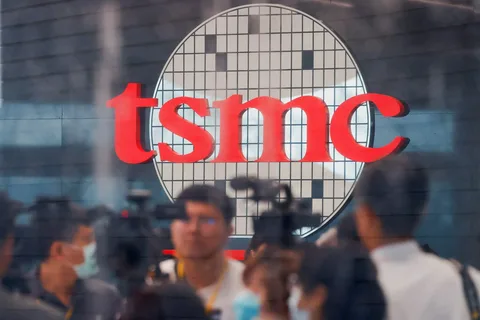
Supply chain constraints remain a challenge, with TSMC working to expand production capacity for AI chip packaging. However, Nvidia’s ramp-up of its latest “Blackwell” AI chips could limit AMD’s ability to secure additional manufacturing resources.

Despite these hurdles, AMD’s fourth-quarter net income is set to rise by more than 61% to $1.08 billion, reflecting strong demand for its products.


ASML to Halt Reporting of Key Metric, Citing Volatility

ASML, the world’s leading chip equipment manufacturer, has announced it will stop publishing new order bookings, a key metric closely watched by investors. The company argues that the figure is too inconsistent and causes excessive volatility in its stock price.

Instead, ASML believes its own forecasts—based on discussions with chipmakers about their capacity expansion plans—offer a more reliable indicator of future performance. The company’s circuit-printing machinery plays a critical role in chip manufacturing, but orders can take six to 18 months to fulfill, making quarterly booking figures difficult to interpret.

“The swing factor is significant,” said Chief Financial Officer Roger Dassen, explaining the move.

The decision, announced on Wednesday, came as ASML’s stock jumped 7% following better-than-expected fourth-quarter bookings of €7.1 billion ($7.4 billion), a sharp increase from the €2.6 billion recorded in Q3. The fluctuation was likely driven by timing of orders from TSMC, which recently unveiled a $38 billion capital expenditure plan for 2025.

While analysts acknowledge the downside of losing insight into short-term order trends, they largely understand ASML’s reasoning.

“There is downside for investors, as we lose visibility on average bookings and backlog confidence,” said Sara Russo of Bernstein. However, she agreed that a single quarter’s bookings are not the best measure of long-term business health.

Michael Roeg of Degroof Petercam added that capital expenditure announcements from major clients such as TSMC, Intel, and Samsung already provide sufficient indicators of future demand.

Despite market fluctuations, Dassen emphasized that ASML’s full-year sales and margins remained aligned with its January 2024 forecasts.

“If you put all those quarters together, you see it wasn’t too shabby, was it?” he remarked.


ASML Reports Strong Q4 Orders, Calming Investor Fears After DeepSeek’s Release

Key Highlights:

  • ASML, a leading chip equipment maker, exceeded expectations in its fourth-quarter bookings, reaching 7.09 billion euros ($7.39 billion), compared to the forecasted 3.99 billion euros, driven by booming demand in the AI sector.
  • The surge in orders reassures investors about the future prospects of AI chips, despite a recent sell-off triggered by DeepSeek’s AI model, which requires less computing power than competing models.
  • ASML shares rose 7.5% to 695 euros, peaking at 722 euros during the trading day.

AI Boom and Impact on ASML’s Outlook:

  • CEO Christophe Fouquet expressed optimism, stating that AI has strengthened demand for ASML’s most advanced equipment.
  • DeepSeek’s AI model raised concerns over whether companies like Google, Microsoft, Meta, and Amazon would continue their heavy investments in AI chips. Despite this, Fouquet remains confident that as AI model costs decrease, demand for chips and advanced manufacturing tools will increase.
  • ASML reported a net income of 2.7 billion euros for the fourth quarter, surpassing analyst expectations. The company’s 2025 sales forecast remains between 30-35 billion euros, reflecting expected growth driven by the AI chip boom.

Market Position and Forecasts:

  • ASML’s largest customer, TSMC, remains a key player in the chip industry, manufacturing chips for firms like Nvidia and the aforementioned tech giants. Despite DeepSeek’s impact, the growth in AI-related demand for chips continues to drive TSMC’s capital expenditure.
  • ASML’s US market accounted for 28% of sales in Q4, with China following closely. The shift is due to TSMC’s Arizona expansion and Intel’s investments in ASML’s high-tech EUV tools.
  • However, ASML expects its China sales to decline to 20% of total sales in 2025 due to ongoing export restrictions imposed by the US and Dutch governments on national security grounds.