Yazılar

Huawei unveils chip and computing power roadmap in challenge to Nvidia

Huawei on Thursday publicly detailed its long-term semiconductor ambitions for the first time, pledging annual upgrades to its Ascend AI chips and unveiling plans for powerful computing systems designed to rival Nvidia (NVDA.O).

At its annual Huawei Connect conference in Shanghai, rotating chairman Eric Xu said the company will follow a one-year release cycle that doubles computing power with each generation. Huawei also revealed it has developed its own high-bandwidth memory, a technology currently dominated by South Korea’s SK Hynix (000660.KS) and Samsung Electronics (005930.KS).

Xu said Huawei’s upcoming Atlas 950 supernode, slated for launch in late 2026, will connect 8,192 Ascend chips, while the Atlas 960 in 2027 will link 15,488 chips. He claimed these systems will “far exceed” competitors on key performance metrics. Huawei will also release new Kunpeng server chips in 2026 and 2028.

The roadmap underscores China’s push to reduce reliance on U.S. suppliers amid intensifying trade and technology tensions. This week, Beijing accused Nvidia of antitrust violations and ordered major Chinese firms to halt purchases of its AI chips, according to the Financial Times. The moves come just before a scheduled meeting between Presidents Donald Trump and Xi Jinping.

Huawei first entered chipmaking in 2018 but retreated from public disclosures after U.S. sanctions in 2019 restricted its access to advanced chipmaking tools. Since then, analysts say the company has become a leader in China’s domestic semiconductor push. Its current AI flagship, the Ascend 910C, launched earlier this year, with the Ascend 950 due in 2025, followed by the 960 in 2027 and the 970 in 2028.

Despite these advances, engineers at Chinese tech firms acknowledge Nvidia’s chips remain more powerful. U.S. export controls continue to limit Huawei’s access to cutting-edge manufacturing technology, though Washington recently eased some restrictions on downgraded Nvidia chip sales.

“Huawei is leveraging its networking strengths and China’s power supply advantages to push aggressively into supernodes, offsetting lagging chip manufacturing,” said Wang Shen of Omdia.

Chinese semiconductor stocks rose 3.4% on Thursday after reports of the Nvidia purchase ban. Beijing’s foreign ministry responded cautiously, saying China remains open to dialogue to stabilize global supply chains.
Nvidia CEO Jensen Huang Backs Trump’s Plan to Ease AI Chip Export Curbs

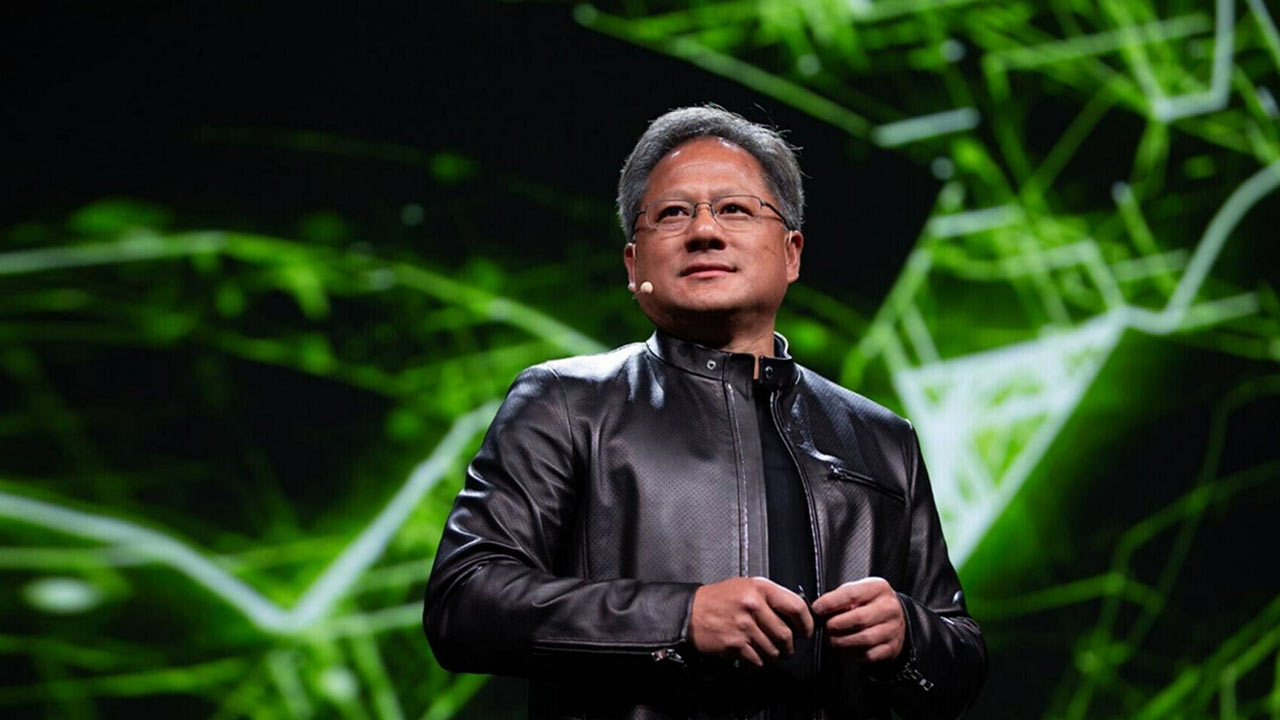
Nvidia CEO Jensen Huang has strongly criticized U.S. export restrictions on AI chips to China, calling them a “failure” that cost American firms billions in lost sales while accelerating China’s self-reliance in semiconductor development. Speaking at the Computex conference in Taipei, Huang welcomed the Trump administration’s decision to reverse some of the Biden-era controls, signaling a shift that could reshape global tech policy.

“The fundamental assumptions that led to the AI diffusion rule have been proven to be fundamentally flawed,” Huang said, referring to the Biden administration’s three-tiered export control regime, which entirely blocked sales of advanced chips to China.

Impact on Nvidia and U.S. Industry

Since the Biden administration’s controls came into effect, Nvidia’s market share in China fell from 95% to 50%, Huang revealed. Nvidia has been hit particularly hard, taking a $5.5 billion charge in April related to its blocked H20 chip, and Huang now estimates total revenue loss at $15 billion.

Despite these setbacks, Huang noted that AI research in China has continued unabated and is now being powered by local technologies, particularly chips from Huawei and other Chinese semiconductor designers. He estimated that China’s AI market will be worth $50 billion in 2025 and called the competition there “intense”.

“They would love for us never to go back to China,” he said.

Trump’s Strategy: A Shift in Direction

Huang praised the Trump administration’s plan to move away from rigid export tiers and toward a global licensing regime based on government-to-government agreements. The proposed shift could provide the U.S. more flexibility and leverage in trade negotiations while also easing pressure on U.S. tech firms.

“President Trump realises it’s exactly the wrong goal,” Huang said, arguing that isolating China from U.S. tech would not stop AI innovation and only encourage the growth of competitive alternatives.

Nvidia’s Workaround

Nvidia is now developing a new version of its Blackwell AI chip that includes slower memory, allowing it to comply with current U.S. restrictions while still serving key markets.

Rising Tensions

China responded sharply to recent U.S. moves that warned firms against using Chinese-made AI chips like Huawei’s Ascend, urging the U.S. to “immediately correct its wrongdoings.” Beijing warned that such measures violate trade agreements and undermine cooperation, threatening “resolute” countermeasures.

Industry Outlook

While the Biden administration had aimed to contain China’s semiconductor and military advancements, the unintended consequence appears to be a rapid buildup of China’s domestic AI and chipmaking capabilities. Huang’s remarks underscore the growing frustration within U.S. tech circles over policies they say are self-damaging.

Meanwhile, Nvidia continues to dominate the global AI infrastructure market, with new product announcements at Computex expected to further boost its $130.5 billion revenue base.

Nvidia Eyes Shanghai R&D Hub to Sustain Presence in China Amid U.S. Export Curbs

Nvidia (NVDA.O) is actively seeking a location in Shanghai to establish a new research and development (R&D) center, according to three sources familiar with the matter, as the U.S. chip giant navigates ongoing export restrictions that have significantly impacted its AI chip sales to China.

The move comes amid intensifying U.S.-China tech tensions and growing competition from domestic Chinese firms like Huawei. The proposed R&D site would cement Nvidia’s long-term strategic foothold in the Chinese AI market, which CEO Jensen Huang recently called irreplaceable.”

Key Details:

  • Nvidia’s site search began in early 2025, focusing on Shanghai’s Minhang and Xuhui districts.

  • The plan gained traction following Huang’s surprise visit to China last month, where he met with:

    • Vice Premier He Lifeng

    • Shanghai Mayor Gong Zheng

  • Shanghai’s local government is reportedly offering incentives such as:

    • Tax reductions

    • Land allocations for the R&D facility

Being excluded from China’s AI market would be a tremendous loss,” Huang told CNBC after the trip, estimating the market could grow to $50 billion in the next 2–3 years.

Strategic Context:

  • China accounted for $17 billion (13%) of Nvidia’s global revenue in FY2024 (ending January 26).

  • But since the U.S. introduced chip export restrictions in 2022, Nvidia’s China sales have been cut in half.

  • The U.S. recently tightened controls again, targeting Nvidia’s H20 AI chipthe only model it could legally sell in China.

  • Nvidia is expected to release a downgraded H20 variant in the coming months to regain lost market share from rivals like Huawei.

Geopolitical Balancing Act:

Despite Washington’s escalating controls, Nvidia is doubling down on China, hoping to maintain a non-military-facing commercial presence. The proposed R&D center:

  • Could focus on software, systems, or less-restricted chip components.

  • Offers Nvidia a compliant way to retain engagement in a critical market.

Shanghai’s openness to foreign tech investment—already home to Tesla’s Gigafactorymakes it a natural hub for such strategic positioning.

Industry Implications:

  • The plan signals tech decoupling is not total; companies like Nvidia continue to balance compliance with U.S. law and market access in China.

  • It highlights the growing importance of regional R&D to circumvent geopolitical bottlenecks.

  • If successful, the center could become a model for how U.S. tech firms operate under export control regimes while defending global market share.