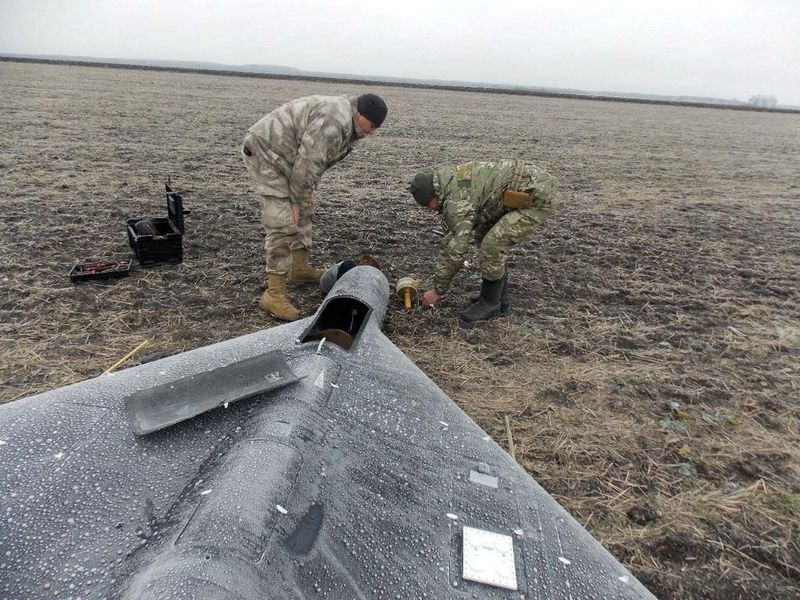
Russia has developed a new long-range kamikaze drone named Garpiya-A1, utilizing Chinese-made engines and components. According to European intelligence sources and documents reviewed by Reuters, the drone has been deployed in the ongoing conflict in Ukraine. The production of over 2,500 Garpiyas from July 2023 to July 2024 marks a shift away from Russia’s previous reliance on Iranian drone designs. The drones have been used to target military and civilian infrastructure, causing significant damage and casualties.
The drone is produced by IEMZ Kupol, a subsidiary of Almaz-Antey, Russia’s state-owned weapons manufacturer, using Chinese engines supplied by Xiamen Limbach. The engine, originally of German design, is now manufactured in China. A former cement factory in Izhevsk, Russia, is being used as the primary production facility, with the plant reportedly churning out thousands of drones in recent months.
China’s Role and International Concerns
The Garpiya-A1 bears similarities to Iran’s Shahed-136 drone but features distinct design elements like bolt-on fins and Chinese-made Limbach L-550 E engines. Although China has officially denied involvement in supporting Russia’s military activities, the export of components with potential military applications, including drones, has drawn international scrutiny. U.S. and European authorities are particularly concerned about Chinese companies continuing to supply critical parts that enable Russia to manufacture these kamikaze drones.
In July 2023, Beijing announced stricter regulations on drone exports, effective from September, while maintaining that its trade with Russia is not restricted under international law. However, NATO Secretary General Jens Stoltenberg and Western officials have urged China to halt its indirect support of Russia’s military efforts, warning that Chinese technology has prolonged the conflict.
Production and Deployment
Production of the Garpiya-A1 began in early 2023, with Kupol securing a contract worth over 1 billion rubles (€10 million) to set up the factory. Initial prototypes were tested in early 2023, with output reaching 2,000 drones in the first half of 2024. Intelligence sources identified several Chinese suppliers, including Juhang Aviation Technology and Redlepus Vector Industries, both based in Shenzhen, for providing essential parts. Juhang has been under British and U.S. sanctions for supplying drone equipment to Russia.
Customs records show that Russia imported over $36 million worth of drone-related components from Chinese suppliers between April 2022 and December 2023, fueling concerns that these imports were marked for civilian use but repurposed for military applications.
Western Reactions and Sanctions
Washington has imposed several sanctions aimed at curbing Moscow’s access to technology for military use, warning Beijing of potential consequences for continuing to support Russia’s defense sector. Despite the sanctions, the Garpiya-A1 drone is the latest example of how Russia has managed to maintain drone production using external support, raising concerns over global arms control.
With a take-off weight under 300 kilos and a range of 1,500 kilometers, the Garpiya-A1 matches the capabilities of Iran’s Shahed-136, a drone that Russia has used extensively in Ukraine. The ability to produce such drones domestically marks a significant advancement in Russia’s drone capabilities, posing new challenges for Ukraine’s defense forces.