Yazılar

Scania Steps In to Support Struggling Battery Maker Northvolt

Truck manufacturer Scania has taken an active role in assisting Northvolt, the troubled electric vehicle battery maker, in an effort to improve production quality and secure its financial future. Since November, Scania has deployed staff to Northvolt’s Ett plant in northern Sweden to work alongside managers and help standardize operations, according to internal documents reviewed by Reuters.

Northvolt, once seen as Europe’s best hope for an EV battery leader, has faced persistent quality and production issues. Its financial situation remains precarious, with only weeks of funding left unless it secures an additional $1.29 billion. Last year, the company filed for Chapter 11 bankruptcy in the U.S. after failing to reach a financing deal with key investors, including Volkswagen, Goldman Sachs, and Scania itself.

Scania, which owns a stake in Northvolt and relies on it for battery supply, has played a hands-on role in the production process, a level of involvement beyond what other customers, such as Audi and Porsche, have shown. The truckmaker’s employees have been embedded at Northvolt’s plant under a program called “P.2 100k,” aimed at ramping up weekly battery cell production to at least 100,000 units. Improving quality is crucial for Northvolt to access additional funding, with Scania linking loan disbursements to production milestones.

Industry experts note that while Scania lacks deep expertise in battery manufacturing, its operational efficiency and experience in scaling up production could provide valuable guidance. Workers at Northvolt remain hopeful that Scania’s intervention will help stabilize the company and prevent its collapse. A failure of Northvolt could leave Scania scrambling for alternative battery suppliers and force Europe to rely more heavily on Chinese manufacturers such as BYD and CATL.

 

Xpeng and Volkswagen Partner to Build Ultra-Fast EV Charging Network in China

Xpeng Motors and Volkswagen have expanded their collaboration to build an ultra-fast electric vehicle (EV) charging network in China, the companies announced on Monday. This partnership will allow the two automakers to share their fast-charging networks, which together consist of more than 20,000 charging points across 420 cities in China.

The companies have signed a memorandum of understanding (MoU) that enables each other’s customers to use their respective charging stations. In addition, Xpeng and Volkswagen plan to explore the construction of co-branded ultra-fast charging stations to further enhance the EV charging infrastructure in the country.

The collaboration builds on their 2023 partnership, when Volkswagen acquired a 4.99% stake in Xpeng for approximately $700 million. As part of the agreement, the automakers are also working on jointly launching two Volkswagen-branded electric models by 2026. Volkswagen has also developed a new architecture for intelligent and electric vehicles in collaboration with Xpeng, with the aim of offering more affordable EVs in China, its largest market.


European Carmakers Raise Petrol Prices, Discount EVs Amid Stricter Emissions Rules

Europe’s automakers are adjusting pricing strategies ahead of stricter EU emissions rules set to take effect on January 1, raising prices on petrol cars while offering discounts on electric vehicles (EVs) to close the sales gap and avoid significant fines.

Looming Challenges: New Emission Targets

The European Union will impose lower carbon dioxide (CO₂) emission caps next year, requiring at least 20% of automakers’ sales to be EVs. This marks a sharp increase, as EVs currently account for just 13% of all vehicle sales in the region, according to data from the European Automobile Manufacturers’ Association (ACEA).

The stricter rules arrive at a difficult time for the industry, with carmakers battling overcapacity, stagnant demand, and rising competition from Chinese automakers. Executives have raised alarms over the impact on profits. Stellantis CEO Carlos Tavares‘s recent resignation partially stemmed from disagreements about managing these challenges.

Automaker Response: Price Hikes and Discounts

Volkswagen, Stellantis, and Renault have increased the prices of petrol engine vehicles in recent months while keeping electric models stable or discounted. Analysts suggest this move aims to nudge consumers toward EVs to meet CO₂ targets and avoid billions in potential fines.

For instance:

  • Stellantis’s Peugeot raised prices on non-EV models in France by up to 500 euros.
  • Renault added 300 euros to some petrol models, such as the Clio SCE 65, while keeping hybrid prices unchanged.
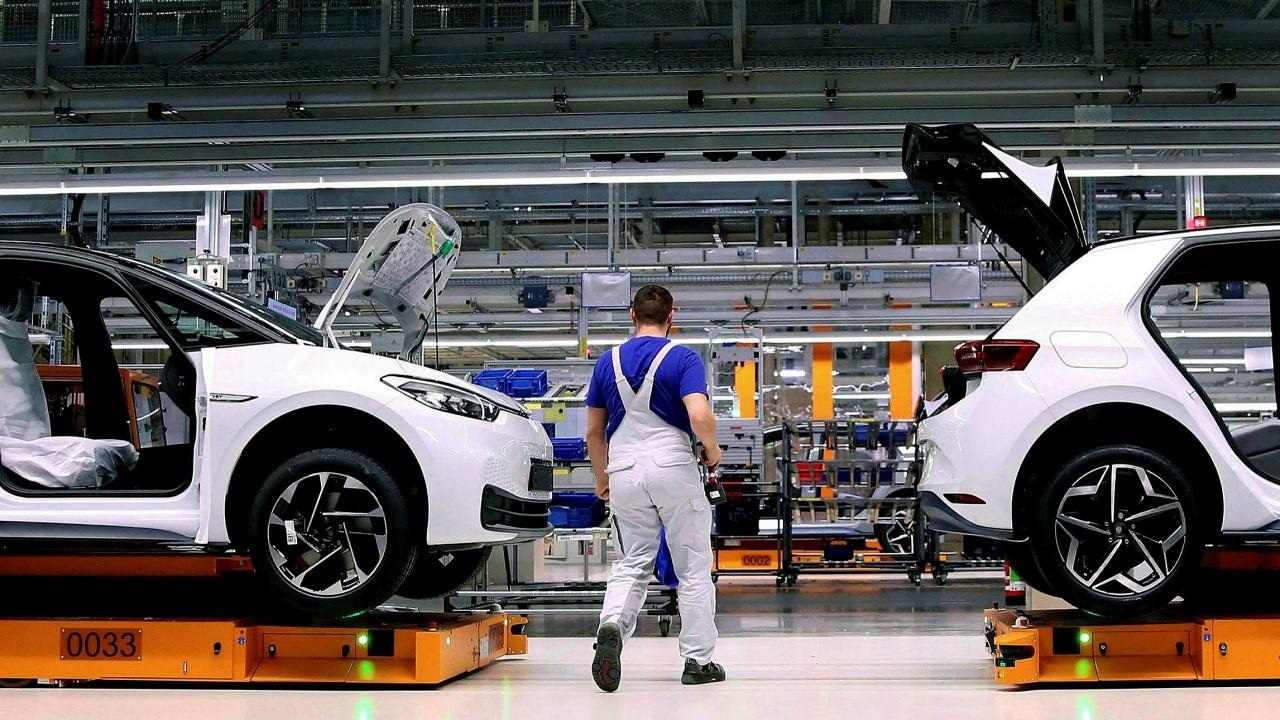
  • Volkswagen lowered the price of its ID.3 compact EV in multiple markets, bringing it below 30,000 euros in Germany.

While this strategy may steer demand, industry insiders warn it could backfire. Raising petrol car prices could reduce production volumes, further straining suppliers and the value chain without guaranteeing sufficient EV sales growth.

Profit Pressure and Discounts

The price hikes are expected to indirectly fund EV discounts, which are seen as critical to boosting adoption but will erode automaker margins. Analysts at S&P Global note that combustion-engine buyers effectively subsidize EV buyers through these pricing shifts.

In the UK alone, automakers anticipate EV-related targets will cost around £6 billion this year, with £4 billion attributed to discounts alone.

Pooling Emissions to Avoid Fines

To sidestep fines, some carmakers are turning to “pooling” strategies, where companies with high emissions buy credits from brands with stronger EV portfolios.

  • For example, Japan’s Suzuki partnered with Geely-owned Volvo to meet 2025 targets, significantly lowering Suzuki’s exposure to penalties.

This approach, while less costly than heavy discounts, remains another strain on profits.

Industry Pushback

Amid these mounting pressures, automakers are urging EU policymakers to reconsider the aggressive targets. Luc Chatel, president of French car lobby PFA, expressed frustration: “I can’t sell enough electric vehicles and I’m going to be penalized on my thermal vehicles. What do they want me to make, horse-drawn carriages?”

Looking Ahead

While EU regulators show little sign of easing rules, EV sales are forecast to climb significantly. GlobalData projects a 41% jump in EV sales across Europe next year, reaching 3.1 million units in 2025. Still, automakers face a balancing act of steering consumer demand, protecting margins, and avoiding fines.