Yazılar

Political Turmoil in Germany Deepens Woes for Major Industries Amid Trump’s Trade Pressures

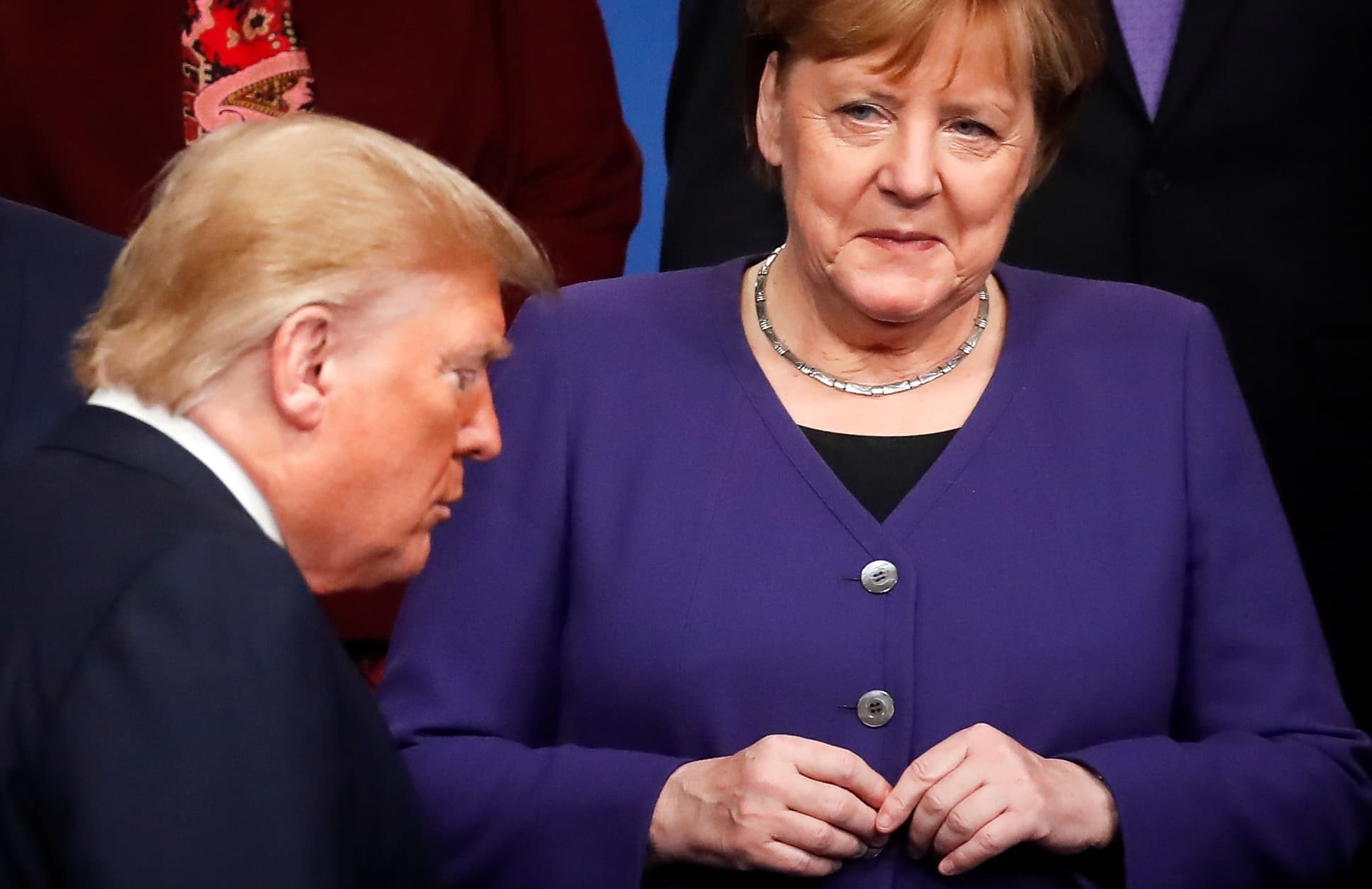
Germany’s political crisis, unfolding alongside Donald Trump’s recent re-election, is adding strain to an already struggling economy, especially in key industries like automotive, banking, and energy. The collapse of Germany’s ruling three-party coalition has left the country in a precarious position with major reforms stalled and companies bracing for global shifts and trade tensions intensified by Trump’s administration and U.S.-China confrontations.

Following recent disagreements over how to revive the German economy, Europe’s largest, Chancellor Olaf Scholz’s government is now a caretaker administration, with new elections set for spring. Major firms such as Commerzbank, which hoped for government support to fend off a potential takeover bid from Italy’s UniCredit, and Volkswagen, Germany’s automotive giant, are now left without much-needed political backing. “In the face of global crises and uncertainty, we need clarity,” said Evonik Industries CEO Christian Kullmann, pressing for expedited elections.

Trump’s recent victory has amplified concerns about U.S.-Europe trade relations, with possible 20% tariffs on European exports threatening to reduce Germany’s GDP by up to 1.5% by 2027-2028, according to German economic institute IW. Chancellor Scholz’s recent dismissal of Finance Minister Christian Lindner ended the fragile coalition, heightening the crisis just as companies were seeking government-led industry support.

Scholz, facing pressure to respond swiftly, announced plans for a comprehensive economic growth package, targeting issues like pensions and immigration. However, with no parliamentary majority, opposition calls for new elections have cast doubt on the viability of his proposals. The turmoil also affects Commerzbank, which may see UniCredit move forward with a takeover bid as political focus shifts to elections. Commerzbank labor union leader Jan Duscheck urged the government to oppose any takeover by UniCredit.

Germany’s car manufacturers are also hit hard. Volkswagen, grappling with the electric vehicle market’s rapid growth, has hinted at plant closures and wage cuts in Germany for the first time in its history. Without state support, such companies face greater risks. The current disarray in Berlin leaves limited room for the government to assist struggling sectors, despite Scholz’s reassurances following meetings with executives like Volkswagen’s Oliver Blume.

Meanwhile, energy company Uniper’s planned stock market re-listing may be delayed due to the unstable political environment, even as Berlin’s finance ministry holds a 99% stake in the company valued at over €19 billion. Scheduled for spring, this re-listing could now be pushed back by snap elections.

Although Germany’s industrial earnings are projected to drop by 2.8% in the third quarter—trailing other European economies—some leaders remain cautiously optimistic. Allianz economist Ludovic Subran noted the historic moment for Germany to potentially transform its “shrinking to greatness” into renewed growth. The outcome, however, hinges on stabilizing Germany’s political landscape before global pressures worsen.
 

Volkswagen Faces Union Backlash Over Potential German Plant Closures and Mass Layoffs

Volkswagen (VW) is considering shutting three German plants and laying off tens of thousands of employees as part of a cost-cutting overhaul. The automaker’s works council head, Daniela Cavallo, has accused VW management of undermining its German workforce, arguing the restructuring is not a tactic in collective bargaining but a definitive plan to reduce the company’s presence in its home country.

The drastic restructuring aims to address VW’s competitiveness issues, driven by factors like high energy and labor costs, increased competition from Asia, slowing demand in Europe and China, and a lagging transition to electric vehicles (EVs). VW is set to make formal proposals on Wednesday amid growing tensions with labor unions, who are preparing for strikes if plant closures proceed. “If VW confirms its dystopian path on Wednesday, the board must expect the corresponding consequences,” warned IG Metall union negotiator Thorsten Groeger.

Escalating Union-Management Conflict

Cavallo’s statements on Monday have intensified the union-management rift, with VW unions rallying thousands of employees at the Wolfsburg headquarters, blowing horns and holding signs opposing any plant shutdowns. Despite VW’s management emphasizing the need for “comprehensive measures” to regain financial stability, the works council and unions argue that management’s decisions could decimate Germany’s automotive workforce.

VW board member Gunnar Kilian acknowledged the severity of the situation, highlighting that without substantial cost reductions, investments in VW’s future would be at risk. According to Thomas Schaefer, head of VW’s brand division, German plants are operating at 25-50% above competitive costs, even doubling costs in some cases. To address these challenges, VW is also looking at salary reductions and a wage freeze through 2026.

Government and Market Reaction

The potential plant closures have put additional pressure on Germany’s government, which is already grappling with economic contraction and mounting competition from international markets. With federal elections on the horizon, Chancellor Olaf Scholz’s administration is under pressure to support German industry and avert large-scale layoffs. A government spokesperson reiterated Scholz’s support for the workforce, emphasizing that poor management decisions should not result in job losses.

Industry experts indicate that a full market recovery is unlikely anytime soon. Moritz Kronenberger from Union Investment, which holds VW shares, highlighted the urgency of “significant cost-cutting measures” to stave off negative cash flows. Meanwhile, VW shares dipped over 1% after the announcement, extending a 44% decline over the past five years—compared to a 12% loss for Renault and a 22% gain for Stellantis.

Broad Industry Concerns and Potential Union Strikes

VW’s cost-cutting initiatives reflect a wider crisis in Germany’s automotive industry, which has historically been central to the country’s economy. German automakers like Mercedes-Benz and Porsche have similarly announced cost-cutting plans to offset profit declines due to weakening demand in China and escalating production costs. Additionally, impending EU tariffs on Chinese EVs further threaten German automakers’ export potential, fueling fears of a trade conflict with China.

Union representatives are planning further actions to resist any plant closures, with strikes now likely in December. For many, the planned closures threaten not only jobs within VW but also those in the wider ecosystem of suppliers and service providers. As VW management and labor representatives prepare to meet on Wednesday, the outcome will be critical, potentially signaling a shift in Germany’s industrial landscape amid global economic pressures.

China’s Chery Assembles Cars in Russian Plants Vacated by Western Firms

Chinese automaker Chery has begun assembling cars in Russia at three factories vacated by Western companies, such as Volkswagen and Mercedes, following Russia’s invasion of Ukraine. As Chinese brands now dominate more than half of Russia’s car sales, Chery is expanding its role in the country’s manufacturing sector by importing nearly finished cars and completing assembly domestically. This development underscores China’s growing influence in Russia’s economy and industrial landscape.

Chery has taken over production lines once owned by Western firms, including Nissan, Volkswagen, and Mercedes-Benz. In St. Petersburg, the Nissan plant is now producing rebranded Chery models, like the Tiggo 7 SUV, which is being sold as the Xcite X-Cross 7 in Russia. In Kaluga, Tiggo crossovers are being assembled in a factory previously operated by Volkswagen. In the Moscow region, a plant formerly owned by Mercedes-Benz is producing Chery’s Exeed VX model, a luxury mid-size crossover.

Chery’s “semi knocked down” (SKD) strategy involves importing nearly complete vehicles to Russia, where the final assembly takes place at these facilities. Chery has already witnessed significant sales growth in Russia, nearly quadrupling its car sales to over 200,000 vehicles in 2023. With plans to enter more than 60 new markets in the coming years, the company is also poised to expand further, despite new tariffs imposed by the European Union on Chinese electric vehicles.

Russia, on the other hand, has been raising tariffs on car imports, making local assembly an attractive option for foreign manufacturers. This trend is part of a broader shift in Russia’s automotive industry as Chinese firms fill the gap left by Western brands. Although Chery has yet to confirm any plans to build or acquire its own factories in Russia, its expanding production in the country reflects growing collaboration between China and Russia amid ongoing geopolitical tensions.