Yazılar

Waymo Expands Robotaxi Service Across Bay Area and Los Angeles

Alphabet’s self-driving unit Waymo announced on Tuesday that it is expanding its robotaxi operations across more parts of the San Francisco Bay Area and Los Angeles, further cementing its lead as the only commercial robotaxi operator with paying customers in the U.S.

Following a recent greenlight from California regulators, Waymo’s autonomous ride-hailing service will now serve several new cities on the San Francisco Peninsula — including Brisbane, South San Francisco, San Bruno, Millbrae, and Burlingame. In Silicon Valley, it is broadening its reach in Palo Alto and Menlo Park.

In Los Angeles, starting Wednesday, Waymo will operate in:

  • Playa del Rey

  • Ladera Heights

  • Echo Park

  • Silver Lake

  • The full stretch of Sunset Boulevard

While San Jose is included in the regulatory approval, Waymo has not yet confirmed a launch timeline for service in the city.

Industry Context:

This expansion comes as Tesla prepares to debut its own paid robotaxi service in Austin, Texas, intensifying the competition in autonomous mobility. However, Waymo remains the only player operating at commercial scale — with over 1,500 vehicles completing more than 250,000 rides weekly across San Francisco, Los Angeles, Phoenix, and Austin.

As the self-driving sector gains momentum, Waymo’s growing footprint highlights the company’s strategy of incremental but steady expansion, banking on regulatory compliance and real-world data to maintain its edge.
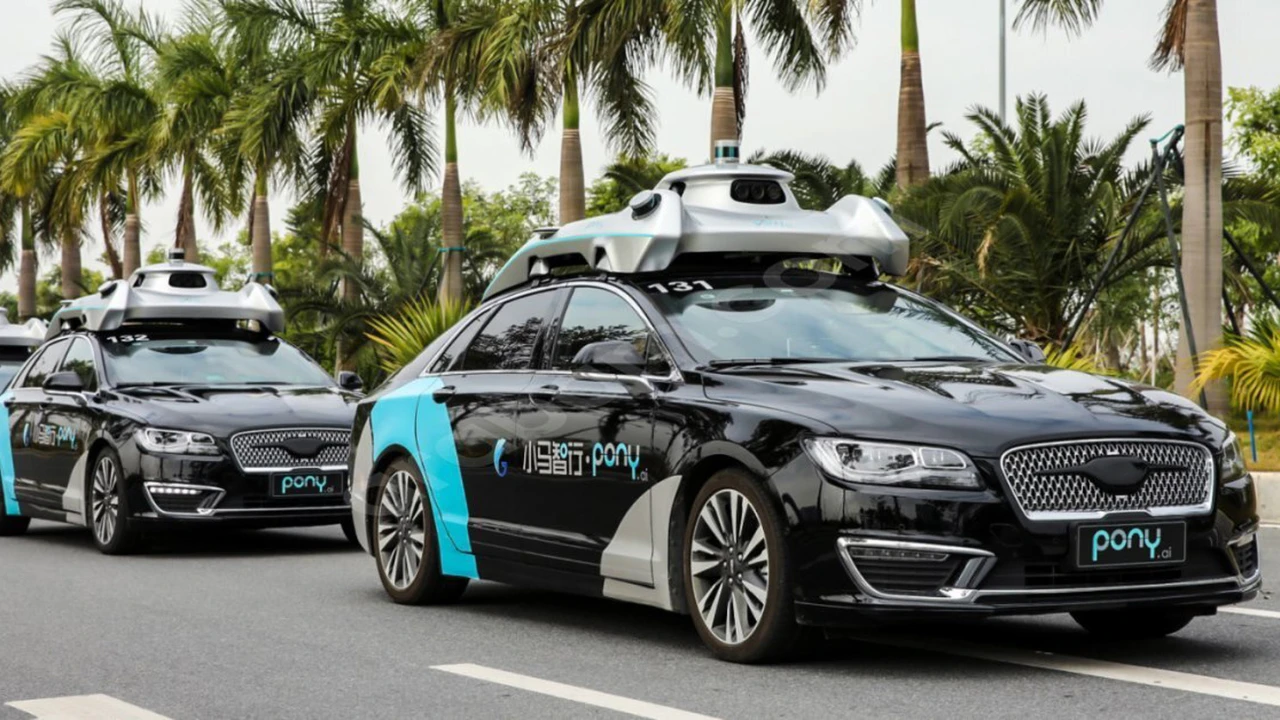
Pony.ai Robotaxi Catches Fire After Malfunction, No Injuries Reported

Pony.ai, one of China’s leading autonomous vehicle companies, confirmed on Wednesday that one of its driverless robotaxis caught fire in Beijing after a system malfunction triggered an emergency stop. The incident occurred while the vehicle was being handled by service personnel. Fortunately, no passengers were on board, and no injuries were reported.

According to a company statement, the car—operating without a human driver—experienced an “abnormal statusearly Tuesday morning, prompting its safety system to initiate a stop. Service staff arrived within two minutes, but during the response process, the vehicle ignited and caught fire.

No collision occurred and no one was injured. The specific cause is currently under investigation,” Pony.ai stated.

Incident Footage and Public Response

Videos circulating on Chinese social media show thick black smoke rising from a multi-lane highway, with a burned-out vehicle straddling a road divider. The car appears to be a Lexus, the luxury brand under Toyota, which is a known backer of Pony.ai. However, Reuters was unable to verify the model or authenticity of all media posted online.

An unnamed Beijing traffic police officer told Qingdao city’s broadcast outlet that the fire broke out when the engine was restarted, further complicating the cause analysis.

Regulatory and Industry Implications

The incident comes at a sensitive time, as Chinese regulators have begun tightening scrutiny on autonomous driving systems following a recent fatal autopilot-related crash involving a Xiaomi vehicle. The government has been encouraging the deployment of autonomous driving technology, with Pony.ai, Baidu, and others receiving approval to operate fully driverless robotaxis in designated urban zones.

However, high-profile failureslike the Waymo robotaxi incident in San Francisco where the vehicle was set on fire by a crowd—have raised broader concerns about safety, emergency response, and public trust in autonomous vehicles.

Ongoing Investigation

Neither Pony.ai nor Toyota provided additional details as of this writing. The cause of the fire remains under investigation, and regulators are likely to monitor the situation closely as the government refines its autonomous vehicle safety standards.

Uber Misses Q1 Revenue Target Amid Slower U.S. Travel, Leans on Global Growth and Robotaxis

Uber Technologies (UBER.N) reported Q1 revenue of $11.53 billion, slightly below analyst expectations of $11.62 billion, with its core ride-hailing business posting its slowest growth since the pandemic, due largely to weakened U.S. travel demand. Despite the miss, Uber struck an optimistic tone with above-estimate forecasts for Q2, pointing to international expansion and autonomous vehicle partnerships as key growth drivers.

The categories we operate in … tend to be quite consistent, even during macro uncertainty,” CEO Dara Khosrowshahi told analysts.

Key Financial Highlights:

  • Total revenue: $11.53B (vs. $11.62B expected)

  • Ride-hailing revenue growth: +15% (slower than past quarters)

  • Delivery revenue growth: +18% (in line with forecasts)

  • Q2 gross bookings guidance: $45.75B–$47.25B (vs. $45.83B expected)

  • Q2 adjusted EBITDA: $2.02B–$2.12B (vs. $2.04B expected)

CFO Prashanth Mahendra-Rajah cited a “slightly higher mix of international trips” and “lower inbound U.S. travel” as key factors behind the slowdown. Broader foreign spending on U.S. travel dropped sharply in March, reinforcing a trend echoed by Airbnb.

Strategic Moves to Offset U.S. Softness:

  • 85% stake acquisition of Trendyol Go (Turkey) for $700M

  • Partnership with China’s Pony AI for robotaxi deployment

  • Robotaxi service with Waymo in Austin showing high usage and scaling plans

Despite the revenue miss, Uber’s stock, which is up 42% year-to-date, fell only ~1% by market close after dipping 6% in early trading.

We see the miss as immaterial, and as such, believe the stock will recover,” said Jamie Meyers, senior analyst at Laffer Tengler Investments.

Uber’s positioning in delivery, mobility, and autonomous vehicles continues to insulate it from domestic travel headwinds, with international markets and automation partnerships paving the way for sustained long-term growth.