Yazılar

India Proposes Tough AI Labelling Rules to Curb Deepfakes and Misinformation

India’s government has unveiled draft regulations requiring artificial intelligence and social media platforms to clearly label AI-generated content, in a sweeping effort to combat deepfakes and misinformation amid rising concerns over the technology’s misuse.

The proposed rules, released Wednesday by the Ministry of Electronics and Information Technology, would compel companies such as OpenAI, Google, Meta, and X to include visible AI markers covering at least 10% of a video or image’s surface area, or the first 10% of an audio clip’s duration, to indicate that the material was artificially created.

India — home to nearly 1 billion internet users — has faced an explosion of AI-generated deepfakes and false information, particularly during elections, in a country already divided along ethnic and religious lines. Officials warn that manipulated videos and fake news could incite violence and erode public trust.

Under the proposal, platforms must also ask users to declare whether their uploads are AI-generated and introduce technical safeguards to verify authenticity. The ministry said the rules aim to ensure “visible labelling, metadata traceability, and transparency for all public-facing AI media.”

The government cited a growing threat from generative AI tools capable of impersonating individuals, spreading propaganda, or manipulating elections. “The potential for harm has grown significantly,” it said in a statement inviting public and industry feedback by November 6.

Legal experts noted that the new labelling rule is one of the first in the world to set a quantifiable visibility standard. Dhruv Garg, founding partner of the Indian Governance and Policy Project, said it would require AI platforms to develop automated detection and tagging systems that identify synthetic content at the moment of creation.

The issue has already reached India’s courts. Bollywood actors Abhishek Bachchan and Aishwarya Rai Bachchan recently sued to block AI-generated videos using their likenesses, while challenging YouTube’s AI training policies.

India’s fast-growing digital landscape has made it a major market for AI firms. OpenAI CEO Sam Altman said in February that the country is the company’s second-largest market by user numbers, which have tripled in the past year.
Judge Rejects Elon Musk’s Bid to Move SEC Lawsuit From Washington to Texas

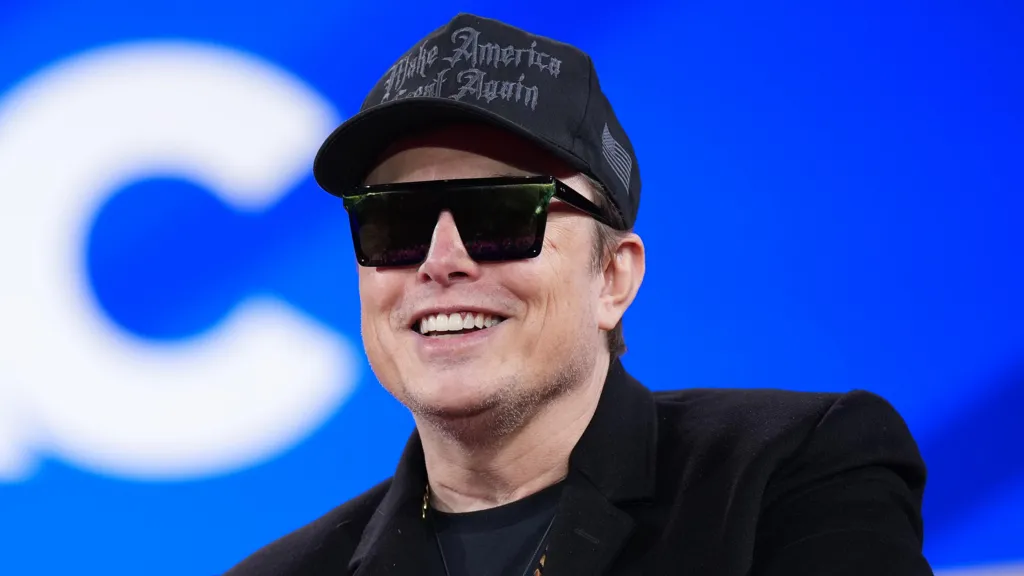
A U.S. federal judge has denied Elon Musk’s request to move a Securities and Exchange Commission (SEC) lawsuit from Washington, D.C. to Texas, rejecting his claim that the capital’s court location was overly burdensome given his packed schedule.

Judge Sparkle Sooknanan ruled on Thursday that while she acknowledges Musk’s demanding workload, his “considerable means” and frequent travel make Washington an appropriate venue. She also noted that Musk spends at least 40% of his time outside Texas, including significant periods in the capital, where he recently led the Department of Government Efficiency.

The judge emphasized that Texas courts face heavier caseloads, while her court could handle the matter with “reasonable alacrity.” Musk’s argument centered on his claim that he works 80 or more hours per week, often sleeping at his office or factories, and that defending himself in Washington would cause “substantial burdens.”

The SEC lawsuit, filed in January, accuses Musk of failing to timely disclose his acquisition of a 5% stake in Twitter (now X) in early 2022. The 11-day delay, according to the SEC, allowed him to buy over $500 million worth of shares at artificially low prices, saving him an estimated $150 million. The agency seeks a civil fine and the forfeiture of those gains, while Musk is attempting to have the case dismissed.

Musk, whose fortune reportedly surpassed $500 billion this week, resides in Austin, Texas, where his major companies—Tesla, SpaceX, and The Boring Company—are headquartered. He had also proposed moving the case to Manhattan, where former Twitter shareholders have filed a related lawsuit, but that request was likewise denied.

The case, titled SEC v. Musk, will proceed in the U.S. District Court for the District of Columbia under docket number 25-00105, setting the stage for another high-profile courtroom battle involving one of the world’s most controversial billionaires.

T-Mobile Expands Satellite Network to Support WhatsApp, X, and Google Maps in Remote Areas

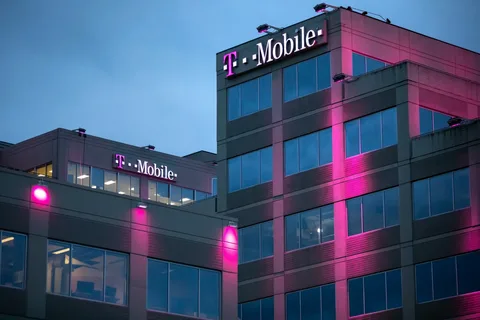
T-Mobile announced on Wednesday that its satellite-to-cell network—developed in partnership with SpaceX’s Starlink—now supports popular apps such as WhatsApp, Google Maps, and X, expanding mobile connectivity for users in dead zones and remote regions.

The service, known as T-Satellite, initially launched commercially in July 2024 with limited capabilities, allowing only SMS texting, MMS, photo messages, and short audio clips when users were outside the range of traditional mobile networks.

Now, T-Mobile says the system can support a dozen widely used apps, including Apple Music, Samsung Find, Pixel Weather, AccuWeather, and AllTrails, alongside its new flagship “Experience Beyond” plan.

“We’ve worked closely with Apple and Google to create frameworks for SAT mode so that any app can access the data channel when connected to the satellite,” said Jeff Giard, T-Mobile’s Vice President of Strategic Partnerships and Product Innovation, in an interview with Reuters.

HOW IT WORKS

The network relies on more than 650 Starlink direct-to-cell satellites, which automatically connect when a user’s device loses a terrestrial signal.
Apps that are “satellite-ready” provide essential services such as navigation, communication, and weather updates — though not full, data-heavy features like high-definition video streaming.

T-Mobile customers under the Experience Beyond plan can access the network at no extra charge, while users from AT&T and Verizon can subscribe for $10 per month.

EXPANDING DEVELOPER ACCESS

Giard said that both the App Store and Google Play Store now support SAT mode integration through a dedicated API, enabling developers to make their apps satellite-compatible.
T-Mobile is working with app makers to encourage adoption, especially for tools that provide critical communications and safety features.

“People are excited that their regular phone can now connect to space,” Giard said. “They essentially get a satellite phone experience—without having to buy new equipment.”

With this expansion, T-Mobile strengthens its push toward universal mobile connectivity, aiming to make complete coverage a reality even in the world’s most remote areas.