
Standoff Escalates as Philippine Authorities Pursue Fugitive Preacher with International Charges

A violent standoff involving nearly 2,000 Philippine police officers and followers of Pastor Apollo Carreon Quiboloy, a fugitive wanted by both the FBI and local authorities for sexual abuse and human trafficking, has entered its fourth day. Quiboloy, a self-proclaimed “appointed son of God” and founder of the Kingdom of Jesus Christ church, has been evading capture for over three years.

The 74-year-old preacher faces a 2021 indictment in the US accusing him and his alleged associates of operating a sex trafficking ring. The indictment claims they coerced girls and young women into sexual acts with threats of “eternal damnation.” Quiboloy, who denies all charges, is thought to be hiding within a sprawling 30-hectare (75-acre) compound in Davao City, southern Philippines. This compound includes a cathedral, college, bunker, and a taxiway to Davao International Airport.

Since the raid began on Saturday, police have encountered fierce resistance from Quiboloy’s followers. Protesters have reportedly thrown stones, blocked roads with burning tires, and clashed with officers. On Saturday, a 51-year-old follower died of a heart attack, though police state his death was unrelated to the ongoing operation.

The confrontation intensified on Sunday when police deployed tear gas in an attempt to disperse the crowds. At least six officers have been injured, and 18 people have been arrested. Images from the scene depict officers with bloodied faces receiving medical treatment.

Police Brig. Gen. Nicolas Torre III, who is spearheading the operation, emphasized that the raid will persist until Quiboloy is apprehended. “We’re not leaving,” Torre declared. “No one’s pulling out until we have him.”

Quiboloy founded the Kingdom of Jesus Christ church in 1985 and gained prominence during the rise of televangelism in the Philippines. The church, boasting 7 million followers worldwide, operates various businesses including a college, resort, and media outlets.

Quiboloy has been a close ally of former Philippine President Rodrigo Duterte, frequently appearing on church-linked media during Duterte’s tenure as mayor of Davao City. Duterte’s controversial war on drugs, which rights groups claim resulted in thousands of extrajudicial killings, was notably linked to the church’s media network.

In recent developments, Vice President Sara Duterte criticized the ongoing operation on social media, adding a new layer of political tension to the unfolding crisis.
Oil Leak Threatens Red Sea After Houthi Attack on Greek Tanker

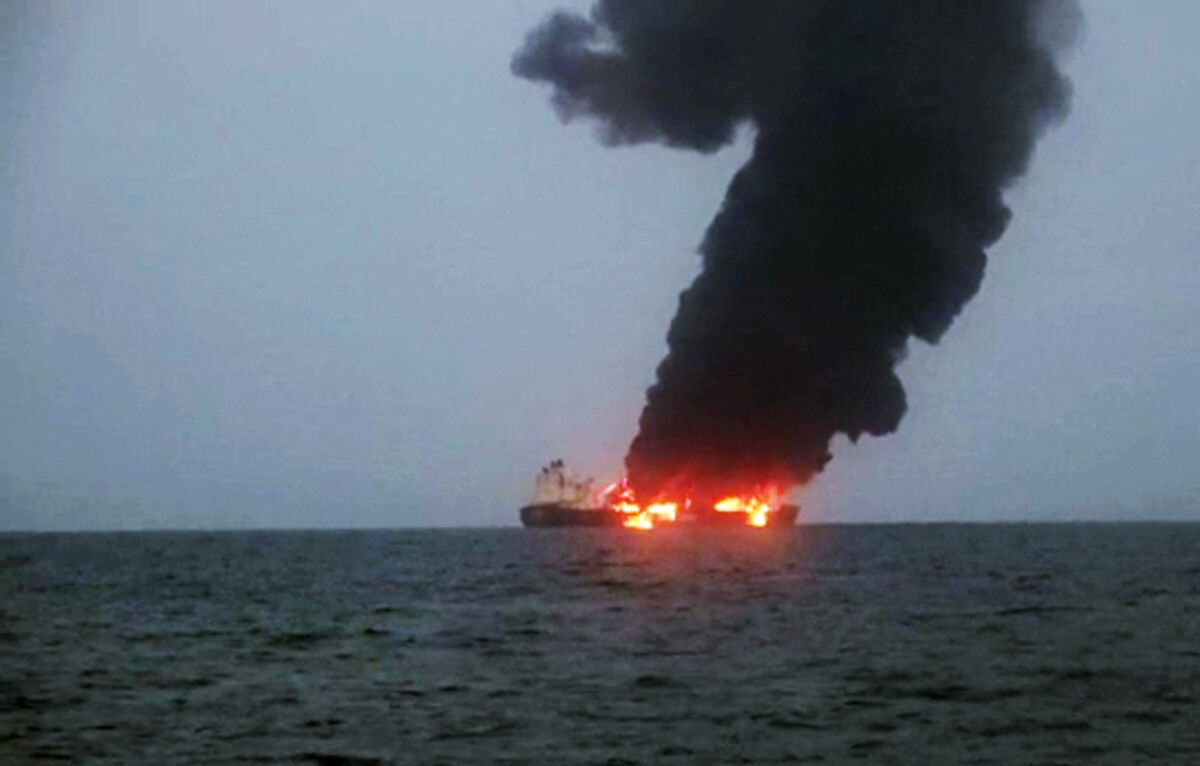
The Pentagon has confirmed that the Greek-flagged oil tanker Sounion, attacked by Yemen‘s Houthi rebels last week, is now leaking oil. The Sounion, carrying approximately 1 million barrels of crude oil, was targeted with multiple projectiles off the Yemeni port city of Hodeidah. The Houthis, who control Yemen‘s most populous regions, claim the attack was in solidarity with Palestinians in the ongoing conflict between Israel and Hamas.

The Pentagon spokesman, Air Force Major General Patrick Ryder, stated that the Houthis have threatened to attack any vessels attempting to salvage the Sounion, which is still on fire. He condemned the attack as a “reckless act of terrorism” that destabilizes global and regional commerce, endangers innocent mariners, and threatens the delicate maritime ecosystem of the Red Sea and Gulf of Aden.

The US military is working with regional partners to determine how to assist the vessel and mitigate the potential environmental impact. The Houthis have sunk two ships and killed at least three crew members in their 10-month campaign, which has forced vessel owners to avoid the Suez Canal shortcut, significantly disrupting global ocean shipping.

The Houthis specifically cited Delta Tankers, the Sounion‘s operator, for violating their ban on entering “occupied Palestine” ports. This attack marks the third vessel operated by Delta Tankers to be targeted in the Red Sea this month.

The potential for a major oil spill in the Red Sea raises serious environmental concerns. The largest recorded ship-source oil spill occurred in 1979, when approximately 287,000 metric tons of oil leaked from the Atlantic Empress after a collision in the Caribbean Sea.

Ukraine’s Current Military Operations Echo a Pivotal World War II Victory in the Kursk Region

The ongoing military incursion by Ukraine into Russian territory in the Kursk region is occurring on land that witnessed one of the most significant Soviet victories against the German invaders during World War II. Historians argue that this victory, known as the Battle of Kursk, marked a turning point in the war in Europe, nearly a year before the D-Day invasion of Normandy.

While the June 6, 1944, landings in Normandy are often perceived as the decisive moment in the defeat of Nazi Germany, the Battle of Kursk, fought from July 5 to August 23, 1943, played a crucial role in shifting the tide of war. This battle involved millions of troops and thousands of tanks and armored vehicles.

The victory at Kursk allowed the Soviets to seize the initiative in the eastern front and maintain it until the end of the war.

The Battle of Kursk:

In the spring of 1943, Hitler‘s army in the east suffered heavy losses in the Battle of Stalingrad. The Germans lost almost a million men in their attempt to capture the city on the Volga River, defeat the Soviet army, and seize oil fields in the Caucasus.

Following the German retreat from StalingradHitler‘s generals sought to regain the initiative in the east. They targeted a 150-mile bulge in the German lines, defended by over a million Soviet troops, centered on Kursk.

The Germans planned to attack in the spring, but Hitler delayed the operation, known as Operation Citadel, to allow for the deployment of new tanks. This delay gave the Soviets ample time to prepare their defenses.

A Formidable Defense:

The Germans committed around 800,000 troops and 3,000 tanks to the attack. However, they faced a formidable defense. The Soviets had prepared a series of defensive lines, dug over 3,000 miles of trenches, and deployed anti-tank guns and artillery in depth. The Soviets also used their superior air power to disrupt German supply lines and support their ground troops.

The Battle of Kursk was a brutal and bloody affair. Both sides suffered heavy casualties, but the Soviets ultimately prevailed. The German defeat at Kursk marked a turning point in the war on the Eastern Front. It weakened the German army, allowed the Soviets to launch a series of offensives, and ultimately contributed to the eventual defeat of Nazi Germany.