American Father and Daughter Describe Near-Death Experience in Iceland Cave Collapse

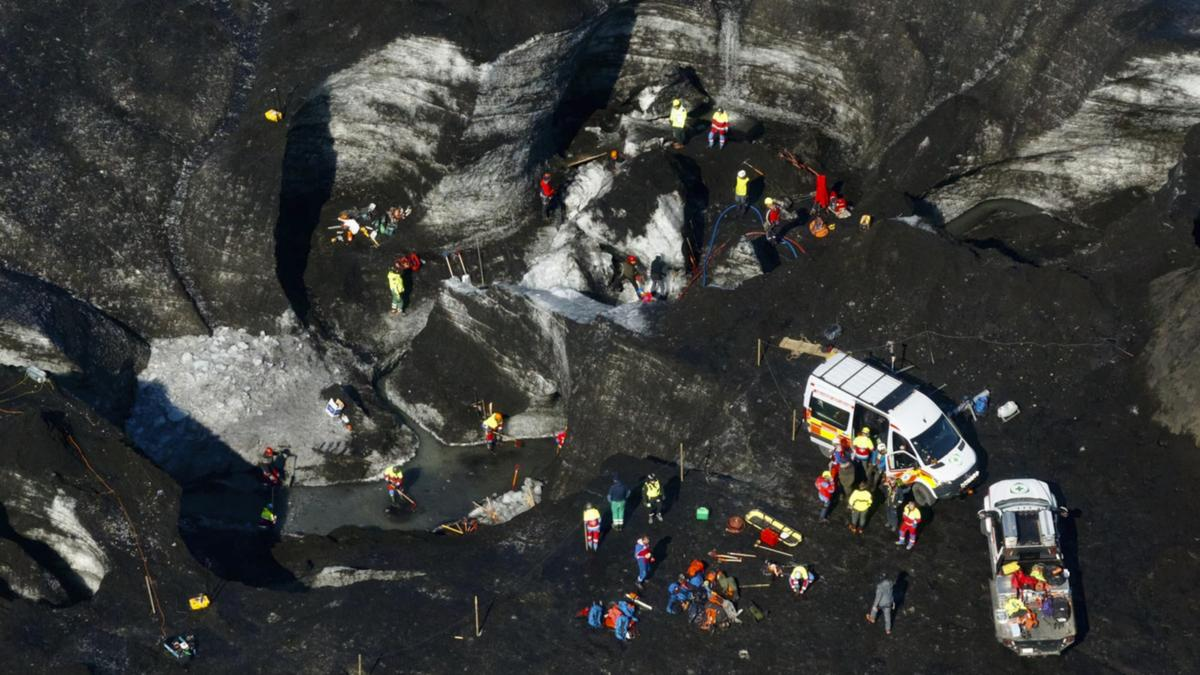
Scott Stevens, from Austin, Texas, and his daughter Wylde, 10, narrowly escaped a deadly cave collapse in Iceland’s Breiðamerkurjökull ice cave on Sunday. Stevens, who was photographing his daughter, opted not to switch camera lenses to avoid delaying the group. They exited the cave just moments before it collapsed, hearing a loud “boom” shortly after leaving.

“I was aware of the group behind us and didn’t want to hold them up,” Stevens recounted. “If we had stayed a minute longer, it would have been us. We were in the exact spot where it happened.”

The collapse tragically resulted in the death of an American man and injured an American woman among a group of 23 tourists from various countries. The incident occurred in the southeast of Iceland, according to local reports.

Stevens expressed his shock and relief, stating, “It felt like it could have very easily been us. I’m thinking of the man who died; he was just on vacation, expecting to go home.”

Stevens and his group had left the cave before the collapse, while the deceased and injured were part of a second group with a different guide. Upon hearing the collapse, Stevens and his guide ran back to the scene, where they found a woman in distress and provided assistance along with a doctor who was on the tour.

The guides were visibly shaken by the incident. “One was in tears, covered in blood from the deceased, and both were deeply traumatized,” Stevens said.

The American victims were confirmed to be a couple, and the U.S. State Department has offered consular assistance. Iceland, with its extensive glaciers and ice caves, is a popular destination for tourists, but the cave collapse has highlighted the inherent risks of exploring such natural wonders.
 

Foot Locker Reports First Sales Growth in Six Quarters Amid Store Revamps

Foot Locker has reported a 2.6% increase in comparable sales for the fiscal second quarter, marking its first growth in six quarters. This rise exceeded analysts’ expectations and indicates that the company’s efforts to revitalize its stores and enhance customer experience are paying off. Despite this positive news, Foot Locker’s stock fell approximately 8% in premarket trading.

CEO Mary Dillon highlighted the success of the “Lace Up Plan,” Foot Locker’s turnaround strategy, noting improved top-line trends and a solid start to the Back-to-School season. The company also saw its gross margin expand for the first time in over two years.

Foot Locker’s fiscal performance included a loss of $12 million, or 13 cents per share, compared to a loss of $5 million, or 5 cents per share, in the same period last year. Adjusted for one-time items, the loss was 5 cents per share, better than the expected 7 cents. Revenue reached $1.90 billion, surpassing the anticipated $1.89 billion.

For the remainder of the fiscal year, Foot Locker has maintained its sales guidance, expecting a range of 1% decline to 1% growth, outperforming the anticipated 0.4% decline. The company also retained its adjusted earnings per share forecast, projecting earnings between $1.50 and $1.70, ahead of the expected $1.54.

Under Dillon’s leadership, Foot Locker is focusing on transforming its store network, with plans to invest $275 million this year to remodel two-thirds of its stores by the end of fiscal 2025. The company is also closing or transferring operations of 30 stores in the Asia-Pacific region and 629 in Europe, while expanding its reach in Greece and Romania.

Foot Locker’s Champs Sports banner is showing signs of recovery, with comparable sales down 3.9%, a significant improvement from the 25.3% decline seen last year. The company is also relocating its global headquarters from New York City to St. Petersburg, Florida, by late 2025, aiming to enhance collaboration and reduce costs.

Despite broader retail industry challenges and consistent inflation, Foot Locker’s strategies are driving sales growth and customer engagement. Dillon remains confident in the company’s approach to ensure long-term profitable growth and shareholder value.

Goldman Sachs Warns About Rapid Recovery in Market Confidence Following August Sell-Off

Goldman Sachs’ Christian Mueller-Glissmann has raised concerns about the swift rebound in market confidence after a significant drop in global stocks earlier this month. Speaking on CNBC’s “Squawk Box Europe,” Mueller-Glissmann likened the August market slump to a “warning shot” and expressed worry over the speed at which investor sentiment has recovered.

August saw intense market pressure due to fears of a potential U.S. recession and the unwinding of “carry trades” associated with the Japanese yen, leading to a 3% drop in the S&P 500 on August 5, marking its largest one-day decline since 2022. However, expectations of upcoming interest rate cuts by the Federal Reserve and positive U.S. economic data have since propelled stocks higher. The S&P 500 has risen 8% and the Dow Jones Industrial Average more than 6% since early August.

Mueller-Glissmann noted that market positioning and sentiment were notably bullish prior to the August decline, which he views as an overreaction. He highlighted concerns that the market has quickly returned to previous levels, reflecting similar issues to those before the drop.

Investors are now awaiting a crucial U.S. inflation report, the personal consumption expenditures price index, which will offer insights into the economic outlook. Fed Chair Jerome Powell’s recent comments about policy adjustments have fueled expectations of a rate cut at the Fed’s September meeting, though specific details on the timing or scale of the cut were not provided.

Mueller-Glissmann suggested that while August’s market sell-off created a buying opportunity, the rapid recovery of stocks and risky assets might signal a return to previous problems. He also pointed out that safe assets like bonds, gold, and the Swiss franc have not experienced significant sell-offs.

Looking ahead, Mueller-Glissmann recommended caution for investors, noting that the bond market’s role in cushioning losses may not be as reliable in the near term. He advised considering adjustments to risk exposure or exploring alternative diversifiers to manage market volatility.