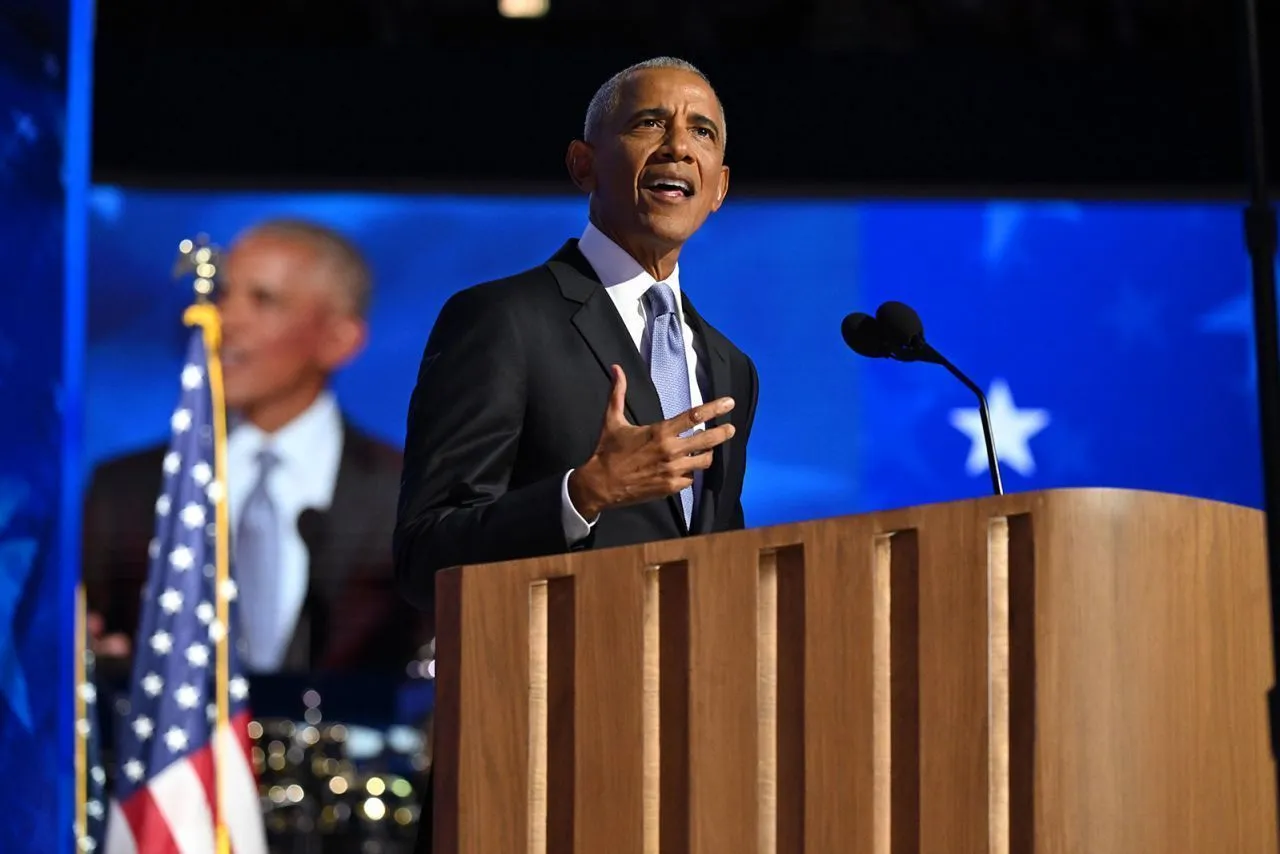
Barack and Michelle Obama Rally Support for Kamala Harris at Democratic National Convention

At the Democratic National Convention in Chicago, former U.S. President Barack Obama and former First Lady Michelle Obama delivered powerful speeches endorsing Kamala Harris’s presidential campaign as she prepares to challenge Republican frontrunner Donald Trump in the upcoming election. The Obamas urged Americans to support Harris, emphasizing the need for a new chapter in American politics after years of chaos under Trump’s leadership.

Barack Obama, America’s first Black president, passionately supported Harris, who is aiming to become the first woman and the first Black and South Asian person to hold the presidency. He framed her candidacy as a pivotal moment in history, stating that the country is ready for a better story and a leader like Kamala Harris. Taking direct aim at Trump, Obama condemned the instability and divisiveness of the past administration, while also paying tribute to current President Joe Biden, praising his defense of democracy during challenging times.

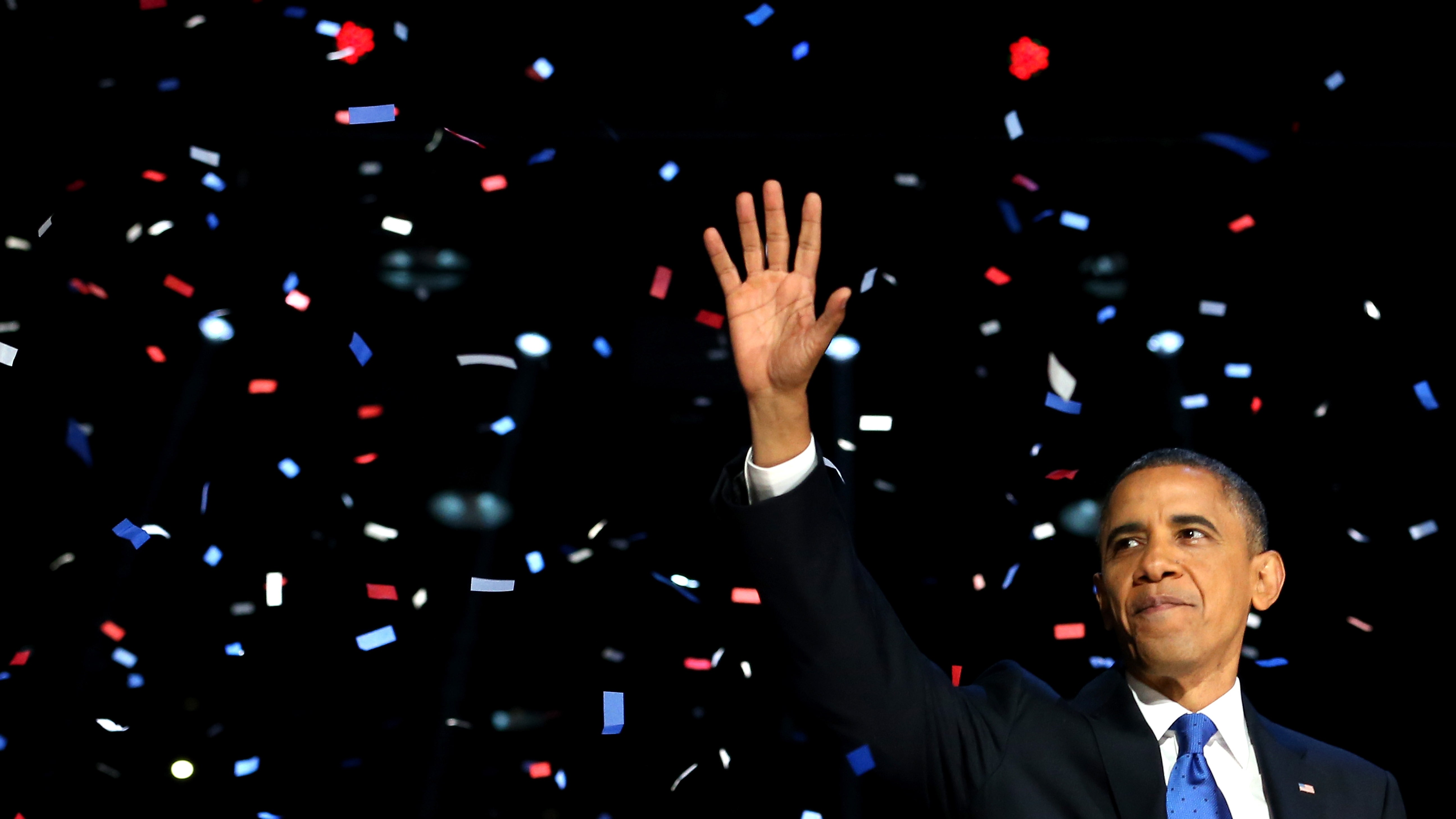
Michelle Obama, introduced her husband with an energetic and hopeful message, declaring that “hope is making a comeback.” She warned the crowd that Trump would attempt to distort the truth about Harris, just as he had with the Obamas during their time in the White House. She strongly criticized Trump’s narrow and divisive worldview, while celebrating the achievements of both herself and her husband as Black leaders in the U.S.
Picture background

Harris, who joined the convention virtually from a rally in Milwaukee, continues to build momentum, drawing record fundraising numbers and strong public support. She used her platform to address key issues, including the Supreme Court’s 2022 decision to overturn Roe v. Wade, emphasizing her commitment to holding Trump accountable at the ballot box for his role in reshaping the judiciary.

The night also featured Republicans who have distanced themselves from Trump, such as former White House press secretary Stephanie Grisham and Republican Mayor John Giles of Mesa, Arizona. These voices echoed the need for unity and warned of the dangers of Trump’s continued influence on the GOP.

The event was not without tension, as protests against U.S. support for Israel’s actions in Gaza erupted outside the convention. Although most speakers steered clear of the topic, Senator Bernie Sanders called for an immediate ceasefire and an end to the conflict, reflecting the growing unrest over the issue within Democratic circles.

As Harris continues her historic bid for the presidency, the Democratic Party, with the Obamas at the forefront, is uniting behind her, determined to forge a new path for America.
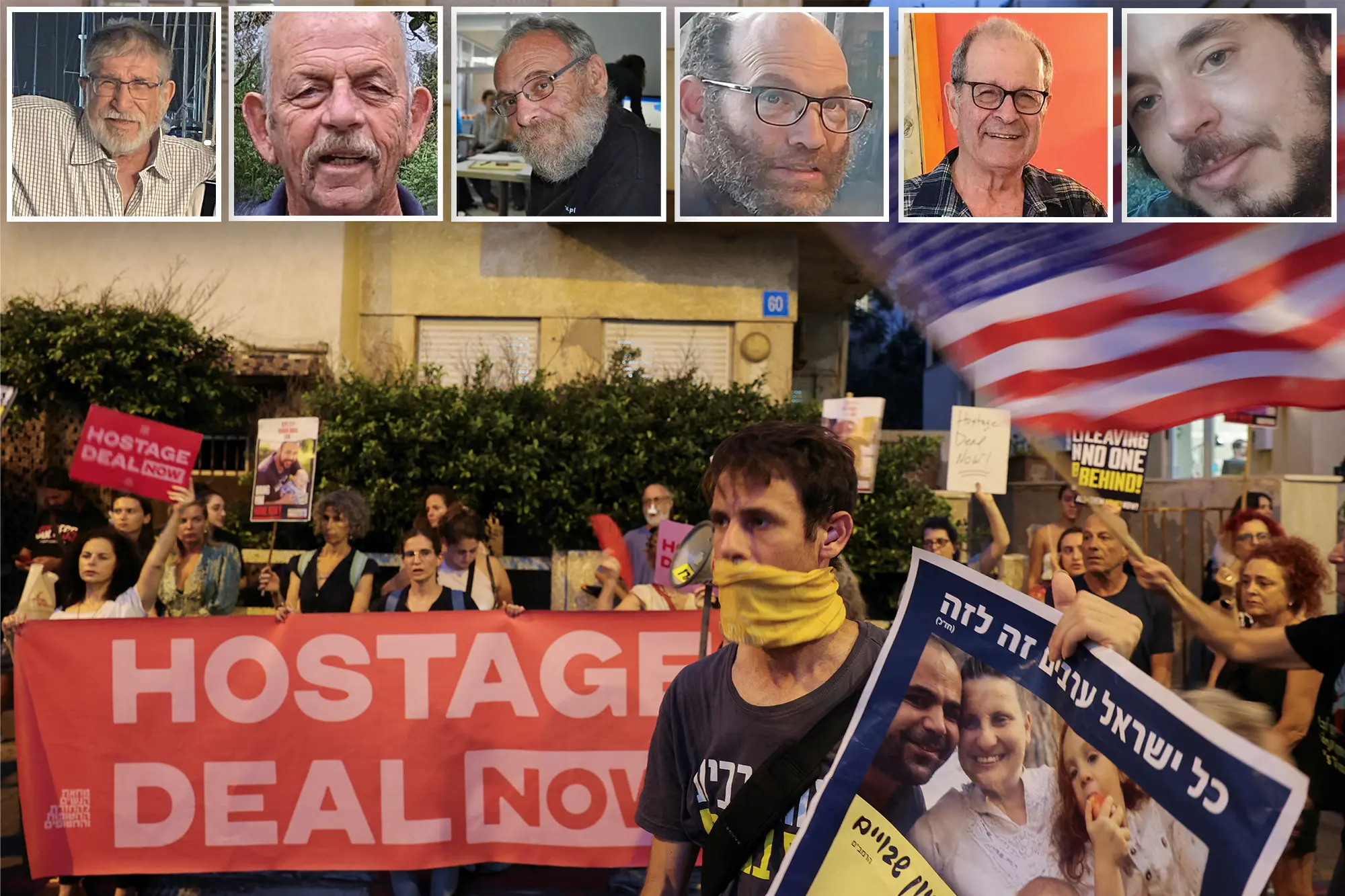
Israeli Military Recovers Bodies of Six Hostages from Gaza Strip

The Israeli military has announced the recovery of six hostages’ bodies from the Gaza Strip. The Israel Defense Forces (IDF) confirmed that the bodies of Yagev Buchshtab, Alexander Dancyg, Avraham Munder, Yoram Metzger, Chaim Peri, and British-Israeli Nadav Popplewell were retrieved from Khan Younis on Monday. Five of these deaths had been previously confirmed, while Avraham Munder’s survival had been uncertain.

The recovery operation, conducted by the IDF in coordination with the security agency Shin Bet, followed the hostages’ abduction from Kibbutz Nir Oz and Kibbutz Nirim during Hamas’s attacks on southern Israel on October 7. The Hostage Families Forum has expressed that this development provides crucial closure for the families but emphasized that the return of remaining hostages will require a negotiated agreement.

Israel had previously confirmed the deaths of Popplewell, Peri, and Metzger in June, and Buchshtab and Dancyg in July. The IDF’s investigations suggested that some of these men may have been killed by Israeli fire during operations.

Israeli Defense Minister Yoav Gallant described the body recovery as a result of a “complex operation” and reaffirmed Israel’s commitment to dismantling Hamas. Israeli President Isaac Herzog extended condolences to the families and stressed the ongoing effort to bring all hostages back.

The Hostage Families Forum has urged the Israeli government to expedite the current negotiation process, as discussions continue to secure a ceasefire and hostage release deal. US Secretary of State Antony Blinken is actively involved in these negotiations and recently met with Israeli Prime Minister Benjamin Netanyahu, who viewed their discussion as positive.

In the broader context of the conflict, the IDF has intensified its operations in Gaza, with recent air strikes resulting in additional casualties. The escalation follows an unprecedented attack by Hamas gunmen on October 7, which resulted in significant Israeli casualties and hostage-taking. The ongoing conflict has led to severe losses on both sides, with significant casualties reported in Gaza.

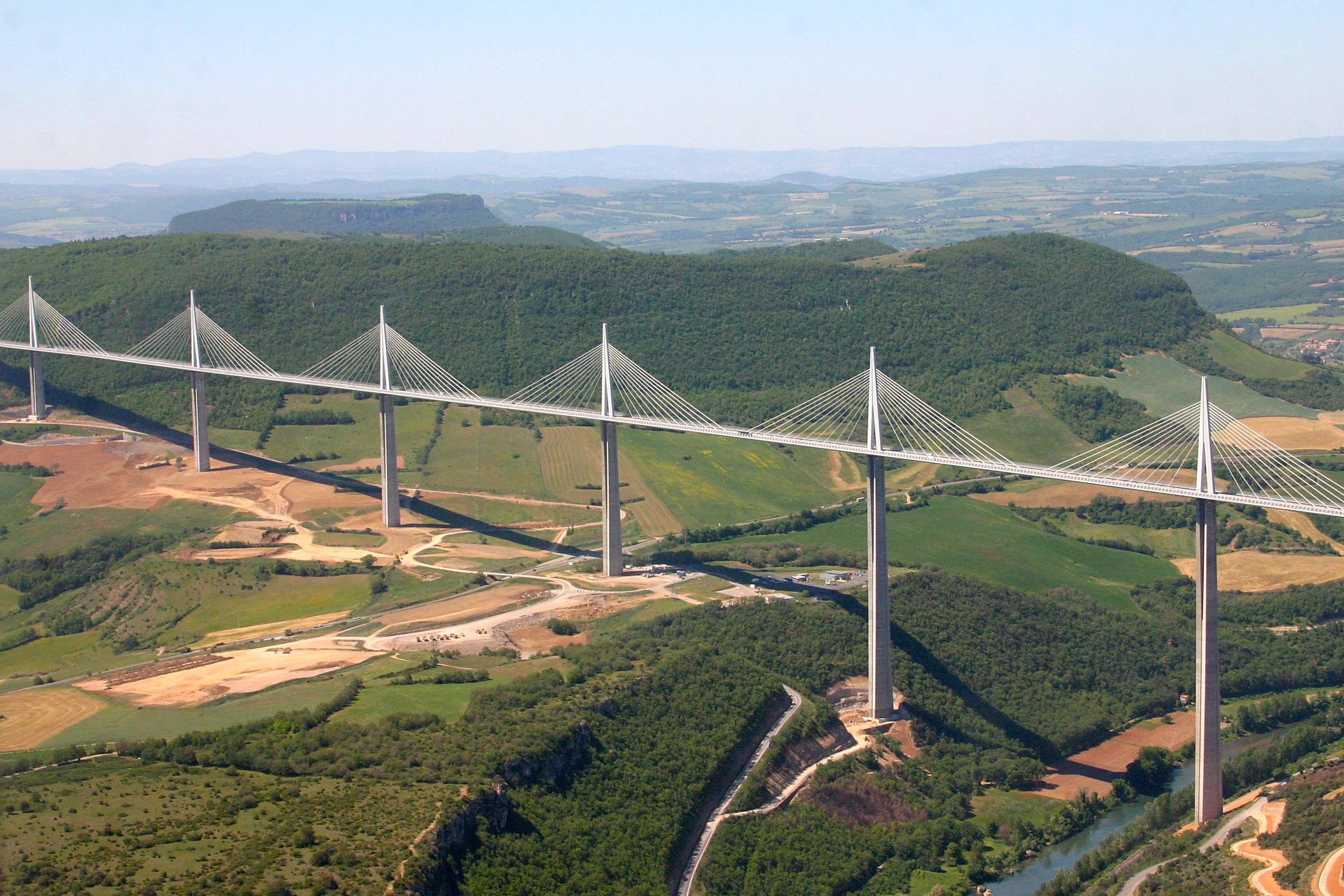
The Millau Viaduct: How the World’s Tallest Bridge Transformed the Map of Europe

The Millau Viaduct, a stunning feat of engineering and design, has significantly reshaped Europe’s landscape and transportation network. Spanning the Tarn gorge in southern France, this bridge stands as the world’s tallest, with a structural height of 336.4 meters (1,104 feet), and stretches 2,460 meters (8,070 feet) in length. Its striking presence is so notable that it can be seen from space and has become a major destination for tourists.

Unlike traditional bridges that connect points of similar elevation, the Millau Viaduct arches gracefully across a valley, its seven piers ranging from 78 to 245 meters (256 to 804 feet) in height. The bridge’s design includes expansive 342-meter (1,122-foot) spans, allowing it to elegantly navigate the undulating terrain. Its road deck, weighing 36,000 tons and measuring about 14 feet thick, is supported by steel pylons and cable stays that ensure stability and smoothness for travelers.

The viaduct’s creation was driven by the need to alleviate traffic congestion in Millau and improve north-south travel across France. The region’s challenging geography, characterized by deep valleys and highlands, made the project both complex and critical. The French government, aiming to enhance the road network and resolve severe traffic issues, initiated the project in the 1980s.

The design phase, led by engineer Michel Virlogeux and architect Norman Foster, involved overcoming significant challenges. The team decided on a cable-stayed bridge to balance aesthetic beauty with structural efficiency. The viaduct’s slender, elegant design was intended to blend with the natural landscape rather than dominate it.

Construction began in October 2001 and was completed in December 2004, costing approximately 400 million euros ($437 million). Despite initial local opposition fearing the bridge would mar the scenic beauty of the area, the viaduct ultimately enhanced the landscape and attracted tourists. Its creation resolved long-standing traffic issues and transformed Millau into a prominent destination.

The viaduct not only improved travel efficiency but also contributed to environmental benefits by reducing CO2 emissions from heavy vehicles. As it nears its 20th anniversary, the Millau Viaduct remains a testament to modern engineering and design, continuing to captivate visitors and stand as a symbol of innovative infrastructure.