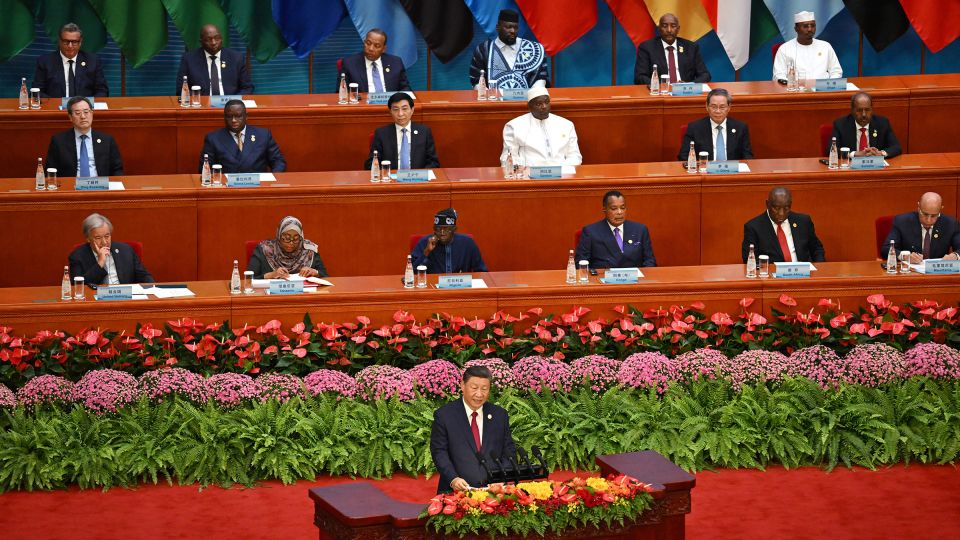
China’s Xi Praises “Best in History” Africa Ties, Pledges $50 Billion in Financial and Military Aid

Chinese leader Xi Jinping hailed the “best in history” ties between China and African nations during a major diplomatic event in Beijing on Thursday, pledging $50 billion in financial aid and $140 million in military support over the next three years. Speaking to delegates from over 50 African nations at the Forum on China-Africa Cooperation, Xi emphasized the importance of deepening strategic relations, highlighting cooperation in areas like infrastructure, industry, security, and green development. Xi’s pledge, which includes credit funds and private investments, underscores Beijing’s commitment to the continent despite recalibrating its spending under the Belt and Road Initiative. The fresh military aid, aimed at bolstering Africa’s security capacities, further signals China’s growing strategic ambitions in the region, where it has already established its first overseas military base in Djibouti. Xi’s speech, emphasizing a “shared future” and pushing back against Western-dominated global systems, comes amid rising competition with the U.S. and Europe, both of which are vying for Africa’s critical resources and geopolitical influence. African leaders, including South Africa’s Cyril Ramaphosa, responded positively, commending China’s solidarity and support in navigating global challenges such as climate change and the competition for critical minerals. However, while China has been a leading foreign economic power in Africa, concerns over debt levels persist as Beijing continues to navigate its role amid mounting global tensions and shifts in the global security order.


European Stocks Open Lower After Consecutive Declines, U.S. Jobs Data in Focus

European stocks opened lower on Thursday following three consecutive declines in September, with the Stoxx 600 index sliding after closing above 525 points last Friday. Market sentiment has been negatively impacted by weaker-than-expected U.S. economic data, particularly from manufacturing surveys and jobs openings, sparking concerns of a potential slowdown in the world’s largest economy. This has reignited debate over whether the Federal Reserve might cut interest rates by 50 basis points, rather than the anticipated 25 basis points, at its next meeting.

Investors are now closely monitoring upcoming U.S. jobs data, with initial jobless claims set for release on Thursday and the highly anticipated nonfarm payrolls and unemployment rate reports on Friday. A weaker-than-expected jobs report in July had contributed to a broad sell-off at the beginning of August, raising fears of an economic slowdown. However, some analysts, including George Lagarias, chief economist at Forvis Mazars, suggest that while a slowdown is evident, the U.S. economy is still far from entering a recession, implying that the Federal Reserve may avoid aggressive rate cuts.

In addition to the jobs data, the technology sector has weighed heavily on European markets this week, with a 3.2% drop in tech stocks on Wednesday. U.S. chipmaker Nvidia saw a sharp decline earlier this week, dragging down global chip stocks, though the company denied reports of a Department of Justice subpoena related to antitrust issues.

Meanwhile, Wall Street index futures were relatively stable early Thursday after a volatile start to the month. In Asia-Pacific markets, losses continued, with Japan’s Nikkei 225 posting the steepest decline amid softer wage growth in August, potentially providing the Bank of Japan with more room to consider a rate hike.


London Landlords Selling Properties at Record Rates Ahead of Anticipated Tax Hikes

London landlords are selling their buy-to-let properties at unprecedented rates in response to anticipated tax hikes from the U.K.’s Labour government, with almost one-third (29%) of homes currently for sale in the capital having previously been rented out, according to new data. This mirrors a nationwide trend, with 18% of U.K. listings being former rental properties, up from a previous five-year average of 14%. While there’s no definitive indication of a “mass exodus” of landlords, the appeal of buy-to-let investments has notably declined. The expected October 30th Autumn Statement by Finance Minister Rachel Reeves, which may include an increase in Capital Gains Tax (CGT), is seen as a key factor driving this uptick in sales. Currently, landlords pay a flat CGT rate of 18% or 28%, depending on their income tax bracket, but speculated changes could bring these rates in line with income tax levels, raising concerns among property investors. These changes follow years of declining profitability in the buy-to-let sector, exacerbated by the removal of tax incentives, higher interest rates, and cost-of-living pressures. The stock of investment properties and second homes has fallen by 8.7% over the past three years, reflecting a broader downturn in the property market, though recent easing of borrowing costs has sparked a rise in homebuyer activity. Experts warn that further pressure on landlords could worsen the existing supply and demand imbalance in the rental market, pushing up rents and reducing affordability for tenants. While London-based estate agents fear the impact of higher taxes on landlords, some analysts remain cautious, noting that the real estate market may not recover evenly across all sectors, and tenants could ultimately bear the brunt of the changes.