
Japan’s Ruling Party to Elect New Leader, Next Prime Minister

Japan’s ruling Liberal Democratic Party (LDP) will vote on Friday to elect the successor to Prime Minister Fumio Kishida, determining the country’s next leader. This election is historic, with nine candidates vying for the top position, making it one of the most competitive races in Japan’s recent political history. The outcome could result in the nation’s youngest or first female prime minister, or it could see a veteran politician finally achieve the role.

Kishida surprised many by announcing in August that he would not seek reelection, ending his three-year tenure as prime minister. The LDP’s new leader will automatically become the next prime minister, as the party holds a majority in both houses of Japan’s legislature. A parliamentary vote to confirm the new prime minister is set for October 1.

The leading candidates include former environment minister Shinjiro Koizumi, economic security minister Sanae Takaichi, and ex-defense minister Shigeru Ishiba. Ishiba, 67, is running for the position for the fifth time. He supports the Bank of Japan’s gradual interest rate hikes and has advocated for the formation of an “Asian NATO” to counter regional threats from China and North Korea.

Takaichi, 63, one of two female candidates, has called for increased fiscal stimulus and stronger policies in diplomacy and defense. Koizumi, at 43, would be Japan’s youngest post–World War II prime minister. Despite his limited government experience, he has pledged social and economic reforms and greater transparency within the LDP.

If no candidate secures a majority in the first round, a run-off will be held between the two top contenders.

The new leader will face significant challenges, including guiding Japan through its economic transition after three decades of stagnation, addressing diplomatic tensions with China, and confronting a looming demographic crisis due to an aging population. Japan’s future leadership will also need to navigate potential global uncertainties, such as a possible second Trump administration in the U.S. and shifting international alliances.

 

OpenAI CFO Reassures Investors Amid Leadership Departures, Funding Round Set to Close Soon

OpenAI’s CFO, Sarah Friar, sought to calm investors following a series of high-profile executive departures, assuring them that the company remains strong and poised to close a major funding round. In an email to investors. Friar addressed the departure of Chief Technology Officer Mira Murati and two top research executives, Bob McGrew and Barret Zoph, who all left this week.

“While leadership changes are never easy, I want to ensure you have the full context,” Friar wrote. She highlighted Murati’s contributions over her six-and-a-half-year tenure and emphasized the company’s “talented leadership bench” that remains capable of competing in the rapidly evolving AI industry.

Despite the recent turnover, OpenAI, which is backed by Microsoft and has recently partnered with Apple, is finalizing a $6.5 billion funding round. The round, led by Thrive Capital with a $1 billion investment, is expected to value the company at $150 billion. According to Friar, the funding round is oversubscribed and should close by next week.

In her message, Friar emphasized that the company remains “laser-focused” on democratizing AI and building sustainable revenue models, noting that investors will soon be introduced to key product and research leaders. The company remains committed to its next phase of growth.

Murati’s exit follows other high-profile departures at OpenAI, including co-founder John Schulman and safety chief Jan Leike, who joined rival Anthropic. Other founders such as Ilya Sutskever and Greg Brockman have also left, with Sutskever starting his own AI company, and Brockman currently on a leave of absence.

To fill the leadership gap, Mark Chen will assume the role of Senior Vice President of Research, while other executives like Kevin Weil, formerly of Meta, and Srinivas Narayanan will continue to drive the company forward.

In addition, OpenAI CEO Sam Altman addressed concerns in an all-hands meeting regarding rumors of a “giant equity stake” for himself, which he firmly denied. Investors have expressed concerns about Altman’s lack of equity in the company he co-founded nearly nine years ago.

Hurricane Helene Slams Florida, Bringing Fears of Devastating Damage and Fatalities

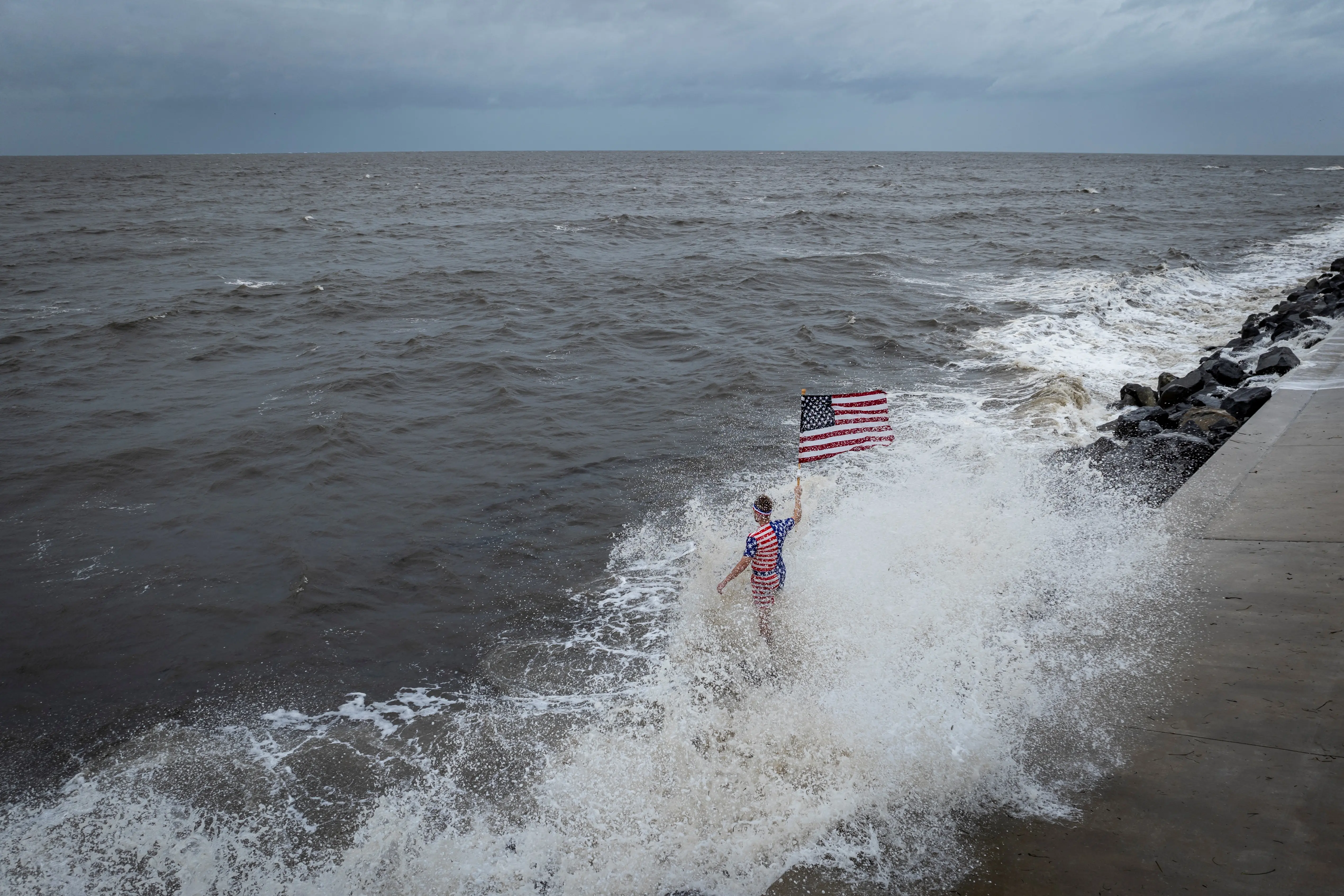
Hurricane Helene made landfall late Thursday in Florida’s Big Bend region as one of the most powerful storms to hit the state in recent years. Packing sustained winds of 130 mph (209 kph), Helene, a Category 4 hurricane, has sparked widespread fears of catastrophic damage, fatalities, and extreme flooding, exceeding the levels seen in prior storms.

Even before making landfall, Helene wreaked havoc along Florida’s Gulf Coast, flooding large areas and leaving over 1 million people without power. State officials have issued urgent evacuation orders, warning that the storm’s surge—a dangerous wall of seawater driven inland by hurricane-force winds—could rise as high as 20 feet (6.1 meters), equivalent to the height of a two-story building. National Hurricane Center Director Michael Brennan described the situation as “unsurvivable” in some areas, with floodwaters potentially destroying homes and carrying vehicles.

The storm is already lashing Georgia, South Carolina, parts of North Carolina, and Tennessee with strong rain bands. In response, Atlanta, despite being hundreds of miles from Florida’s coast, has been placed under a tropical storm warning. The extreme rainfall is expected to exacerbate flooding across multiple states, while also threatening Georgia’s cotton and pecan crops, both of which are in the middle of their harvest season.

Florida Governor Ron DeSantis reported the first confirmed fatality on Thursday, though details were not immediately provided. Officials have drawn comparisons between Helene and last year’s Hurricane Idalia, which submerged 1,500 homes in low-lying areas. Already, water levels are rising in Pinellas County, where swamped roads and beachside flooding have been reported.

The storm has caused widespread disruption, with airports in Tampa, Tallahassee, and St. Petersburg suspending operations. As Helene moves inland, it is expected to remain a hurricane while passing through Macon, Georgia, and could bring over 12 inches (30.5 cm) of rain in its path, posing a severe threat to both rural and urban areas.

Despite mandatory evacuations, not all residents chose to leave. In Dunedin, Florida, just west of Tampa, 58-year-old Ken Wood, a ferry operator, decided to stay put with his 16-year-old cat, Andy. “We’re under orders, but I’m staying here. The storm looks like it’ll be a bit west of us, but who knows? It’ll be interesting, to say the least,” Wood said.

Taylor County authorities took more drastic measures, advising those who refused to evacuate to write their names and birth dates on their arms in permanent ink in case they needed to be identified posthumously. Meanwhile, reinsurance broker Gallagher Re estimates private insurance losses from Helene could total $3 to $6 billion, with additional losses to federal insurance programs potentially reaching $1 billion.

Energy production sites along the Gulf Coast have scaled back operations and evacuated staff to mitigate risk. Deanne Criswell, the Federal Emergency Management Agency (FEMA) director, announced that she would be traveling to Florida to assess the damage on Friday. According to the National Hurricane Center, Helene could dump as much as 15 inches (38.1 cm) of rain in some areas, raising the risk of flash floods and prolonged power outages due to downed trees and blocked roads.