
U.S. Supreme Court Rejects Uber and Lyft Appeal on California Driver Lawsuits

The U.S. Supreme Court has denied an appeal by Uber and Lyft, refusing to block lawsuits brought by California against the ride-hailing giants. These lawsuits, initiated by the state’s attorney general and labor commissioner, claim the companies owe compensation to drivers misclassified as independent contractors rather than employees. The legal fight revolves around whether drivers, who had agreed to private arbitration for disputes, can still be represented in state lawsuits.

Uber and Lyft have argued that under federal law, states cannot pursue legal action on behalf of individuals who signed arbitration agreements. This principle affects not only millions of gig economy workers but also a wide range of consumers who accept similar terms of service for various products or services. However, a California appeals court ruled against this claim, and the state’s highest court refused to review the case further, prompting the companies to take the matter to the U.S. Supreme Court, which declined to hear the case.

The companies maintain that they are not employers of gig workers, arguing that these workers benefit from the flexibility of being independent contractors. Nonetheless, California, along with several other states, contends that this classification deprives drivers of basic employment protections like minimum wage, overtime, and reimbursements for work-related expenses.

Uber and Lyft have supported state ballot measures, such as California’s Proposition 22, which allows them to continue treating drivers as contractors while offering limited benefits. In 2020, this measure was overwhelmingly approved by voters, and in July 2023, California’s top court upheld it. Despite this, the companies continue to face legal battles over driver classification.

Similar lawsuits have emerged in other states, including Massachusetts, where Uber and Lyft agreed in June to pay $175 million and adopt a minimum hourly pay of $32.50 for drivers. Although the companies face multiple legal challenges from drivers nationwide seeking employee status, many of these cases have been directed to arbitration due to the widespread use of arbitration agreements.

 

Mexican Mayor Assassinated Days After Taking Office

Alejandro Arcos, the newly elected mayor of Chilpancingo, the capital of Mexico’s Guerrero state, was assassinated on Sunday, just six days after taking office. Guerrero Governor Evelyn Salgado confirmed the tragic event, expressing the grief and anger felt by the local community. “His loss mourns the entire Guerrero society and fills us with indignation,” Salgado shared on social media. The Guerrero state attorney general’s office has opened an investigation into Arcos’ murder, though the circumstances surrounding the killing remain under scrutiny.

Disturbing images circulated online via WhatsApp, showing a severed head placed on a pickup truck, allegedly belonging to Arcos. However, the authenticity of the photos has not yet been independently verified by news agencies.

This assassination follows the murder of the city’s newly appointed government secretary, Francisco Tapia, just three days prior. Both men were described by Senator Alejandro Moreno as young, honest officials committed to improving their community. Moreno, leader of Mexico’s PRI political party, has called on the federal attorney general’s office to take charge of the investigation, citing concerns about the deteriorating security situation in Guerrero.

Guerrero, a state notorious for violence, has become one of the most dangerous places in Mexico for public officials and journalists. Leading up to the June 2024 elections, at least six candidates for public office were killed in the region. Arcos, before his assassination, had been actively engaged in disaster relief efforts following severe flooding caused by Hurricane John, which ravaged Acapulco and nearby areas.


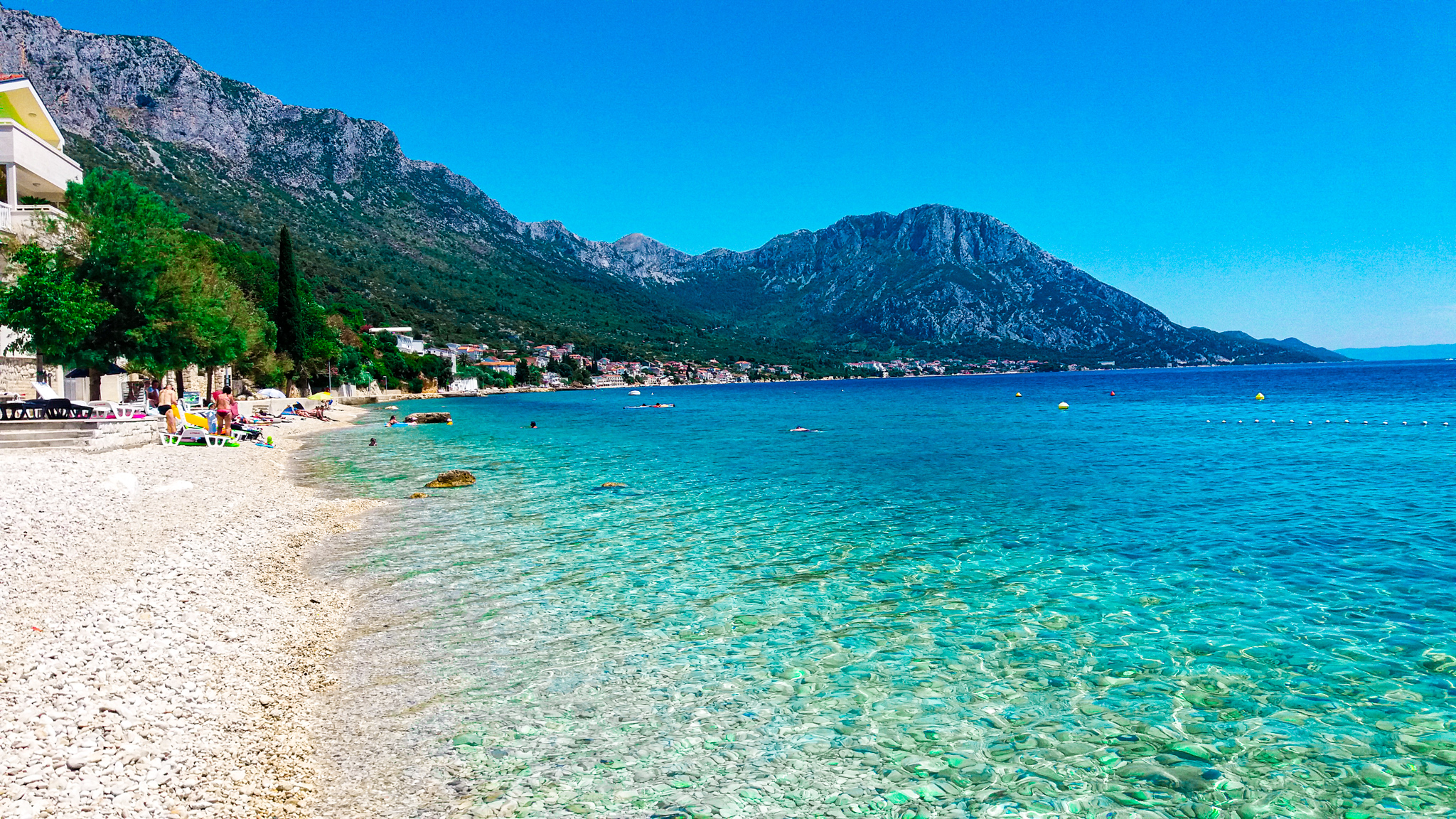
Oasis on the Adriatic where Ukrainians and Russians have gone to escape war

Montenegro, a small Balkan nation, has become an unexpected haven for both Ukrainians and Russians fleeing the war in Ukraine. Despite the potential for tension, the country has managed the influx of war-torn refugees and exiles remarkably well, thanks to its people’s hospitality and tolerance. Since the war began in February 2022, more than 200,000 Ukrainians have sought refuge in Montenegro, making it the country with the highest per capita population of Ukrainian refugees. Russians and Belarusians have also found their way to this Adriatic oasis, drawn by its visa-free regime, similar language, and shared religion.

Montenegro, a NATO member and an EU candidate, has a pro-Western government that has extended temporary protection status to Ukrainians until March 2025. As of last year, the UN reported that over 62,000 Ukrainians had obtained legal status in Montenegro, constituting nearly 10% of the nation’s population. This large influx of refugees, many of whom are still seeking stability in a foreign land, has posed challenges. Employment in coastal areas is often seasonal and poorly paid, and obtaining Montenegrin citizenship is nearly impossible.

For many, life in Montenegro has been a complex mix of struggle and adaptation. Some have found comfort in local initiatives such as Pristaniste (Haven), a non-profit shelter in Budva that provides immediate support to newly arrived refugees. Pristaniste helps them find accommodation, employment, and access to documentation. It also offers a two-week respite for Ukrainians to recover from the trauma of war.

The war’s devastating impact on the mental health of refugees is evident. Valentina Ostroglyad, a 60-year-old art teacher from Zaporizhzhia, describes how she used to associate fireworks and roof noises with explosions. Today, she has adjusted to her new life in Montenegro, appreciating its natural beauty and the kindness of its people. For many Ukrainians like her, the threat of war remains a persistent reminder of the violence they escaped, and for some, the idea of returning home is tied to whether they will have homes to return to at all.

Russians fleeing conscription and the authoritarian grip of Vladimir Putin’s regime have also found a temporary sanctuary in Montenegro. Many Russians and Ukrainians have forged friendships, and a spirit of empathy has taken root. Russian volunteers have played a key role in helping the refugee community, including initiatives like children’s centers for traumatized Ukrainian youth. Despite the painful political divide, the community in Montenegro has fostered mutual understanding, with people sharing a sense of horror about the war.

One notable project bringing Russians and Ukrainians together is a theater troupe established by Ukrainian actors Katarina Sinchillo and Viktor Koshel, which has drawn support from progressive Russian immigrants. Meanwhile, Russian rock musician Mikhail Borzykin describes how the war has changed the Russian diaspora, noting that the influx of young, anti-war Russians has shifted the tone of conversations and interactions.

However, the long-term future for many immigrants in Montenegro is uncertain. The country’s strict citizenship laws mean that many will eventually have to leave. While some Ukrainians express a desire to return home if the war ends, Russians, such as Borzykin, are more skeptical about returning to a country where pro-Kremlin attitudes may linger for years, even after Putin’s regime falls. As he notes, changing a nation’s mindset can take generations.