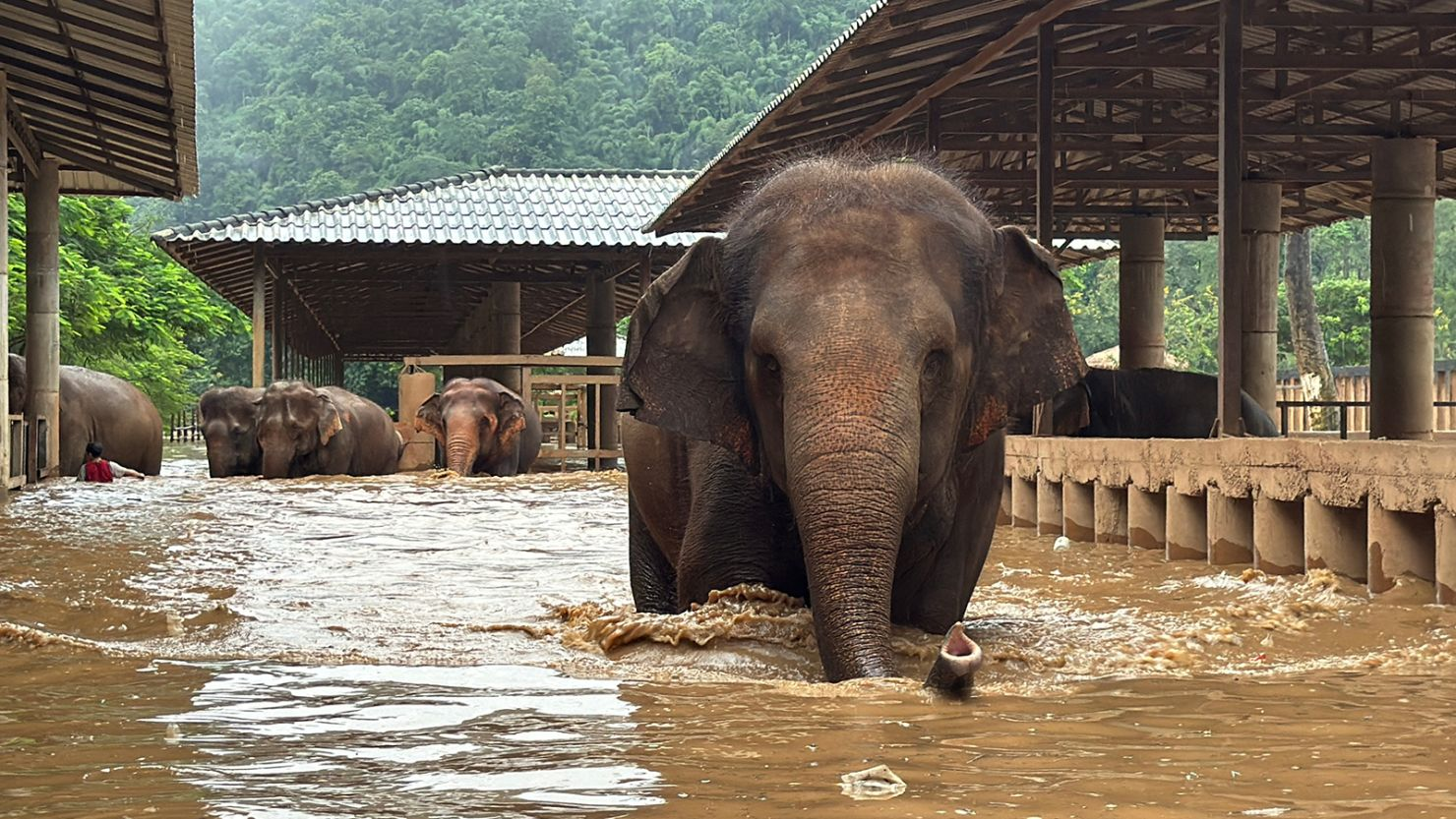
100 Elephants Rescued Amid Flash Floods at Sanctuary in Northern Thailand

A popular elephant sanctuary in northern Thailand was hit by severe flash floods on Thursday, forcing the urgent evacuation of around 100 elephants and trapping tourists as staff fought to guide the animals to safety. The Elephant Nature Park, near Chiang Mai, experienced the worst flooding in its history as water levels rose rapidly, leaving the sanctuary overwhelmed.

Videos and images captured the dramatic scene as mahouts (elephant handlers) led elephants through chest-deep water, encouraging them to move to higher ground. Saengduean “Lek” Chailert, the park’s founder, called the evacuation the largest the park has ever undertaken.

Despite successfully moving many elephants to nearby mountains, the threat persists. Thirteen adult elephants remain trapped in their enclosures, panicked and struggling as waters continue to rise. Saengduean expressed the need for urgent help from Thai authorities, emphasizing the challenge of rescuing the remaining elephants and ensuring their safety.

Floods and Ongoing Danger

Thailand’s northern region has been battered by severe flooding and landslides in recent weeks, worsened by torrential rains from Typhoon Yagi, which struck in mid-September. The storm is Asia’s most powerful this year, and the damage it has caused is visible in many areas. The Ping River, which runs through Chiang Mai, has reached dangerous water levels, with officials issuing flood alerts across the region.

The sanctuary is now grappling with rising water levels and the possibility of needing to evacuate again. Volunteers and staff are working around the clock, but they face difficulties due to flooded roads that have cut off access to the sanctuary, isolating both animals and people.

Saengduean has made a desperate plea for boats and additional manpower to assist in the evacuation. About 30 foreign volunteers, including five Americans, are currently trapped at the park, unable to leave due to the floodwaters. These volunteers, some of whom have been at the sanctuary for several weeks, are helping the staff in their efforts to care for the animals.

Rescue and Rehabilitation Efforts

The Elephant Nature Park is known for its work in rescuing and rehabilitating elephants from the tourism and logging industries. Since the 1990s, it has saved over 200 elephants, many of which are blind or have physical injuries, further complicating their evacuation efforts.

“The animals were exhausted, some barely able to walk,” said Saengduean. “We need immediate assistance to continue the rescue operations and protect these vulnerable elephants.”

In addition to elephants, the sanctuary houses about 5,000 other rescued animals, including dogs, cats, horses, pigs, and rabbits. Some of these animals were moved to safety in recent days after authorities issued flood warnings, but the situation remains critical.

Thailand’s National Animal in Danger

Thailand’s elephants, the country’s national animal, have faced numerous threats over the past century, including poaching, habitat loss, and exploitation in tourism and logging industries. Their numbers have dwindled significantly, with an estimated 3,000 to 4,000 wild elephants remaining, down from over 100,000 at the start of the 20th century.

Efforts to save these animals have been hindered by ongoing flooding, and while Thai authorities have sent rescue teams to the sanctuary, they have struggled to reach the park due to impassable roads. Atthapol Charoenchansa, head of Thailand’s Department of National Parks, has called for additional resources, including flat-bottomed boats and volunteers, to assist in the evacuation efforts.

The Road Ahead

With heavy rains expected to continue and the threat of further flooding, the situation at the Elephant Nature Park remains dire. The staff, volunteers, and elephants face an uncertain future, and the park is calling for urgent help to secure the safety of all its animals and visitors.
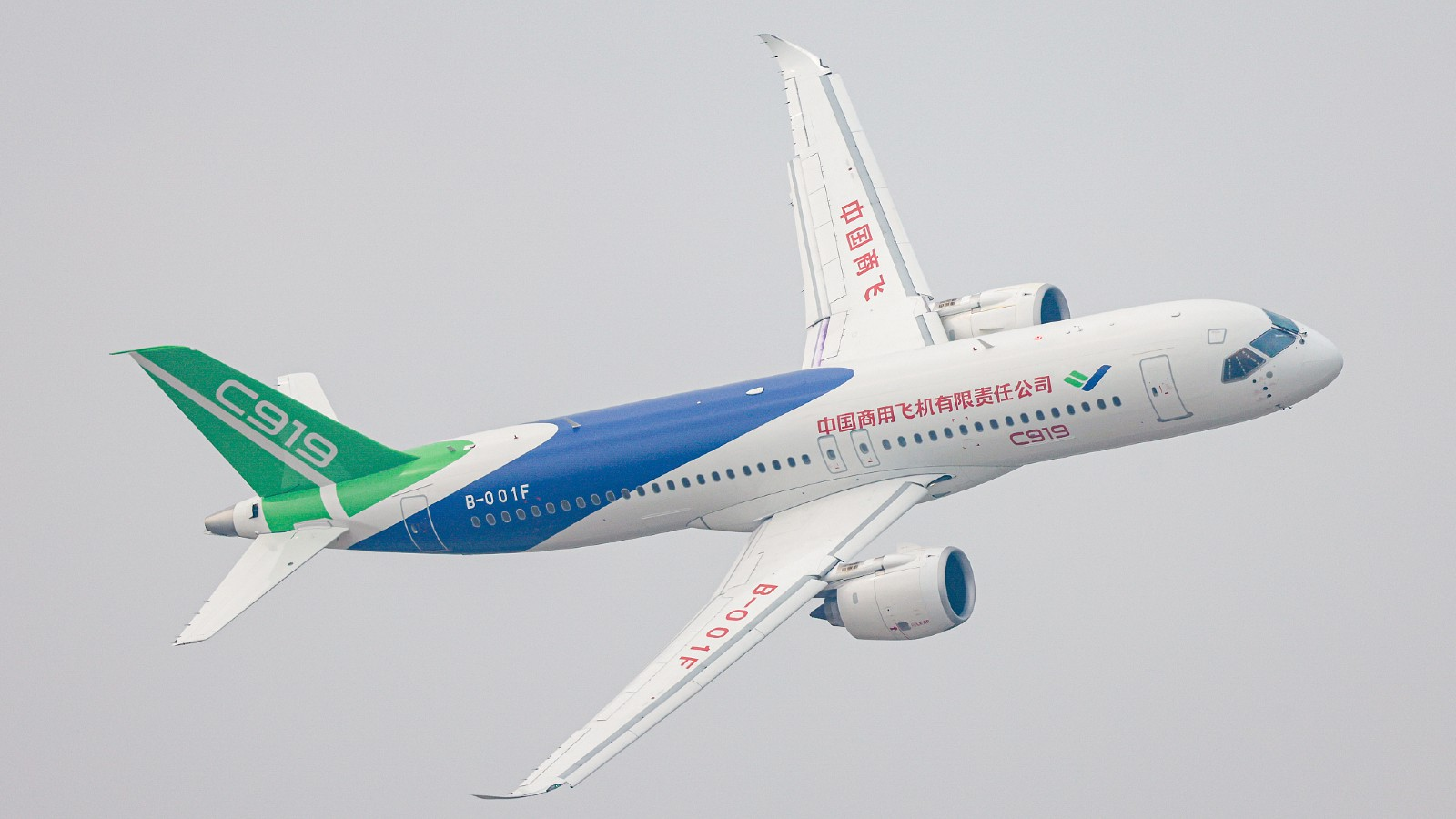
C919: China’s Answer to the A320 – A Flight Review of the Homegrown Jetliner

As an avid traveler who has logged more than a million miles across the globe, I recently had the chance to fly aboard Air China’s first C919 jetliner, China’s first domestically produced mainline passenger plane. Manufactured by COMAC (Commercial Aircraft Corporation of China), the C919 is being hailed as China’s challenger to the Airbus A320 and Boeing 737. Despite skepticism surrounding the aircraft’s “Chineseness” due to key parts being sourced from the U.S. and Europe, I was eager to experience it firsthand on a flight from Beijing to Shanghai.

First Impressions of the C919

As I approached the C919 at Beijing Capital International Airport (PEK), it was easy to mistake it for an A320 with its sleek, curved fuselage. However, upon closer inspection, its distinctive cockpit windows and wingtips set it apart. Stepping inside the month-old aircraft, it felt quite similar to an A320 with a clean and modern interior, complete with that new-plane smell.

Air China has opted for a spacious configuration with 158 seats—eight in first class and 150 in economy, despite the plane’s maximum capacity of 192 seats. Economy seating is arranged in a typical 3×3 layout, and though the seats are of the thinner variety, I found comfort in the extra legroom provided by the emergency exit row seat I had pre-booked. As a 5’11” (180 cm) tall passenger, I could easily stretch my legs, enjoying more space than even some domestic first-class seats.

Cabin Features and Passenger Comfort

The C919’s interior is basic yet practical. The individual air nozzles and foldable device holders for tablets and smartphones were thoughtful touches, though inflight entertainment options were limited. While there are no individual seatback screens or WiFi, the drop-down screens above played standard programming, and each row shared two USB-A and USB-C sockets for charging devices.

A pleasant surprise was the free pillow provided to economy passengers, which helped compensate for the thin seat padding. The overhead bins, though not as large as those on some other jets, were sufficient for this flight, with all passengers managing to store their carry-on luggage.

Inflight Experience

The inflight service was comparable to other Air China flights. Passengers were served a hot meal, including an omelet, yogurt, and a chocolate bar, during the short 1 hour 40-minute flight. Bottled water was conveniently placed in seatback pouches before boarding. The flight attendants were friendly, and one proudly highlighted the fact that we were flying on a C919 during the pre-takeoff briefing.

The lavatories in the rear were clean, bright, and more spacious than many counterparts on A320s or B737s, adding a touch of comfort to the overall experience. While the engine noise was slightly louder than some comparable jets, it was not distracting.

Post-Flight Reflection

Upon landing smoothly at Shanghai Hongqiao International Airport (SHA) ahead of schedule, I was left with a solid impression of the C919. Although the journey didn’t feel drastically different from those aboard an Airbus or Boeing narrowbody, the C919 demonstrated reliability, comfort, and safety—key qualities passengers value most. The relatively quiet reception from passengers upon disembarking, with a few taking photos of the new plane, spoke volumes about its growing place in China’s aviation industry.

For an aircraft still in its early stages, with only a handful in service across mainland China, the C919’s performance has been “remarkably unremarkable.” This is good news for COMAC as it works to establish the C919 as a competitor in global markets, with the potential to expand into Southeast Asia, Africa, and other emerging regions—provided it secures certifications from U.S. and European regulators.

In the end, Air China’s C919 offers an experience that matches the current market standards, and if COMAC continues to fine-tune its operations, this homegrown aircraft may indeed become the workhorse of Chinese aviation.


Ford Unveils New 2025 Expedition SUV, Featuring Enhanced Technology and Off-Road Capabilities

Ford Motor Company has unveiled the 2025 redesign of its large Expedition SUV, introducing significant enhancements in technology, comfort, and off-road capabilities. The updated model aims to solidify its position in the increasingly competitive full-size SUV segment, which includes rivals such as the Chevrolet Tahoe, Jeep Wagoneer, and more affordable three-row crossovers like the Kia Telluride and Hyundai Palisade.

The new Expedition offers a sleeker design, both inside and out, with key upgrades such as a 24-inch driver display and the integration of Ford’s BlueCruise hands-free driving system for highway driving. Trevor Scott, Ford’s general manager of Utilities, emphasized that the redesign was influenced by over 1,100 hours of customer feedback, with a focus on making family trips more convenient and enjoyable.

Ford has not yet released pricing details for the 2025 Expedition, which is expected to hit dealerships in spring 2024. Current models are priced between $55,000 and $84,000, with the average transaction price at around $70,000.

New Model Lineup and Features

Ford has introduced a new lineup for the Expedition, which includes the Active, Platinum, King Ranch, and a new off-road-focused Tremor model. The Tremor, which has been available on other Ford vehicles, will now cater to off-road enthusiasts with the Expedition, providing additional ruggedness and capability.

In addition, Ford has introduced a high-end “Ultimate” version under the Platinum trim, which offers a premium driving experience with added luxury and technology features.

The Expedition will continue to be offered in two versions: the standard model and the larger “Max” variant, catering to those needing extra cargo space. Both versions will be powered by a 3.5-liter EcoBoost V6 engine, with the option of a high-output version delivering 440 horsepower and 510 foot-pounds of torque.

Segment Growth and Competition

The full-size SUV market, which includes vehicles like the Expedition, has grown steadily over the years. According to data from Edmunds.com, this segment now represents 2.7% of the U.S. auto market, up from 2% in 2017, with sales totaling roughly 312,500 units through September 2023. Despite the Expedition’s upgrades, General Motors continues to lead the segment with its Chevrolet Suburban, Tahoe, and GMC Yukon models.

However, the Expedition faces competition not only from traditional full-size SUVs but also from three-row crossovers, which offer similar seating capacity at lower price points. Vehicles such as the Kia Telluride and Hyundai Palisade are increasingly being cross-shopped by buyers considering full-size SUVs like the Expedition.