Tigers to Return to Kazakhstan After Decades of Extinction in Historic Rewilding Effort
Kazakhstan’s Ile-Balkhash State Nature Reserve, once devoid of large mammals and suffering from ecosystem degradation, has transformed over the last decade. Spanning over 4,000 square kilometers across the Almaty and Balkhash regions, the reserve now supports a thriving wildlife population, including the endangered Bukhara deer and the Kulan, a rare wild ass. Now, for the first time in 70 years, the reserve will welcome back wild tigers.
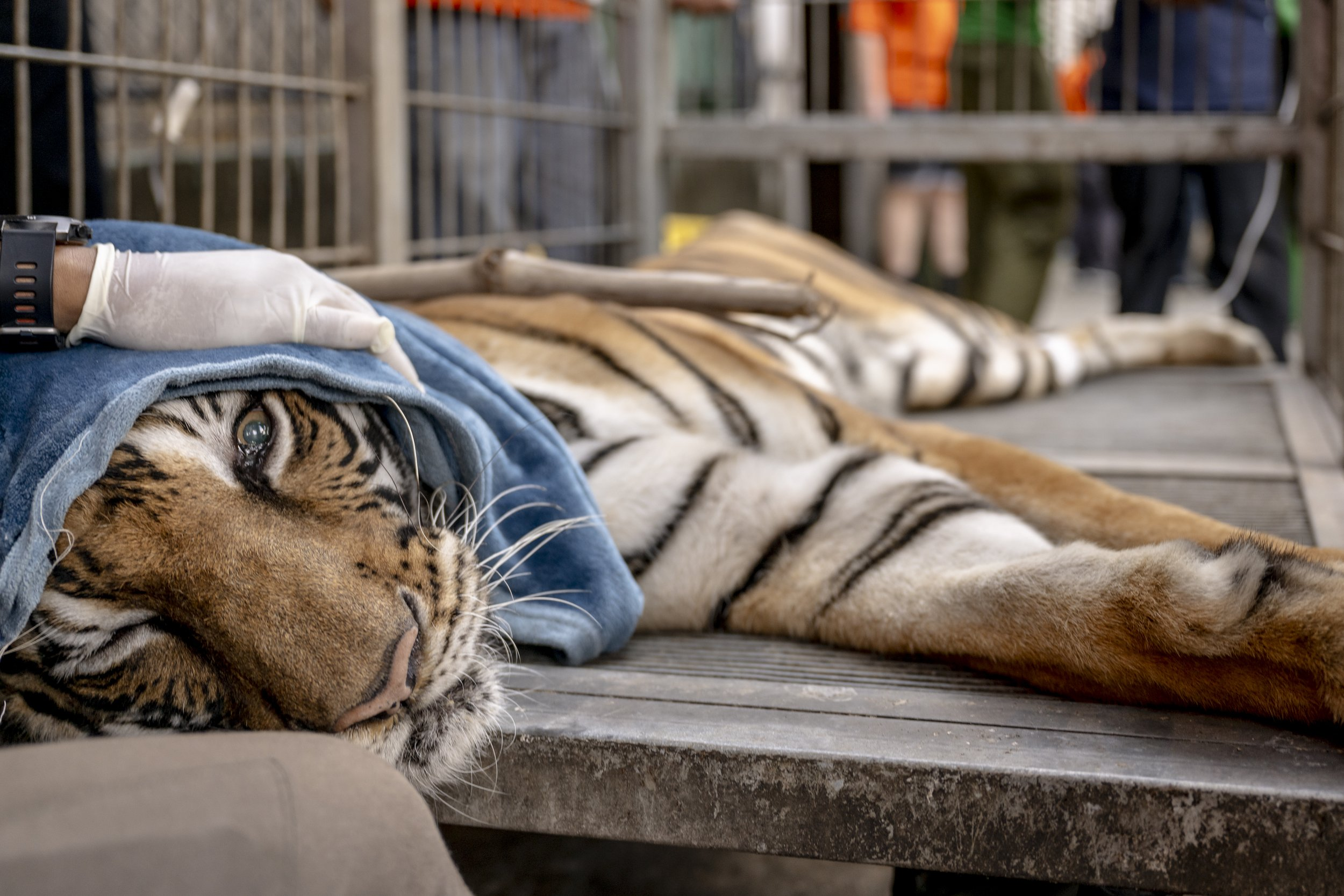
In September 2024, two captive Amur tigers named Bodhana and Kuma were translocated from the Netherlands to Kazakhstan, marking a major milestone in conservation efforts. This initiative aims to reintroduce tigers to Central Asia, where they once roamed widely but were driven to extinction in the 1950s due to hunting and habitat loss. These two tigers are expected to acclimate to the semi-wild environment of the reserve before their offspring are released into the wild.
“These tigers resemble those that lived in the Caspian region before their extinction,” explained Stuart Chapman, leader of WWF’s Tigers Alive Initiative. Amur tigers, typically found in Russia’s Far East, have adapted to the extreme climate similar to that of the Balkhash region, making them suitable candidates for reintroduction in Kazakhstan. The historic event also represents the first cross-border translocation of tigers for reintroduction purposes.
The journey of these tigers to Kazakhstan was the culmination of years of planning. Kazakhstan first expressed its intent to reintroduce tigers in 2010, establishing the Ile-Balkhash State Nature Reserve in 2018 as a foundation for the project. With support from WWF and the United Nations Development Program, the reserve launched large-scale habitat restoration and species reintroduction initiatives, including the reintroduction of key tiger prey animals like the Bukhara deer and Kulan. To ensure the reserve’s biodiversity and protect its ecosystem, the Kazakh government has implemented strict hunting regulations, which have allowed prey populations to recover.
The success of this initiative is the result of strong collaboration among government agencies, conservation groups, and local communities, according to Chapman. “When you get a positive alignment of all those things, this is where the magic happens,” he stated.
In preparation for their release, Bodhana and Kuma underwent a period of adaptation, including training to hunt and acclimate to their environment. Upon arrival, they were kept in a quarantine enclosure to ensure their health, and in early October, they were moved into a larger semi-wild enclosure. Conservationists now hope the tigers will breed, with any future cubs staying with their mother until they reach maturity. Male tigers will be reintroduced gradually, and cubs will undergo a rewilding process with minimal human contact before being released into the reserve’s wider area.
Kazakhstan’s rewilding efforts aim to build a sustainable wild tiger population, with plans to add at least eight more tigers to the reserve over the coming years. By 2035, conservationists hope to have 50 wild tigers thriving in the reserve.
Beyond the rewilding efforts, authorities are actively working to mitigate human-wildlife conflict. While the reserve itself is free from human settlement, nearby villages with around 6,000 residents could experience interactions with the growing tiger population. Conservationists have preemptively implemented education and compensation programs, and by fitting the tigers with radio collars, they have established an early warning system to notify nearby villages of tiger movements, a practice that has been effective in parts of India.
Globally, tiger conservation has seen mixed results. While the population of wild tigers rose from 3,200 in 2010 to an estimated 5,573 in 2023, the species remains endangered, with populations suffering in Laos, Malaysia, Myanmar, and Indonesia. Tigers have lost nearly 93% of their historical range, according to the IUCN, and fragmented habitats still pose significant threats to the species’ survival.
Despite these challenges, Kazakhstan’s rewilding success offers hope for the global conservation community. Stuart Chapman noted, “It’s not often, in conservation terms, that wildlife gets a second chance. Bringing back tigers to Kazakhstan is so significant in conservation terms, I have to pinch myself that this is happening.”