
Aging Voyager 1 Spacecraft Revives Ancient Transmitter to Reestablish Contact with NASA

NASA’s Voyager 1 spacecraft, which has been traveling through interstellar space for nearly five decades, has successfully reestablished communication after a brief but critical blackout. Launched in September 1977, Voyager 1 is currently about 15 billion miles (24 billion kilometers) from Earth, making it the farthest spacecraft from our planet.

Recently, the spacecraft experienced a technical issue that prompted its autonomous fault protection system to engage, cutting off communication for several days. To mitigate power consumption and prolong its operational life, the Voyager team has been selectively turning off components over the years. In a remarkable turn of events, engineers activated a radio transmitter that Voyager 1 hadn’t used since 1981 to maintain contact with mission control.

Communication Breakdown and Recovery

On October 16, NASA sent a command to turn on Voyager 1’s heaters, which are crucial for warming components that have suffered radiation damage over time. However, something triggered the fault protection system, leading the spacecraft to automatically shut down non-essential systems to conserve power. The following days saw no response from Voyager, leading to heightened concerns among the team.

Using the Deep Space Network, a system of antennas that facilitates communication with distant spacecraft, engineers were able to eventually detect a faint signal from Voyager 1 on October 18. However, by October 19, communication halted entirely, leading to fears that the X-band transmitter, typically used for sending data, had shut down again, potentially switching to the weaker S-band transmitter instead.

A Dim Signal and Future Steps

NASA’s team confirmed that the S-band signal was detectable, although it poses significant challenges for long-term communication. According to Bruce Waggoner, Voyager mission assurance manager, the S-band is “too weak to use long term.” While this weaker signal allows for basic commands to be sent, it does not support telemetry or scientific data transmission.

Engineers are now working meticulously to analyze the fault protection system’s triggers before attempting to switch back to the more powerful X-band transmitter. This careful approach is necessary to avoid further complications that could jeopardize Voyager 1’s mission. Waggoner noted that reestablishing the X-band’s functionality could provide critical data that may explain the recent communication failures.

In the meantime, the team successfully confirmed the functionality of the S-band transmitter on October 24, ensuring that Voyager remains oriented towards Earth, but this is not a sustainable solution for ongoing communication.

Innovative Solutions Amidst Challenges

Despite these challenges, the Voyager team has demonstrated remarkable ingenuity. Earlier in the year, they employed several innovative techniques to maintain contact with the aging spacecraft, such as activating old thrusters to keep the antenna aligned with Earth and resolving a computer glitch that had interrupted scientific data transmission for months.

Voyager 1’s ability to continue operating in the harsh conditions of interstellar space highlights both the resilience of the technology and the dedication of the team working to ensure the mission’s success as it continues its unprecedented journey through the cosmos.

 

La Dolce Vita Orient Express: Indulge in Italy’s Culinary Journey in Luxury

This week’s travel roundup highlights the exciting La Dolce Vita Orient Express train, new hotel openings in Italy, and some fascinating global travel news.

The La Dolce Vita Orient Express train promises an extravagant dining experience, with Michelin-starred chef Heinz Beck crafting a menu that reflects the diverse culinary traditions of the 14 Italian regions featured on the train’s eight routes. Highlights include a truffle-themed journey between Rome and Nizza Monferrato, and a tour through the Tuscan vineyards of Montalcino. The train is set to launch in spring 2025, with prices starting at 3,500 euros ($3,794) per person. This luxurious train aims to capture the chic allure of 1960s and 1970s Italy, differing from the original Orient Express’s 1920s aesthetic.

In addition to the train, the Orient Express brand is introducing its first hotels, starting with the Orient Express La Minerva in Rome, followed by the Orient Express Palazzo Donà Giovannelli in Venice. More details about these hotel openings will be announced later this year.

For train enthusiasts, Vietnam’s Revolution Express is also on the horizon. Two refurbished steam trains from the 1960s are expected to begin service in 2025, connecting the coastal city of Da Nang with the historic capital of Hue.

Food, Drink, and Legal Intrigues

In the realm of culinary crime, a gang has made headlines for stealing over 24 tons of artisanal cheese from a renowned UK dairy. This theft follows a significant bust in France and Italy, where counterfeit French wine was discovered being sold for an astonishing $16,000 per bottle. As a precaution, travelers should be wary of dubious wine-and-cheese offers.

Meanwhile, traditional alcoholic beverages are seeing a resurgence in popularity. In Japan, doburoku, once illegal, is gaining favor again. Similarly, Ireland’s poitín, notorious in the past, is now a legally protected spirit. In Germany, a butcher is creatively addressing the raccoon population by crafting sausages, humorously referred to as “raccoon balls.”

Lands of Fire and Ice

In southwestern Turkey, near Antalya, the Yanartaş mountain is famous for its eternally burning flames, which have captivated visitors since ancient times. While scientific explanations have emerged for this phenomenon, the legendary tales surrounding it add to its allure.

Conversely, Antarctica offers stunning contrasts with its colossal icebergs, some formed millions of years ago from ancient glaciers. This stark, frozen landscape has transformed into a sought-after vacation destination. For those planning chilly adventures, CNN Underscored recommends some of the best hand warmers for 2024.

Impact of Hurricane Helene

Western North Carolina, renowned for its stunning fall foliage, faces a staggering $2.1 billion loss in tourism due to the destruction caused by Hurricane Helene. Local business owners are eager for support from visitors as they recover from the devastating impact of the storm.


China’s New Aircraft Carrier Sparks Interest Amid Naval Expansion

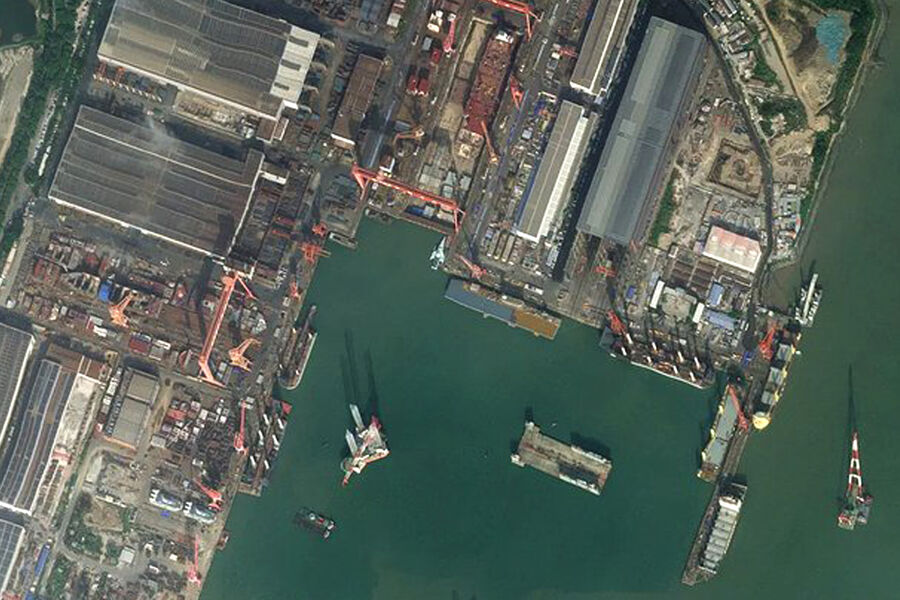
Recent satellite imagery indicates that China is constructing a new and unusual type of aircraft carrier at Guangzhou Shipyard International on Longxue Island in Guangdong province. This vessel, which features a large, open flat top, has caught the attention of military experts due to its atypical design and smaller size compared to China’s existing naval carriers.

Thomas Shugart, a former U.S. Navy submarine commander and fellow at the Center for a New American Security, remarked that this potential new aircraft carrier is “somewhat unusual” in shape and size, making it smaller than the Type 075 amphibious assault ships currently in service. Shugart speculated that it may be the world’s first “ostensibly civilian ‘aircraft carrier’ used as an oceanographic research vessel.”

The report about this new vessel first emerged from The War Zone, which highlighted China’s accelerating production of advanced warships, often rivaling U.S. carrier technology. Earlier this year, China’s most formidable aircraft carrier to date, the Fujian, underwent sea trials, with expectations that it could be operational by 2026. The Fujian, displacing 80,000 tons, surpasses the PLAN’s existing carriers, the 66,000-ton Shandong and the 60,000-ton Liaoning, placing it alongside the supercarriers operated solely by the U.S. Navy.

In addition to these developments, China is also making strides in constructing the world’s largest amphibious assault ship, the Type 076, which features an expansive flight deck comparable to the area of three U.S. football fields. This rapid naval expansion has propelled China’s fleet to over 340 warships, making it the largest navy globally.

The construction of this new aircraft carrier-type vessel may reflect China’s broader “military-civil fusion strategy,” which aims to integrate civilian and military capabilities. Shugart noted that such a vessel could enhance the People’s Liberation Army Navy’s operational and logistical capabilities, particularly in low-threat environments.

Carl Schuster, a former director of operations at the U.S. Pacific Command’s Joint Intelligence Center, suggested that the vessel could serve as a helicopter or drone carrier for the China Coast Guard, which increasingly acts as a quasi-military force. This new capability would enhance the Coast Guard’s surveillance operations in distant waters, particularly in the South China Sea and near Taiwan.

China’s military presence around Taiwan has intensified, with recent large-scale drills demonstrating unprecedented involvement from Coast Guard vessels in the region. Schuster remarked that the new vessel could significantly support Coast Guard operations, especially in quarantine enforcement.

Beyond military applications, the vessel could also play a role in humanitarian efforts, facilitating rapid relief and evacuation in non-combat situations or serving as a logistics support ship in amphibious operations.

Additionally, in a display of its growing naval capabilities, the Liaoning and Shandong carriers recently conducted their first-ever dual-carrier exercise in the South China Sea. This operation, described by state-run Xinhua news service, involved coordinated movements of fighter jets and support ships, aiming to enhance the combat capabilities of China’s aircraft carrier formations.

Experts believe that the collaboration between the Liaoning and Shandong carriers demonstrates the PLA Navy’s increasing complexity and coordination, potentially enabling more sophisticated fleet operations in the future.