Swapped at Birth: Two Women Discover Their True Identities

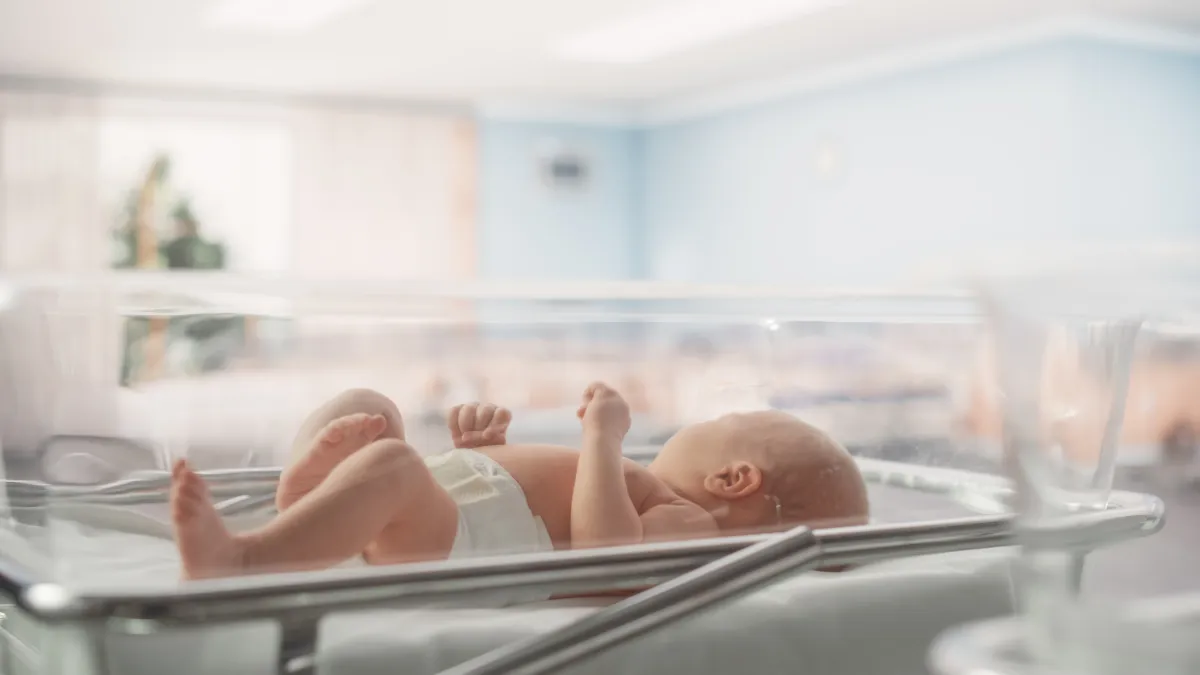
In a startling revelation, two families in the West Midlands are awaiting compensation following the first documented case of babies being switched at birth in NHS history. This unexpected twist of fate began with a simple DNA test that forced two women and their families to reconsider their entire identities.

Tony received a DNA home-testing kit as a Christmas gift in 2021 but left it unopened for two months. Finally, during a rainy February day, he decided to test the kit out. After sending in his sample, he didn’t give it much thought until he received the results one Sunday evening while on the phone with his mother, Joan.

Initially, the results aligned with his expectations, revealing information about his maternal lineage. However, the name listed as his sister was not Jessica, as he had always known her, but Claire. This unexpected finding triggered concerns for both Tony and his mother, who was in her 80s and living alone after her husband’s death.

An Unexpected Connection

Eager for answers, Tony contacted Claire through the DNA testing service’s messaging feature. Claire had also taken the same DNA test two years prior, prompted by her son. Her results had also raised questions about her familial connections, revealing a genetic link to a first cousin she did not recognize.

As Claire and Tony began exchanging details, they discovered that Claire was born around the same time and in the same hospital as Jessica. It soon became clear that they had been swapped at birth, a shocking realization given the rarity of such occurrences in the UK. According to a 2017 Freedom of Information request, the NHS had no documented cases of babies being sent home with the wrong parents prior to this incident.

The absence of such cases is largely attributed to protocols established in the 1980s, where newborns receive radio frequency identification (RFID) tags for tracking.

Embracing the Truth

Confronted with this life-altering news, Tony and Claire discussed their next steps. “The ripples from this will be enormous,” Tony acknowledged. Claire, however, expressed an eagerness to meet Tony and their biological mother.

When Tony finally shared the discovery with Joan, she was desperate for clarity about how such a mix-up could occur. Her memories of the day Claire was born remained vivid; she had been induced at a West Midlands hospital due to high blood pressure and had briefly held her long-awaited daughter before she was taken to the nursery for the night. The following day, she was handed Jessica, who had fair hair unlike the rest of the family, but Joan attributed this to distant relatives.

After 55 years, Joan longed to know more about Claire’s life. Before they could reach out to her, Tony and Joan had to inform Jessica about the revelation. Their relationship has since changed, as Jessica has not agreed to be interviewed regarding the situation.

A Moment of Connection

Only five days after the initial DNA results, Claire visited Joan. For years, she had unknowingly passed through the village where her biological mother lived. Upon arrival, Tony welcomed her with a warm, “Hi Sis,” and invited her to meet Joan.

Instantly, Claire felt a profound connection to Joan, exclaiming, “Oh my God, I’ve got your eyes! We have the same eyes. Oh my God, I look like someone!” Joan echoed this sentiment, remarking how Claire resembled her in her younger days. They spent time sharing family photos and stories, but when it came to Claire’s childhood, she chose to withhold the truth, revealing only that her upbringing had been challenging.

Claire faced practical challenges too, realizing that her birth certificate and identification documents were inaccurate due to the mix-up.

Seeking Accountability

Weeks after their discovery, Tony reached out to the NHS trust overseeing the hospital involved, explaining the DNA test findings. The trust accepted liability for what it termed an “appalling error,” but discussions regarding compensation have yet to be finalized, even two and a half years later.

Despite the turmoil, Claire and Joan have found common ground, bonding over shared interests and experiences. They have traveled together to explore their Irish roots and spent holidays side by side.

“I’d like to spend as much time as I can with them, of course, but that time is gone. It was taken away,” Claire reflected. While Claire now refers to Joan as “Mum,” Jessica’s relationship with Joan remains strained. Yet Joan emphasizes that her love for Jessica remains unchanged. “It doesn’t make any difference to me that Jessica isn’t my biological daughter. She’s still my daughter, and she always will be,” Joan affirmed.

 

Record-Breaking Prime Number Found by Former Nvidia Programmer

Luke Durant, a 36-year-old ex-Nvidia programmer, has achieved a remarkable feat in the realm of mathematics by discovering the largest known prime number, a massive 41,024,320 digits long, officially designated as M136279841. His relentless pursuit of prime numbers consumed nearly a year and involved significant personal investment.

Prime numbers, defined as whole numbers divisible only by 1 and themselves (e.g., 2, 3, 5, 7), have captivated mathematicians for centuries. Durant’s discovery marks the first major advancement in prime number exploration in nearly six years and is classified as a Mersenne prime. This specific category of primes, which can be expressed in the form 2^p – 1, is named after the French monk Marin Mersenne, who studied these intriguing numbers over 350 years ago.

Significance of Mersenne Primes

Mersenne primes hold a special place in the mathematical community, not only for their rarity but also for what their discoveries reveal about the capabilities of computational technology over time. “The historical record of the world’s largest prime tells us something about the historical capability of computers, and in particular it tells us something about the progress of humanity in this area,” explained Dr. Kevin Buzzard, a professor of pure mathematics at Imperial College London.

Durant’s groundbreaking finding was announced by the Great Internet Mersenne Prime Search (GIMPS) community on October 21. This project exemplifies citizen science, enabling nonspecialists to contribute to significant mathematical discoveries. Durant was inspired by the GIMPS community’s robust infrastructure and advanced technology, which motivated him to delve into prime number research.

The Journey to Discovery

Familiarizing himself with GIMPS software and leveraging cloud computing, Durant effectively created a supercomputer by coordinating multiple systems worldwide. GIMPS consists of volunteers from across the globe who run the project’s software on their personal computers to hunt for new primes, supported by mathematicians analyzing the results for future research.

For Durant, the motivation to pursue such massive prime numbers stems from a desire to explore the limits of computing and the physical universe. “I wanted to push the boundaries of the known universe in whatever small way I was able,” he stated, noting that these prime numbers represent some of the largest unique pieces of information in existence.

While extremely large prime numbers have little practical application today, they carry immense significance for those involved in the project. George Woltman, the founder of GIMPS, described the recent discovery as a “rare and beautiful gem” that may inspire future generations of mathematicians.

The Discovery Process

Durant received an initial alert about his prime discovery on October 12 while preparing for a trip. He quickly decided to confirm the new number’s primality, realizing its importance. GIMPS employs a probable prime test for initial verification, followed by several definitive tests on different hardware to confirm the primality of a new Mersenne prime.

The discovery was exhilarating for Durant, who felt privileged to be the one to uncover the latest Mersenne prime. “These numbers are so exceptionally large and rare now that I was fully prepared to fail after maybe still another year or two of effort,” he reflected.

Notably, Durant’s achievement marks the first Mersenne prime found using graphics processing units (GPUs). Known for their speed and efficiency in mathematical computations, GPUs are commonly found in everyday devices. Durant’s discovery used advanced GPUs, which excel in performing repetitive mathematical calculations quickly, significantly enhancing the search for new prime numbers.

Future Implications

Woltman anticipates that GPUs will play an increasingly vital role in discovering more primes in the future. He noted that while CPUs remain essential, GPUs are particularly adept at tackling complex number-crunching tasks, potentially leading to more significant discoveries.

Durant attributes much of his success to his education at the Alabama School of Mathematics and Science, which fostered his interests and technical skills. As a reward for his significant contribution, he is eligible for the $3,000 GIMPS research discovery award, which he plans to donate to a public high school to highlight the importance of education and support.


Russian Influence and “Dirty Money” Threaten Moldova’s Presidential Election Integrity

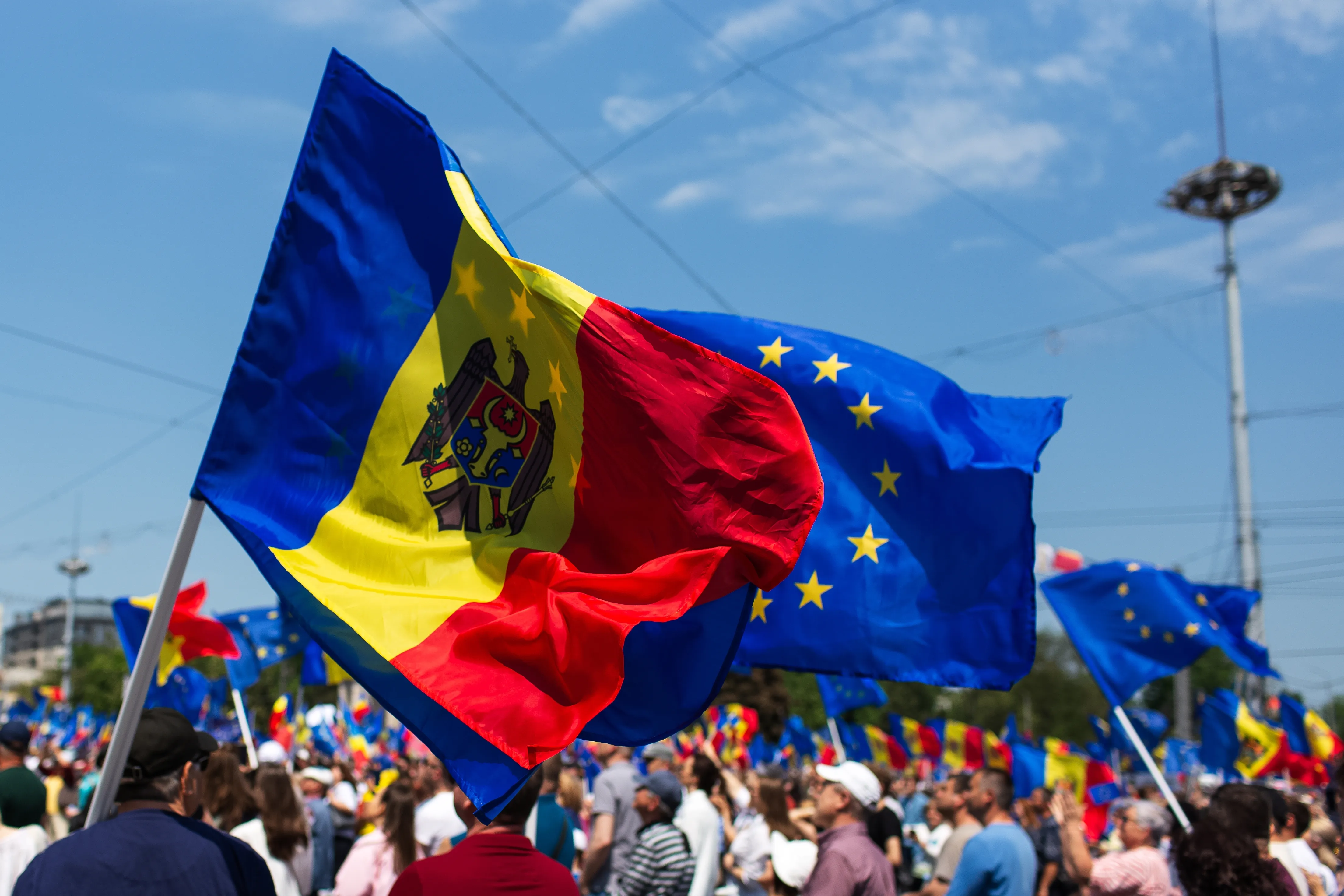
Moldova is gearing up for a pivotal second round of presidential elections this Sunday, which could decisively steer the country’s future towards European integration or pull it back under Kremlin influence. Pro-Western President Maia Sandu is seeking reelection after making significant strides towards the European Union amid the ongoing challenges posed by Russia’s war in Ukraine, which is alarmingly close to Moldova’s eastern border.

In the first round of voting, Sandu garnered 42% of the ballots, coinciding with a narrowly approved EU membership referendum that faced scrutiny due to allegations of widespread vote-buying linked to Kremlin interests. Sandu characterized this interference as an “unprecedented assault” on Moldova’s democracy, a sentiment echoed by analysts concerned about the integrity of the electoral process.

Her opponent, Alexandr Stoianoglo, is a former prosecutor general representing the pro-Russian Party of Socialists. If various Kremlin-aligned parties consolidate their support behind him, the upcoming election is expected to be highly competitive. During last week’s debate, Sandu, who has severed ties with Moscow, labeled Stoianoglo a “Trojan Horse” intended to advance Kremlin interests in Chisinau, Moldova’s capital.

The Risk of Electoral Manipulation

Valeriu Pasha, director of the think tank WatchDog.MD, warned that the election’s outcome hinges on whether citizens elect their president or if Russian “dirty money” tilts the scales in favor of a Kremlin-friendly candidate. Before the elections, Ilan Shor, a Russian-affiliated oligarch, reportedly proposed financial incentives for individuals supporting the pro-Russian candidate and attempted to obstruct the EU referendum. Sandu claimed this scheme aimed to buy the votes of approximately 300,000 citizens—nearly 10% of Moldova’s population.

Despite Stoianoglo polling below 10% prior to the elections, he managed to secure over 26% of the first-round votes. While both the Kremlin and Shor have denied any involvement, Moldovan officials remain vigilant against potential interference in the second round.

Addressing Domestic Discontent

Moldova’s recent electoral landscape also reveals a significant level of opposition to Sandu, who has faced multiple crises throughout her first term, including the COVID-19 pandemic, the fallout from the war in Ukraine, and a gas crisis that spiked inflation to over 30%, deepening poverty in one of Europe’s poorest nations.

Critics have also called out Sandu’s decision to schedule the EU referendum concurrently with the presidential election, arguing that it backfired. “The plan of the government was that the issue of European integration would bolster support for Maia Sandu,” noted Maksim Samorukov of the Carnegie Russia Eurasia Center. However, this strategy led to a decline in support for both Sandu and EU aspirations among discontented voters.

Stoianoglo aims to exploit this discontent, proposing a “reset” of relations with Moscow while simultaneously advocating for EU membership. However, this dual approach presents a contradiction, as it remains challenging to reconcile cooperation with Russia alongside a commitment to European integration.

Implications of a Russian-aligned Government

As the second round approaches, Moldovan officials brace for potential pro-Russian meddling. A defeat for Sandu would severely undermine Moldova’s aspirations for a European future and might worsen conditions in Transnistria, a breakaway region with around 1,500 Russian troops stationed there. Concerns persist that Transnistria could become an additional front in the ongoing war in Ukraine.

Pasha outlined the dire consequences of a Russia-aligned government, warning that it could lead to the dismantling of democratic institutions, including the erosion of free and fair elections, effectively transforming Moldova into a launching pad for further Kremlin operations against Ukraine.

This election follows closely on the heels of Georgia’s elections, another former Soviet state where Russia seeks to maintain influence. Following the victory of the increasingly autocratic Georgian Dream party, Ukrainian President Volodymyr Zelensky stated that Russia appears to have triumphed in Georgia, with Moldova potentially facing a similar fate. The results of this Sunday’s vote will be critical in determining the region’s trajectory.