Meta Superintelligence Labs Raids Silicon Valley for AI Talent Amid Competitive Surge

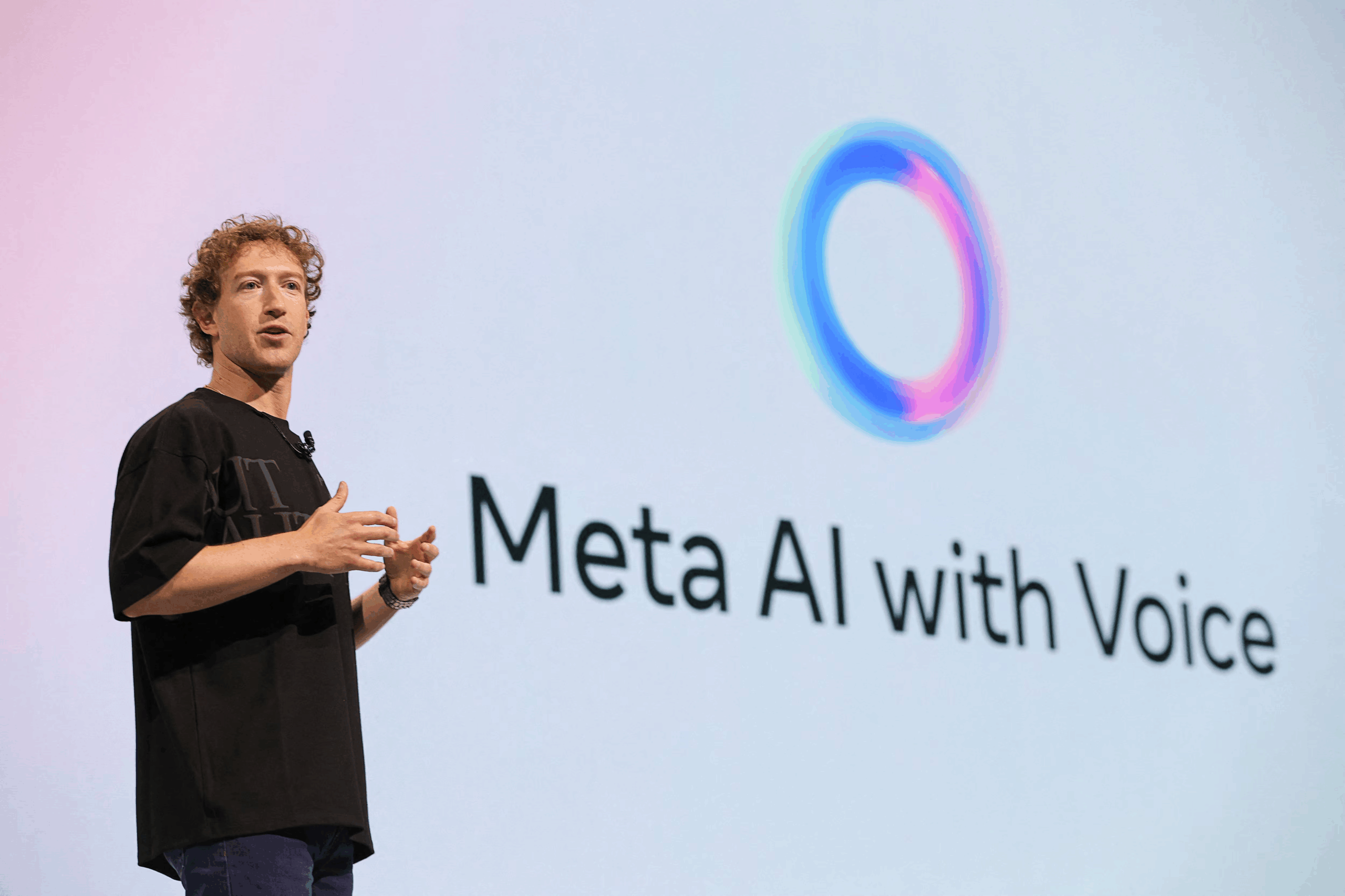
Meta Platforms is escalating the AI talent war by aggressively recruiting top researchers and engineers for its newly formed Superintelligence Labs, aiming to close the gap with leading AI firms like OpenAI, Google DeepMind, Anthropic, and rising Chinese rival DeepSeek.

The initiative follows a lukewarm response to Meta’s LLaMA 4 model and a string of senior staff exits. Now, under Mark Zuckerberg’s direction, Meta is attempting to reposition itself at the forefront of the generative AI revolution by poaching a wave of elite talent from competitors.

Notably, OpenAI CEO Sam Altman recently claimed that Meta was offering bonuses of up to $100 million to lure away his top employees.

Major Recruits to Meta’s AI Division

Here’s a rundown of the high-profile AI experts who have recently joined Meta’s Superintelligence Labs:

  • Alexandr Wang: Former Scale AI CEO and now Meta’s Chief AI Officer. Wang will oversee the entire Superintelligence initiative. Meta previously invested $14.3 billion in Scale AI.

  • Nat Friedman: Former GitHub CEO and co-founder of VC firm NFDG. He joins as co-lead of Superintelligence Labs, overseeing applied research and product direction.

  • Daniel Gross: Co-founder of Safe Superintelligence and another NFDG partner, now leading Meta’s AI product division.

  • Ruoming Pang: Former head of Apple’s Foundation Models team, he joined Meta with a multi-million-dollar compensation package.

  • Trapit Bansal: An OpenAI researcher who helped develop the influential “o-series” models. He previously worked alongside Ilya Sutskever.

  • Shuchao Bi: Formerly with YouTube and Google, and most recently OpenAI, Bi played a critical role in Google Ads and co-founded YouTube Shorts.

  • Huiwen Chang: Co-creator of GPT-4o at OpenAI and inventor of MaskGIT and Muse during her time at Google Research.

  • Ji Lin: Previously built multimodal reasoning systems and Operator stack at OpenAI.

  • Joel Pobar: Formerly with Anthropic, where he managed inference pipelines, and previously spent over a decade at Meta.

  • Jack Rae: Technical lead at Google DeepMind, he was a key figure behind the Gemini 2.5 reasoning capabilities.

  • Hongyu Ren: Helped develop GPT‑4o and several o-series models at OpenAI. Specialized in post-training strategies.

  • Johan Schalkwyk: A former Google Fellow, Schalkwyk joins Meta as Voice Lead, bringing deep speech AI experience.

  • Pei Sun: Previously at Google DeepMind, where he worked on Gemini post-training and coding; also a former key player in Waymo’s perception team.

  • Jiahui Yu: Co-creator of o3, o4-mini, GPT-4.1, and GPT-4o at OpenAI. Previously led a perception team at an AI startup.

  • Shengjia Zhao: A veteran OpenAI researcher, co-creator of ChatGPT, GPT-4, and multiple mini and o-series models.

Context and Strategic Implications

Meta’s aggressive recruitment comes as open-source alternatives lose steam and proprietary models from rivals dominate benchmarks and investor sentiment. The newly formed Superintelligence Labs aims to integrate core research, infrastructure, and applied AI product teams under one roof.

Zuckerberg’s strategy appears to blend cutting-edge foundational model development with AI-driven product innovation, positioning Meta to rival OpenAI’s GPT line, Anthropic’s Claude, and Google’s Gemini models not just in capability, but also in speed-to-market.

With billions of dollars invested and Silicon Valley’s top minds onboard, Meta is setting the stage for a renewed offensive in the AI arms race.


X Alleges Indian Government Ordered Blocking of Reuters Accounts Amid Censorship Concerns

X (formerly Twitter) has accused the Indian government of ordering the platform to block over 2,000 accounts, including two belonging to Reuters News, as part of what it calls “ongoing press censorship” in the country. The order was allegedly issued on July 3, 2025, under Section 69A of India’s Information Technology Act, which allows blocking content to protect national security and public order.

The accounts @Reuters and @ReutersWorld were inaccessible to users in India from Saturday night, displaying the standard “withheld in India in response to a legal demand” message. Both accounts were restored late Sunday following what X said was “public outcry.”

In a post on Tuesday, X stated:

“On July 3, 2025, the Indian government ordered X to block 2,355 accounts in India, including international news outlets like @Reuters and @ReutersWorld… Non-compliance risked criminal liability.”

The company added that it is “deeply concerned” about the implications for press freedom and is exploring all legal options.

Conflicting Statements from Indian Authorities

X’s public disclosure contradicts remarks made earlier by India’s Press Information Bureau, which had denied issuing any directive regarding the Reuters accounts. On Tuesday, the Ministry of Electronics and IT (MeitY) said no fresh blocking order was issued on July 3, nor was there any intention to block major international news platforms.

The ministry also accused X of “unnecessarily exploiting technicalities” by delaying the unblocking of the Reuters accounts after being advised to restore them over the weekend.

Reuters’ Response and Legal Ambiguity

Reuters has not clarified what content may have triggered the block or received a detailed explanation from the Indian government. The news agency stated it worked with X to have access restored in India but declined further comment as of Tuesday.

Section 69A — the legal provision invoked — does not require the government to publicly disclose blocking orders, creating a lack of transparency around takedown demands, especially when involving international press outlets.

X’s History of Legal Clashes in India

This incident is the latest flashpoint in X’s contentious relationship with the Indian government. In March 2025, the company filed a lawsuit challenging a new government portal it claimed would grant “countless” officials enhanced powers to demand content removals. The Indian government has defended the portal, saying it is merely a notification mechanism for reporting harmful content.

The main Reuters account has over 25 million followers, while ReutersWorld has more than 700,000, making their brief suppression in India particularly visible.

X says it complied with the blocking order only under legal threat, and restored the Reuters accounts only after pressure from public and governmental sources.

ReserveOne to Raise Over $1 Billion in Nasdaq Debut via Blank-Check Merger

ReserveOne, a new cryptocurrency investment firm backed by major industry players and led by seasoned financial and regulatory figures, is set to go public through a merger with M3-Brigade Acquisition V Corp, a blank-check company. The deal, expected to close in Q4 2025, will raise more than $1 billion, according to the announcement on Tuesday.

The company plans to manage a diversified portfolio of cryptocurrencies, including bitcoin, ethereum, and Solana, while aligning part of its holdings with the U.S. strategic crypto reserve — a concept hinting at a more structured and government-compliant crypto strategy.

The merger adds to a growing trend of integrating crypto with traditional equity markets. Inspired by the explosive valuation growth of MicroStrategy, which pivoted to a bitcoin-centric strategy in 2020, ReserveOne aims to attract institutional investors by offering equity exposure to digital assets without direct crypto ownership.

Leadership from Wall Street to Washington

Jaime Leverton, formerly CEO of crypto mining company Hut 8, will serve as ReserveOne’s CEO. She emphasized that the team’s “unique pedigree” — blending Wall Street, regulatory, and crypto expertise — sets the venture apart in a crowded space.

Sebastian Bea, who has held roles at BlackRock and Coinbase Asset Management, will act as President and Head of Investment. The board of directors will feature some of the biggest names in finance and crypto:

  • Reeve Collins, co-founder of Tether, will chair the board

  • Chinh Chu, ex-Blackstone dealmaker

  • Wilbur Ross, former U.S. Commerce Secretary under Donald Trump

Leverton noted that Ross, once skeptical of the crypto sector, has grown increasingly supportive over recent months.

Revenue Beyond Holding Crypto

ReserveOne aims to generate returns through institutional staking and crypto lending, providing periodic yields on locked-up digital assets. This diversified approach could help offset volatility in crypto markets.

Key backers of the deal include Blockchain.com and Kraken, which are contributing up to $750 million via a mix of equity and convertible debt.

The transaction leverages a SPAC structure, where M3-Brigade — a publicly traded shell company — raises capital to merge with a private firm like ReserveOne, which then becomes publicly listed without a traditional IPO.

The deal is seen as another step in mainstreaming crypto investment vehicles amid growing interest from institutional investors and traditional financial markets.