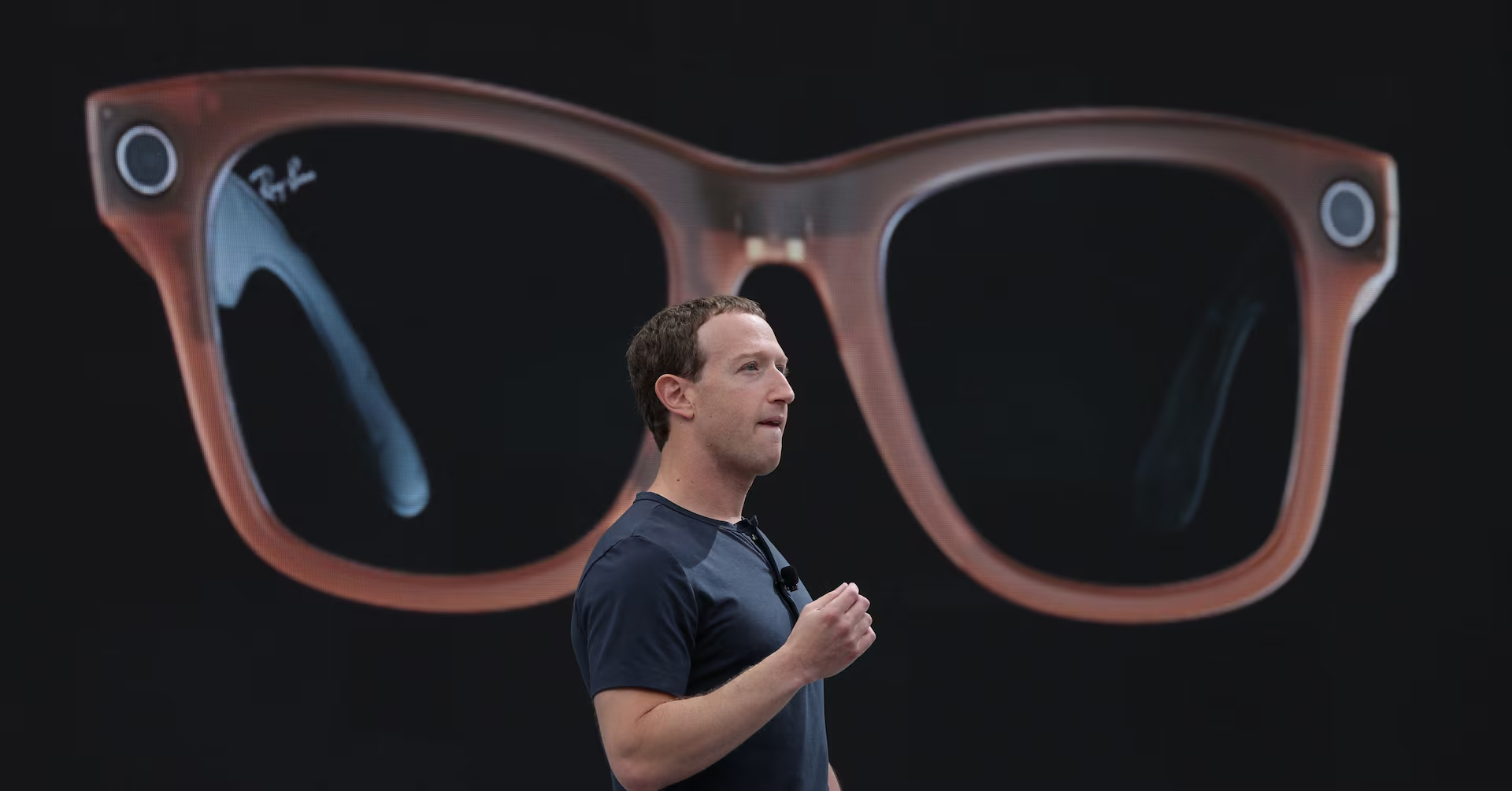
Meta unveils smart glasses with built-in display, pushing toward “superintelligence”

Meta Platforms introduced its first consumer-ready smart glasses with a built-in digital display at its annual Connect event in Menlo Park, California. CEO Mark Zuckerberg pitched the new Meta Ray-Ban Display glasses as the ideal gateway to the AI-powered “superintelligence” era, saying they can enhance communication, memory, and senses while allowing users to stay present in the real world.

The glasses feature a small digital screen in the right lens for notifications and basic tasks. Priced at $799, they will launch on September 30 and come with a wristband that translates hand gestures into commands such as answering calls or replying to texts. Despite some glitches during the demo, the product received applause from the developer audience.

Meta also launched Oakley Vanguard sports glasses for $499, designed for athletes with Garmin and Strava integration, nine hours of battery life, and real-time workout feedback. In addition, Meta refreshed its earlier Ray-Ban line with improved cameras and nearly double the battery life, now priced at $379.

Industry analysts remain cautious. While the Display glasses may not achieve strong immediate sales, they see the launch as an incremental step toward Meta’s more ambitious “Orion” glasses, targeted for 2027. Analysts compared the debut to Apple’s rollout of the smartwatch, suggesting glasses could evolve into an everyday alternative to the smartphone if Meta proves their value.

The unveiling comes amid Meta’s aggressive AI investments and recruitment push, but also at a time of heightened scrutiny over child safety on its platforms and past controversies around VR’s effects on younger users.

IDC forecasts AR/VR headsets and smart glasses shipments to rise nearly 40% in 2025, with Meta expected to drive growth—particularly through the more affordable Ray-Ban line co-developed with EssilorLuxottica.
Netskope hits $8.8 billion valuation in Nasdaq debut as shares surge

Cybersecurity firm Netskope debuted on the Nasdaq on Thursday with a market valuation of $8.79 billion, as its shares surged 21% above the initial offer price. The Santa Clara–based company priced its IPO at $19 per share, raising $908.2 million by selling 47.8 million shares. The stock opened at $23, reflecting strong investor appetite.

The U.S. IPO market is experiencing its strongest wave in years, with recent successes like Figma highlighting pent-up demand. Netskope’s appeal is fueled by rising corporate spending on cybersecurity, especially as AI-driven threats expand. “AI is right in our wheelhouse … enabling companies to leverage it safely,” CEO Sanjay Beri told Reuters.

Founded in 2012, Netskope delivers cloud-based security solutions that protect apps, data, and websites. The company had previously been valued at $7.5 billion in a 2021 ICONIQ-led funding round. Beri noted that the IPO was oversubscribed 20 times and that going public will expand Netskope’s visibility in the market.

Analysts caution that despite the sector’s strong demand, IPO performances remain mixed. Rubrik has soared since listing, while SailPoint has struggled. Netskope’s future success will hinge on its profitability path and ability to navigate a competitive market against rivals like Palo Alto Networks and Zscaler.

Microsoft expands Wisconsin AI data center investment to $7 billion

Microsoft announced plans to build a second major artificial intelligence data center in Wisconsin, raising its total investment in the state to more than $7 billion. The new $4 billion facility will join a $3.3 billion data center already under construction in Mount Pleasant, Racine County, first unveiled last year.

The initial data center is expected to open in 2026 and employ about 500 people, while the addition of the second will expand staffing to around 800. Microsoft says the combined site will eventually host the world’s most powerful AI supercomputer, linking together hundreds of thousands of Nvidia chips.

The development comes on land once earmarked for Foxconn’s highly publicized $10 billion factory, a project dramatically scaled back after initial political fanfare during Donald Trump’s presidency. When President Joe Biden attended Microsoft’s first announcement last year, he highlighted Foxconn’s retreat as a cautionary tale while framing Microsoft’s plan as a sign of renewed investment.

Microsoft said it will pre-pay for electrical infrastructure to avoid burdening local customers with higher power bills and will use Wisconsin’s cold climate for energy-efficient cooling. Annual water consumption will be capped at roughly the level of an average restaurant. To offset its energy use, the company will also build solar power elsewhere in Wisconsin, though Microsoft President Brad Smith noted new fossil fuel generation—specifically liquefied natural gas—will still be part of the mix.

While the 800 permanent jobs fall short of the thousands promised by Foxconn, Smith emphasized the importance of ongoing skilled labor positions, including pipefitters and electricians, needed for both construction and long-term maintenance.