Nvidia invests $900 million to acquire Enfabrica talent and technology

Nvidia has reportedly spent more than $900 million to bring Enfabrica’s CEO, Rochan Sankar, and other staff into the company, while also securing a license for Enfabrica’s technology, according to CNBC. The deal, a mix of cash and stock, closed last week, and Sankar has already taken up his new role at Nvidia.

Enfabrica, a Silicon Valley chip startup founded by former Broadcom and Alphabet engineers, specializes in solving one of AI’s biggest bottlenecks: interconnecting massive numbers of chips efficiently. Its networking technology allows around 100,000 AI chips to work together as if they were one computer—minimizing costly downtime caused when processors wait for data to move across networks.

The startup had previously raised $260 million in venture capital and in July unveiled a chip-and-software system designed to reduce memory chip costs in large-scale AI data centers. Nvidia’s acquisition echoes a recent trend of tech giants pulling in specialized startups and their leaders to strengthen AI infrastructure. Meta recently took a 49% stake in Scale AI while elevating its CEO Alexandr Wang to a strategic role, and Google hired top staff from AI code generation startup Windsurf after OpenAI attempted to acquire it.

Neither Nvidia nor Enfabrica has publicly commented on the reported deal.
How Nvidia’s $5B Intel stake could bolster Intel’s next-gen chipmaking

Nvidia’s (NVDA.O) $5 billion investment in Intel (INTC.O) may give the struggling chipmaker crucial momentum for its next-generation manufacturing efforts, even though Nvidia has not committed to using Intel’s factories for its own chips, analysts said.

The deal, announced Thursday, gives Nvidia a roughly 4% stake in Intel and creates a partnership to develop “multiple generations” of joint products. These products will link Intel’s central processors with Nvidia’s AI and graphics chips via NVLink, Nvidia’s high-speed proprietary interconnect.

Analysts say the collaboration could indirectly strengthen Intel’s 14A manufacturing process, set for 2027, which the company has warned may not move forward without sufficient customer demand. By tying its CPUs to Nvidia’s flagship products in ways unmatched by rivals, Intel could secure the production volumes needed to justify its costly investments.

“Any relationship with Nvidia at this point, while not explicitly talking about the foundry services, should be seen as a possible extension of the partnership in the future,” said Jack Gold, principal analyst at J.Gold Associates.

Under the agreement, Intel Foundry will supply CPUs for the joint products and package Nvidia chips for some of them. Engineers from both firms will collaborate to translate Nvidia’s designs into physical chips manufactured by Intel. This is notable given both companies often rely on Taiwan’s TSMC (2330.TW) for production.

“If these joint products prove popular, it gives me a higher degree of confidence that 14A continues, at which point Intel should have very good returns,” said Ben Bajarin, CEO of Creative Strategies.

For Nvidia, the deal offers better access to government and enterprise customers that run decades of Intel-compatible software. The main loser could be Advanced Micro Devices (AMD.O), which competes directly with both companies in CPUs and GPUs. “Having two major competitors combining their efforts is not exactly a positive outcome for AMD,” Gold noted.

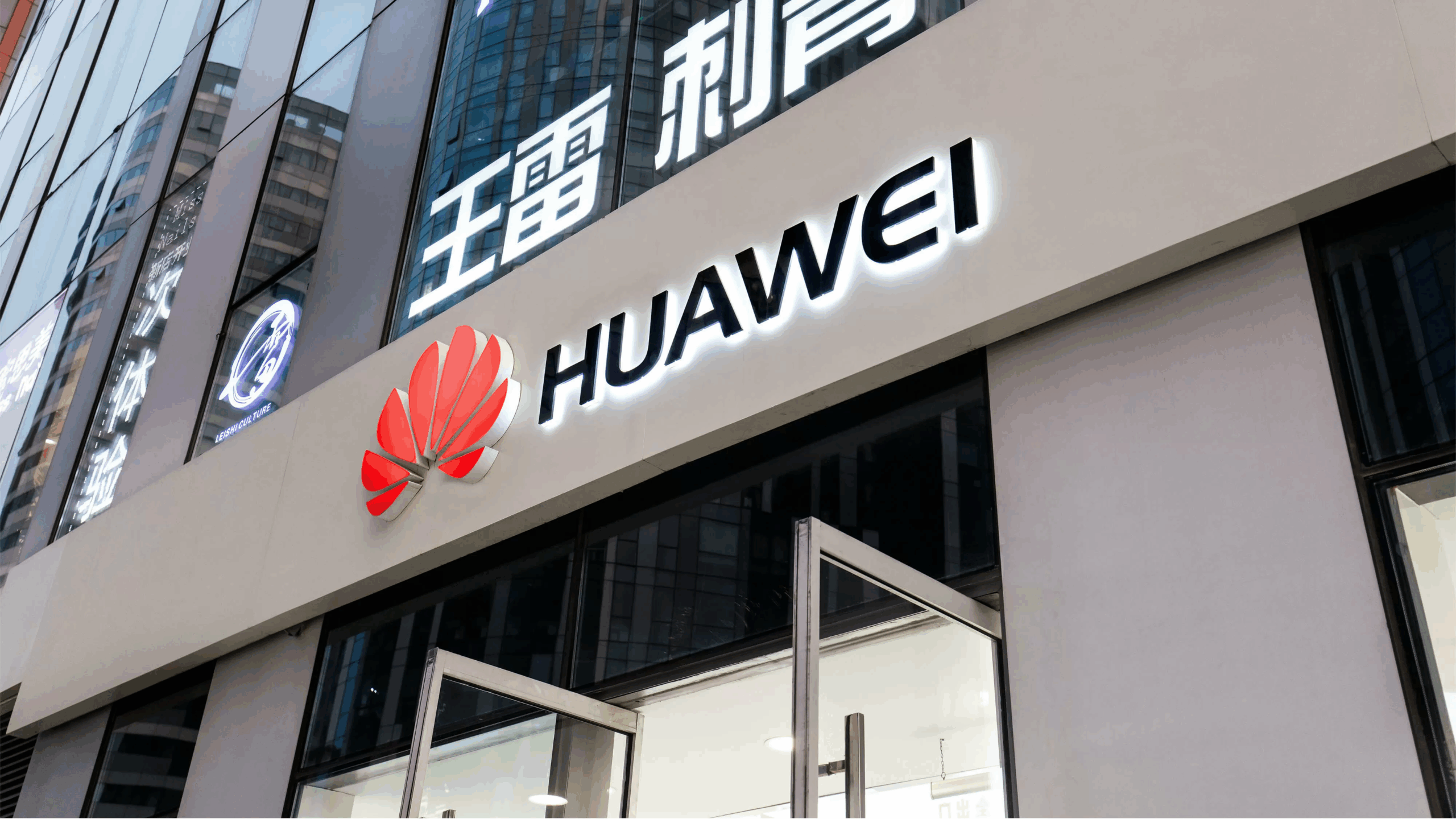
Huawei unveils chip and computing power roadmap in challenge to Nvidia

Huawei on Thursday publicly detailed its long-term semiconductor ambitions for the first time, pledging annual upgrades to its Ascend AI chips and unveiling plans for powerful computing systems designed to rival Nvidia (NVDA.O).

At its annual Huawei Connect conference in Shanghai, rotating chairman Eric Xu said the company will follow a one-year release cycle that doubles computing power with each generation. Huawei also revealed it has developed its own high-bandwidth memory, a technology currently dominated by South Korea’s SK Hynix (000660.KS) and Samsung Electronics (005930.KS).

Xu said Huawei’s upcoming Atlas 950 supernode, slated for launch in late 2026, will connect 8,192 Ascend chips, while the Atlas 960 in 2027 will link 15,488 chips. He claimed these systems will “far exceed” competitors on key performance metrics. Huawei will also release new Kunpeng server chips in 2026 and 2028.

The roadmap underscores China’s push to reduce reliance on U.S. suppliers amid intensifying trade and technology tensions. This week, Beijing accused Nvidia of antitrust violations and ordered major Chinese firms to halt purchases of its AI chips, according to the Financial Times. The moves come just before a scheduled meeting between Presidents Donald Trump and Xi Jinping.

Huawei first entered chipmaking in 2018 but retreated from public disclosures after U.S. sanctions in 2019 restricted its access to advanced chipmaking tools. Since then, analysts say the company has become a leader in China’s domestic semiconductor push. Its current AI flagship, the Ascend 910C, launched earlier this year, with the Ascend 950 due in 2025, followed by the 960 in 2027 and the 970 in 2028.

Despite these advances, engineers at Chinese tech firms acknowledge Nvidia’s chips remain more powerful. U.S. export controls continue to limit Huawei’s access to cutting-edge manufacturing technology, though Washington recently eased some restrictions on downgraded Nvidia chip sales.

“Huawei is leveraging its networking strengths and China’s power supply advantages to push aggressively into supernodes, offsetting lagging chip manufacturing,” said Wang Shen of Omdia.

Chinese semiconductor stocks rose 3.4% on Thursday after reports of the Nvidia purchase ban. Beijing’s foreign ministry responded cautiously, saying China remains open to dialogue to stabilize global supply chains.