Meta unveils smart glasses with built-in display, eyes AI “superintelligence”

Meta Platforms (META.O) launched its first consumer-ready smart glasses with a built-in display on Wednesday, expanding its Ray-Ban line as part of CEO Mark Zuckerberg’s push toward artificial intelligence “superintelligence.”

Unveiled at Meta’s annual Connect event in Menlo Park, California, the new Ray-Ban Display glasses include a digital screen embedded in the right lens for tasks such as notifications. Priced at $799, they will be available starting September 30 and ship with a wristband that translates hand gestures into commands like responding to messages or answering calls.

“Glasses are the ideal form factor for personal superintelligence, because they let you stay present in the moment while getting access to all of these AI capabilities that make you smarter, help you communicate better, improve your memory, improve your senses, and more,” Zuckerberg said.

The launch highlights Meta’s bid to stay competitive in the AI race, even as it lags behind rivals like OpenAI and Google (GOOGL.O) in advanced model development. The company is investing tens of billions of dollars in AI chips and talent as it pursues its long-term vision of “Orion” glasses, slated for 2027.

Meta also introduced Oakley Vanguard glasses aimed at athletes, priced at $499, with features like real-time performance stats synced to Garmin and Strava, nine-hour battery life, and availability from October 21. Its existing Ray-Ban line also received an update, with improved cameras and nearly doubled battery life at $379.

Despite the splashy debut, analysts expect modest near-term sales for the Display glasses. IDC research manager Jitesh Ubrani said the tech offered “great value” but noted the software still needs to mature. Forrester’s Mike Proulx compared the launch to Apple’s early smartwatch push—functional but still needing to prove everyday utility.

The debut comes as Meta faces heightened scrutiny over safety issues on its platforms, with regulators and whistleblowers raising concerns about the impact of its technologies on children.

Zuckerberg, who fumbled a live demo call on stage, laughed off the glitch. “I don’t know what to tell you guys. I keep on messing this up,” he said, drawing applause from the audience.

IDC forecasts global shipments of AR/VR devices and smart glasses without displays to grow 39.2% in 2025 to 14.3 million units, with Meta expected to drive much of the increase through its more affordable Ray-Ban line.
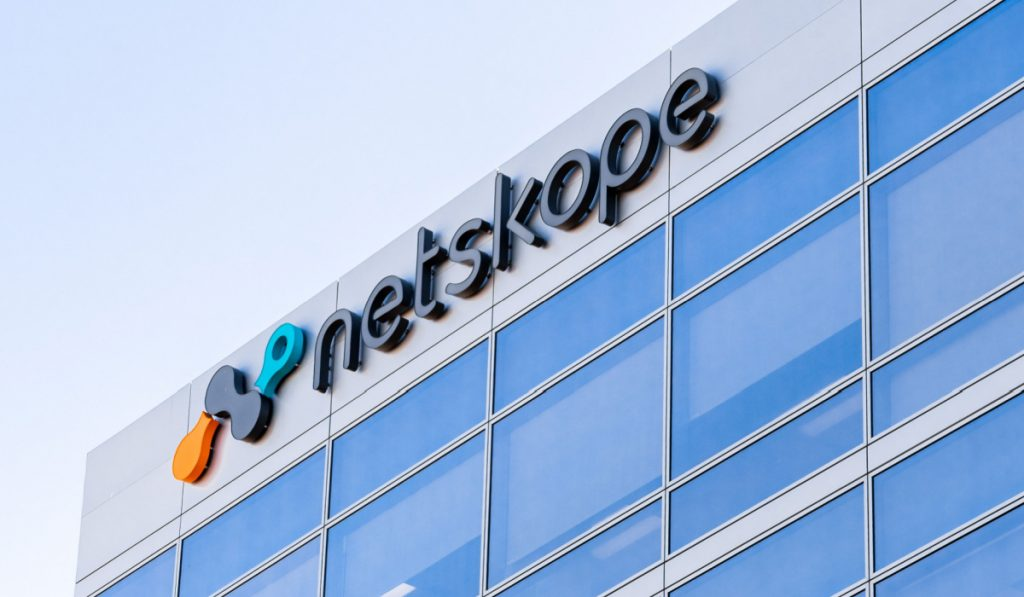

Netskope hits $8.8B valuation as shares soar in Nasdaq debut

Cybersecurity company Netskope reached a valuation of $8.79 billion on Thursday after its shares jumped 21% in their Nasdaq debut, extending a strong run of tech IPOs this year.

The Santa Clara-based firm’s stock opened at $23, well above the $19 offer price. Netskope raised $908.2 million by selling 47.8 million shares at the top of its $17–$19 range, in an offering that was oversubscribed 20 times, according to CEO Sanjay Beri.

Investor appetite for new issues has surged, with recent listings such as design software firm Figma (FIG.N) drawing strong demand. Netskope’s debut comes as enterprises step up cybersecurity spending amid rising AI-driven threats.

“AI is kind of right in our wheelhouse—securing it, enabling companies to say yes to leveraging it by putting guardrails around it,” Beri told Reuters, adding that going public will help boost Netskope’s visibility.

Founded in 2012, Netskope offers cloud-based security solutions that protect apps, websites, and data. The company was last valued at over $7.5 billion in a 2021 round led by ICONIQ. Its competitors include Palo Alto Networks (PANW.O) and Zscaler (ZS.O).

Analysts caution that Netskope’s long-term success will hinge on profitability, execution, and broader market conditions. “Cybersecurity remains one of the few tech sectors with clear structural demand, yet recent IPO performances have been mixed,” said Kat Liu of IPOX.

While Rubrik (RBRK.N) shares have surged since their debut last year, SailPoint (SAIL.O) has struggled to trade above its offer price. Netskope’s performance will be closely watched as a bellwether for the sector.

Microsoft raises Wisconsin data center investment to $7 billion with new AI hub

Microsoft (MSFT.O) announced Thursday that it will build a second large-scale artificial intelligence data center in Wisconsin, boosting its total investment in the state to more than $7 billion.

The $4 billion facility will be built alongside a $3.3 billion data center in Mount Pleasant, unveiled last year. The first site remains on track to open in 2026, employing about 500 people at its peak. Once the second center is completed, total employment is expected to reach about 800.

Microsoft said the expanded site will ultimately host the world’s most powerful AI supercomputer, linking together hundreds of thousands of Nvidia (NVDA.O) chips.

The Racine County location, between Milwaukee and Chicago, has been a political focal point since former President Donald Trump promoted Foxconn’s plan for a $10 billion factory there—a project later drastically downsized. At the launch of Microsoft’s first data center last year, President Joe Biden pointed to Foxconn’s retreat while emphasizing Microsoft’s long-term commitment.

To support the new project, Microsoft said it will pre-pay for electrical infrastructure to prevent higher utility rates in the region. The company will also deploy a state-of-the-art cooling system that leverages Wisconsin’s cool climate, reducing annual water consumption to that of an average restaurant. Solar power will be built elsewhere in the state to offset the data centers’ electricity use, though Microsoft President Brad Smith acknowledged that new fossil fuel generation, including liquefied natural gas, will also be required.

Smith said while permanent jobs will number in the hundreds, construction will create thousands of positions for skilled workers such as electricians and pipefitters. “All the things that we build need to be operated,” he told Reuters. “It needs to be maintained. These are good jobs.”