
Trump’s AI plan backs antitrust scrutiny, DOJ official says

U.S. antitrust authorities are closely watching the artificial intelligence industry for anticompetitive practices as part of the Trump administration’s broader push to secure American leadership in AI, a senior Justice Department official said on Thursday.

Speaking at Fordham University, Assistant Attorney General Gail Slater emphasized that protecting competition in the AI sector is key to fostering innovation. “The competitive dynamics of each layer of the AI stack and how they interrelate, with a particular eye towards exclusionary behavior that forecloses access to key inputs and distribution channels, are legitimate areas for antitrust inquiry,” she said.

One major focus will be access to data. Slater noted that a judge in Washington recently ordered Alphabet’s Google (GOOGL.O) to share some search data with rivals, including AI firms, to strengthen competition in online search. Google has said it will appeal the ruling.

Slater added that demand for data could fuel vertical integration—mergers between companies and their suppliers—especially in sensitive areas such as healthcare. “We may also increasingly see the desire to acquire data, or to deprive rivals of data, play a role in driving transactions,” she said.

Open-source AI models are another area of interest. Slater said such models can enhance competition, but stressed that “a truly open-source model must be one that is not unilaterally maintained by a single vendor that exerts unwarranted influence and impose restrictions.”

Concerns about AI competition were also voiced during President Joe Biden’s administration, which scrutinized Big Tech’s partnerships with AI startups. Trump’s AI plan, however, explicitly ties antitrust enforcement to the goal of strengthening U.S. dominance in the sector.

Judge rules Amazon violated shopper protection law in Prime case

Amazon (AMZN.O) violated U.S. consumer protection law by collecting Prime subscribers’ billing details before disclosing the service’s full terms, a federal judge ruled on Wednesday. The decision marks a partial victory for the Federal Trade Commission (FTC) as it prepares for trial against the retail giant.

U.S. District Judge John Chun said Amazon’s practices breached the Restore Online Shoppers Confidence Act (ROSCA), bolstering the FTC’s argument that the company used deceptive tactics to drive Prime signups. The agency alleges Amazon enrolled tens of millions of people in Prime without consent and made cancellation excessively difficult, frustrating millions of attempts to quit.

“Today’s decision affirms that Amazon defrauded American consumers by failing to disclose all terms of Prime before collecting consumer’s payment information,” said Chris Mufarrige, head of the FTC’s consumer protection bureau. “The Trump-Vance FTC intends to make them whole.”

The ruling also holds two Amazon executives potentially liable for violations if proven at trial, while preventing Amazon from arguing that ROSCA does not apply to Prime subscriptions.

Amazon rejected the allegations, saying it has always acted properly. “The bottom line is that neither Amazon nor the individual defendants did anything wrong,” a spokesperson said. “We remain confident that the facts will show these executives acted properly and we always put customers first.”

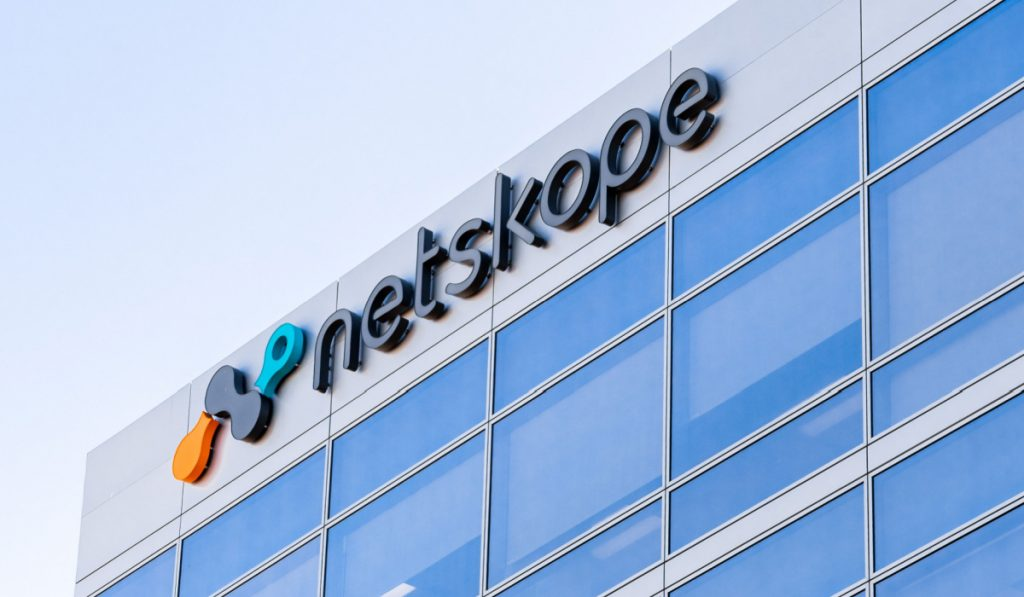
Netskope raises $908.2 million in U.S. IPO, valued at $7.26 billion

Cloud cybersecurity firm Netskope raised $908.2 million in its U.S. initial public offering, the company said on Wednesday. The Santa Clara-based firm sold about 47.8 million shares at $19 each, pricing at the top of its target range of $17 to $19 per share.

The IPO gives Netskope a valuation of $7.26 billion, slightly below the $7.5 billion it reached in a 2021 funding round led by ICONIQ. Investor demand for new listings has surged in recent weeks, following a string of strong debuts that helped ease earlier concerns tied to President Donald Trump’s tariffs, which had delayed several offerings earlier this year.

A wave of companies—from crypto platforms and fintechs to biotechs and coffee chains—has hit the market since Labor Day, signaling renewed appetite for IPOs. Earlier Wednesday, StubHub (STUB.N) also began trading on the NYSE in a closely watched consumer-focused debut.

Founded in 2012, Netskope develops cloud-based cybersecurity software that protects apps, websites, and data against digital threats. Cybersecurity has become a core budget item for global enterprises as attacks grow in frequency and sophistication.

Netskope reported revenue of $328 million in the six months ending July 31, up from $251 million a year earlier, while narrowing its net loss to $170 million from $207 million.

Morgan Stanley and J.P. Morgan led the offering, with Netskope set to trade on the Nasdaq under the ticker “NTSK.”