Australia Commits $1.1 Billion to Anduril “Ghost Shark” Undersea Drone Fleet

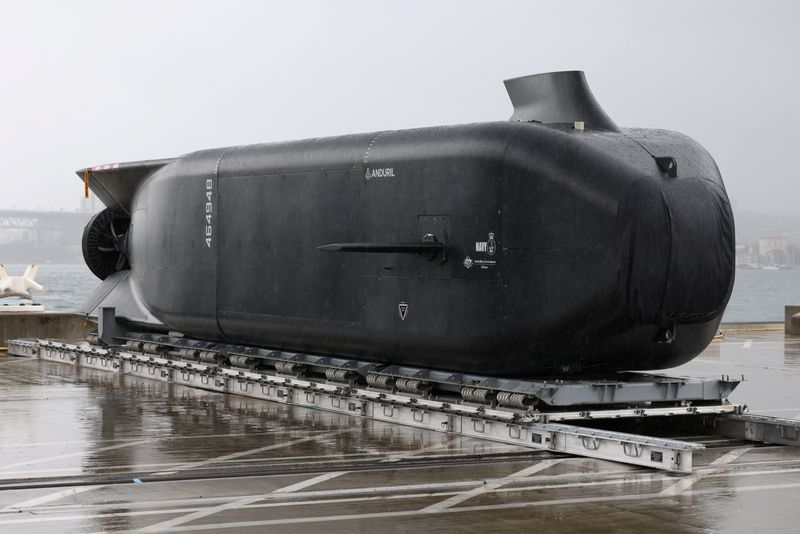
Australia will invest A$1.7 billion ($1.1 billion) in a fleet of Ghost Shark autonomous undersea vehicles, co-developed with U.S. defense startup Anduril Industries, to strengthen surveillance and long-range strike capabilities, Defence Minister Richard Marles announced Wednesday.

Key Details

  • Purpose: Ghost Sharks will complement Australia’s surface fleet and submarines, offering enhanced intelligence, surveillance, reconnaissance, and strike capabilities.

  • Timeline: First drones to enter service in January 2026.

  • Production: Dozens to be built at Anduril’s Australian facility in New South Wales, with export opportunities for allies.

  • Deployment: Can operate from bases, navy vessels, or be air-transported for forward deployment.

Strategic Context

  • Part of Australia’s efforts to counter China’s growing naval presence in the Indo-Pacific.

  • Complements AUKUS plans to acquire nuclear-powered submarines from the U.S. and UK in the 2030s.

  • Ghost Shark’s autonomous design addresses Australia’s challenge of defending its vast 3 million sq km northern ocean zone with a relatively small population.

Defence & Industry Perspectives

  • Navy Chief Mark Hammond: Ghost Shark enhances operations in the contested and opaque undersea battlespace.

  • Minister Pat Conroy: Highlights long-range strike capacity and export potential.

  • Anduril Industries: Describes the project as AI-powered coastal defense with rapid development achieved in just three years due to shared risk with the Royal Australian Navy.

Budget & Oversight

  • Funded within existing defence budget, despite U.S. President Donald Trump urging higher Australian defense spending under the AUKUS framework.

  • The contract covers delivery, maintenance, and ongoing development over the next five years.

Microsoft to Integrate Anthropic AI into Office Apps, Signaling Diversification Beyond OpenAI

Microsoft (MSFT.O) will begin using Anthropic’s AI models for some Office 365 applications, according to The Information. The move reflects Microsoft’s strategy to diversify its AI portfolio, after relying heavily on OpenAI for new features across Word, Excel, Outlook, and PowerPoint.

Key Details

  • Blended Approach: Microsoft will integrate both Anthropic and OpenAI models into Office features.

  • Performance Advantage: Developers found Anthropic’s Claude Sonnet 4 performed better than OpenAI’s GPT models for tasks such as:

    • Automating financial functions in Excel.

    • Generating visually appealing PowerPoint presentations.

  • Cloud Partnership: Microsoft will pay Amazon Web Services (AWS) — an Anthropic shareholder — to access the models, despite AWS being a cloud rival.

Microsoft’s AI Strategy

  • Continues to invest in OpenAI (over $13 billion to date) while:

    • Building its own AI models.

    • Integrating DeepSeek’s AI into Azure cloud.

  • Microsoft insists its long-term partnership with OpenAI remains intact, especially for frontier model development.

Market Impact

  • Office AI pricing remains unchanged, despite new integrations.

  • OpenAI’s recent GPT-5 launch marked an upgrade, but Anthropic’s Claude appears stronger in certain practical business applications.

  • Microsoft is expected to formally announce the Anthropic integration in the coming weeks.

Why It Matters

  • Shows Microsoft’s pragmatic approach to AI adoption: using the best-performing tools for different functions rather than betting on a single provider.

  • Strengthens Anthropic’s position in enterprise AI, while signaling that competition in applied AI features is intensifying.

Block Wins Dismissal of Shareholder Lawsuit Over 2021 Cash App Breach

Block (XYZ.N), the fintech company led by Jack Dorsey, has defeated a shareholder lawsuit tied to a 2021 Cash App data breach that exposed information from about 8.2 million users.

The Case

  • Shareholders accused Block of:

    • Inflating its stock price by failing to disclose weak data security before the breach.

    • Delaying disclosure until April 2022, nearly four months after the incident.

    • Misleading Afterpay shareholders ahead of its $29 billion acquisition of the BNPL firm in January 2022.

Court’s Ruling

  • U.S. District Judge Margaret Garnett in Manhattan dismissed the case.

  • She ruled there was no evidence Block intended to defraud investors.

  • General statements about data security risks were not guarantees of system safety.

  • Shareholders also failed to prove:

    • A unique link between alleged misstatements and the Afterpay deal.

    • That Block executives had a specific motive or benefit from the alleged omissions.

Context

  • Block has faced regulatory pressure over Cash App:

    • $80M settlement with 48 U.S. state regulators (Jan 2024).

    • $40M settlement with New York (Apr 2024).

  • Despite these issues, Cash App processed $283B in inflows in 2024 and had 57M monthly active users by year-end.

What’s Next

  • The case (In re Block Inc Securities Litigation, No. 22-08636) is now dismissed, though investors could still pursue an appeal.

  • For Block, the ruling removes a major legal overhang as it continues to scale Cash App and integrate Afterpay.