Stellantis and Mistral AI Deepen Partnership to Accelerate AI Integration

Carmaker Stellantis (STLAM.MI) and French artificial intelligence firm Mistral AI announced an expansion of their partnership to accelerate AI adoption across Stellantis’ global operations. The announcement was made during the Italian Tech Week in Turin on Wednesday, highlighting the companies’ shared vision of integrating AI into every aspect of automotive production and business management.

The two firms have already been collaborating for the past 18 months on pilot projects exploring the use of AI in vehicle manufacturing, logistics, and customer experience. The new agreement introduces two dedicated platforms — Innovation Lab and Transformation Academy — aimed at scaling these initiatives across Stellantis’ global business.

Two New Platforms to Drive AI Adoption

  • Innovation Lab: Will focus on deploying AI solutions in sales, marketing, and aftersales operations, with the goal of personalizing customer interactions, improving dealership efficiency, and optimizing service networks.

  • Transformation Academy: Will develop AI-driven tools for core production and operational processes, including quality control, supply chain optimization, and predictive maintenance.

According to the joint statement, the collaboration will allow Stellantis to “improve customer service, increase productivity, and enhance data-driven decision-making.” The companies also emphasized that their partnership reflects the strategic importance of AI in transforming the automotive industry, from vehicle design and production to customer engagement.

Stellantis — parent company of brands such as Peugeot, Fiat, Jeep, and Citroën — has made digital transformation a key pillar of its Dare Forward 2030 strategy, which seeks to turn the automaker into a more agile and technology-driven organization.
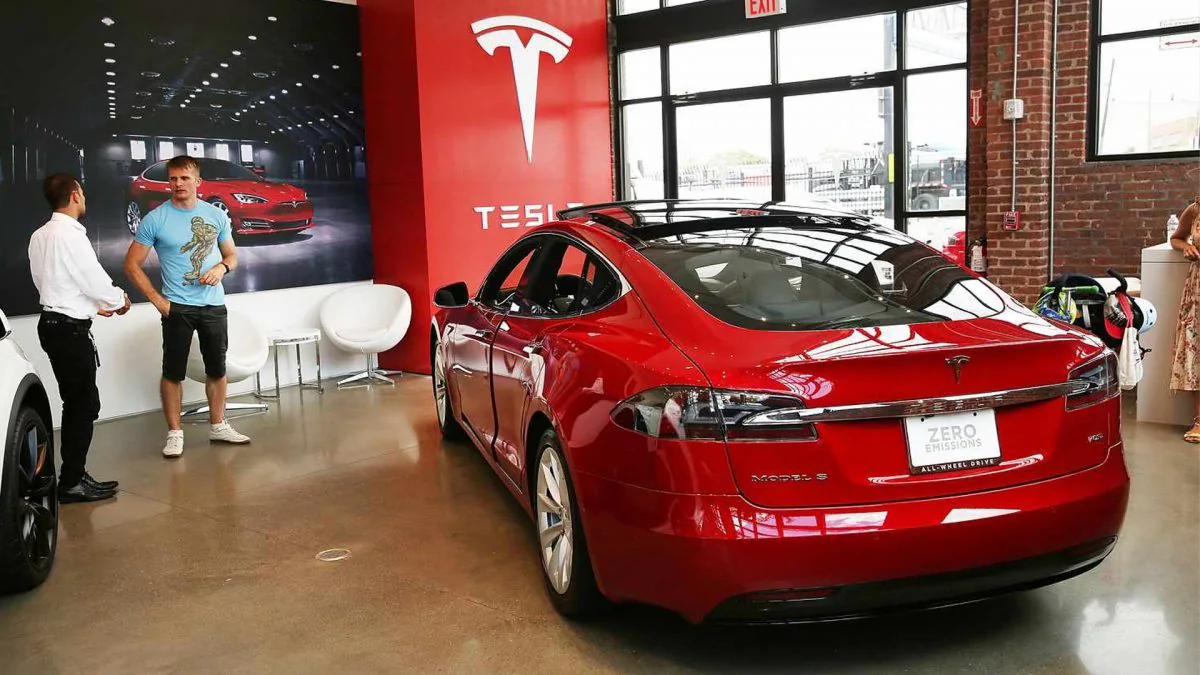
Tesla Raises U.S. Lease Prices After EV Tax Credit Expiration

Tesla (TSLA.O) has increased lease prices across all its models in the United States following the expiration of the $7,500 federal electric vehicle (EV) tax credit, which had significantly boosted EV demand over the past two years. The company’s website showed the new rates on Wednesday.

The price adjustment comes after Congress allowed key EV incentives to expire on September 30, ending tax breaks of $7,500 for new EVs and $4,000 for used EVs that were introduced under earlier clean energy legislation. Tesla and other automakers had used these credits to offer more attractive leasing options to consumers.

Higher Lease Prices Across the Lineup

Tesla’s Model Y, its best-selling vehicle, now leases for $529–$599 per month, up from $479–$529 previously. The Model 3, which recently underwent a design refresh, saw lease prices climb to $429–$759 per month, from $349–$699 before.
Despite these leasing changes, vehicle purchase prices remain unchanged on Tesla’s official site.

Market Pressure Mounts as Incentives Fade

The expiration of federal tax credits threatens to cool U.S. demand for electric vehicles, which had already shown signs of slowing after years of rapid expansion. Industry executives and analysts have warned that the loss of subsidies could deter new buyers, especially as higher interest rates and economic uncertainty weigh on household budgets.

According to Cox Automotive, Tesla’s U.S. market share fell to 38% in August, its lowest level in nearly eight years — a sharp decline from the over 80% share it once commanded. The fall reflects growing competition from established automakers like Ford, Hyundai, and GM, as well as new entrants from China and Europe.

Analysts said the lease price hike may further limit Tesla’s competitiveness in the short term, especially as rivals introduce lower-cost EV models and attractive financing options to capture former Tesla customers.

From Riyadh to Silicon Valley — How Electronic Arts Became the Centerpiece of Saudi Arabia’s Gaming Ambitions

What began as an idea inside a spring brainstorming session between Silver Lake’s Egon Durban and Jared Kushner, son-in-law of U.S. President Donald Trump, has evolved into the world’s largest leveraged buyout — a $55 billion deal for Electronic Arts (EA) that now sits at the heart of Saudi Arabia’s Vision 2030.

Backed by the Public Investment Fund (PIF), the transaction grants the Saudi sovereign wealth fund a majority stake in EA, while Kushner’s private-equity firm Affinity Partners will own about 5 percent. According to LSEG data, PIF already held nearly 10 percent of EA before the acquisition. The buyout gives Silver Lake a stronger foothold in global gaming and entertainment, and provides Saudi Arabia with a cultural asset aligned with its plan to diversify beyond oil.

Kushner reportedly played a key role in brokering the deal. “I grew up playing EA games and now play them with my kids,” he said in the announcement. Silver Lake’s Durban called EA “a special company” and promised to expand its reach and innovation.

Saudi Arabia’s Gaming Power Play

Crown Prince Mohammed bin Salman, a self-proclaimed gaming enthusiast, has said he wants the kingdom to become “the global hub for games and esports” by 2030. Gaming has already generated double-digit annual returns for PIF, which is deploying an estimated $38 billion through its Savvy Games Group. PIF’s gaming investments include stakes in Activision Blizzard, Nintendo, and Take-Two Interactive.

“This isn’t just a spreadsheet deal,” said Joost van Dreunen, professor at NYU Stern. “It’s Saudi Arabia buying time, talent, and cultural clout in one shot. EA gives them the trophy IP house for Vision 2030.”

Expanding the Ecosystem

Beyond the buyout, EA will reportedly partner with Saudi Arabia’s new national esports tournament, while Qiddiya, a $1 trillion PIF “giga-project” near Riyadh, plans to host 10 million annual visitors in a gaming-focused entertainment district. The project aims to incubate 30 leading video-game studios by the end of the decade.

Financing the Megadeal

The consortium is investing $36 billion in equity, including PIF’s existing stake, and securing $20 billion in debt led by JPMorgan. EA shareholders will receive $210 per share in cash, a 25 percent premium over the pre-deal price on September 25.

While the merger allows 45 days for a higher bid, analysts see that as unlikely. “Matching it would require deep pockets and tolerance for scrutiny,” said van Dreunen. “Private equity would struggle to justify the leverage.”

Despite the deal’s scale, experts do not expect major regulatory barriers. “Given current Western-Saudi relations, reviews are likely to be box-ticking exercises rather than resistance,” noted David O’Hara of MKP Advisors.

EA’s integration into the Saudi-backed consortium underscores a pivotal shift — from Silicon Valley to Riyadh, gaming has become both a cultural export and a geopolitical tool in the kingdom’s quest to lead the global entertainment future.