
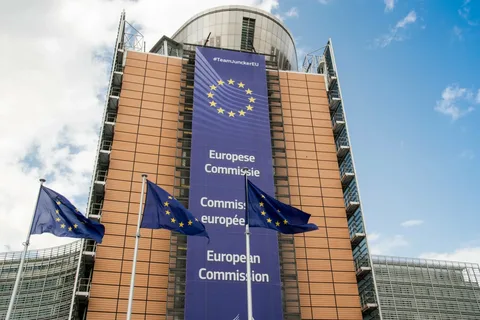
The European Commission said on Friday that the EU’s landmark crypto regulation, MiCA, already provides a robust framework to handle risks linked to stablecoins, pushing back against the European Central Bank’s call for stricter safeguards.
Stablecoins—digital tokens tied to fiat currencies like the U.S. dollar or euro—have grown rapidly in recent years, prompting debate over how they should be regulated. While the United States has moved to promote their use, the ECB has warned that some models could threaten financial stability.
At the center of the dispute is whether multinational stablecoin issuers can treat tokens created inside and outside the EU as interchangeable under MiCA’s “multi-issuance” model. In a letter to EU Commissioner Maria Luis Albuquerque this week, six crypto trade groups, including Circle, urged Brussels to clarify that such structures are allowed.
A Commission spokesperson told Reuters that MiCA already provides “a proportionate framework for addressing risks” and said guidance confirming how multi-issuance operates will be published “as soon as possible.”
The ECB’s Systemic Risk Board, chaired by Christine Lagarde, argues that cross-border token issuance could lead to runs on EU reserves if holders outside the bloc attempt to redeem with EU entities during market stress. Stablecoin issuers, however, maintain that adequate reserve management can prevent such instability.
Analysts at J.P. Morgan said this week that 99% of all stablecoins are pegged to the U.S. dollar, noting that the sector’s global expansion could further boost demand for the greenback.