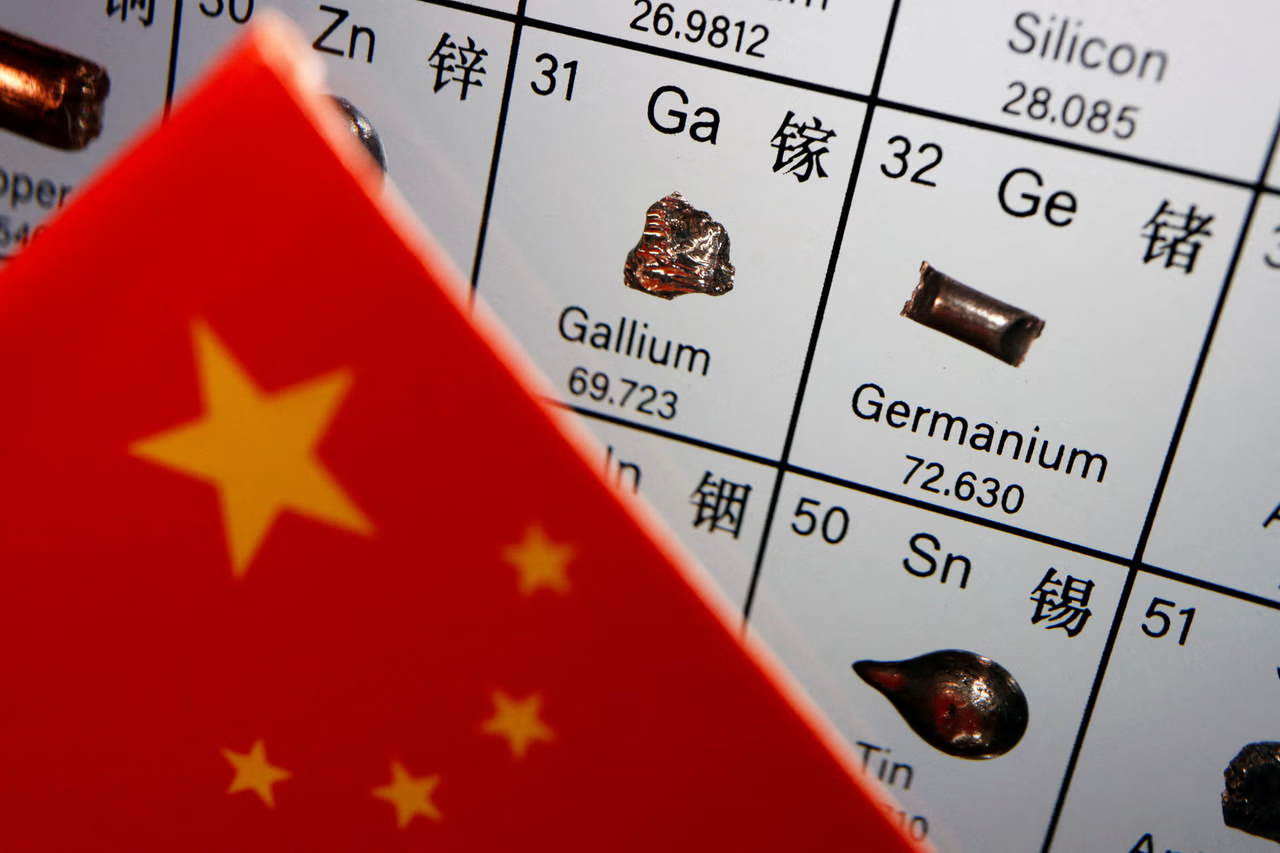
China Bans Export of Key Minerals to U.S., Escalating Trade Tensions

China’s Ministry of Commerce has imposed a ban on exporting critical minerals—gallium, germanium, and antimony—to the United States, citing national security concerns. The move, effective immediately, targets materials with dual-use applications in military and civilian sectors, further intensifying trade frictions between the world’s two largest economies.

Key Details of the Export Ban

  1. Minerals Impacted
    • Gallium and germanium are essential for semiconductors, infrared technology, fiber optics, and solar cells.
    • Antimony has applications in ammunition, infrared-guided missiles, nuclear weapons, batteries, and night vision technology.
  2. Stricter Reviews on Graphite
    Exports of graphite items to the U.S. will now undergo enhanced scrutiny to ensure compliance with end-use restrictions.
  3. Production and Market Implications
    • China dominates global production, contributing 98.8% of refined gallium, 59.2% of refined germanium, and 48% of globally mined antimony in 2023.
    • The announcement has already caused a significant spike in antimony trioxide prices, surging by 228% this year to $39,000 per metric ton.

Strategic Context

  • U.S. Semiconductor Restrictions
    The ban follows Washington’s recent curbs on exports to China’s semiconductor industry, targeting 140 companies, including chip equipment maker Naura Technology Group.
  • National Security Framing
    Both nations frame their actions as necessary for national security. China’s export restrictions align with prior measures to limit critical mineral access, a vital component of advanced technology and defense.
  • Economic Impacts
    Supply chains in the West, already under strain, face further disruption. “This is a considerable escalation of tensions in supply chains where access to raw materials is tight,” said Jack Bedder, co-founder of consultancy Project Blue.

Broader Trade Tensions

China’s move occurs amid increasing tensions as the U.S. enacts policies to limit China’s access to advanced technologies. The export ban coincides with President-elect Donald Trump’s plans for aggressive tariffs on Chinese goods, potentially signaling another round of trade wars akin to his previous administration.

Global Reaction and Outlook

  • Market Adjustments
    Western countries may intensify efforts to discover alternative sources for these minerals, with exploratory projects expected to increase globally.
  • Strategic Risks
    The restriction underscores growing economic decoupling, with potential ramifications for global industries reliant on these materials.
  • Future Negotiations
    Both nations are expected to leverage these policies as bargaining tools in upcoming trade negotiations.


 

UN Plastic Treaty Talks Stalled Over Key Divisions

The fifth session of the United Nations Intergovernmental Negotiating Committee (INC-5) in Busan, South Korea, concluded without an agreement on a global treaty to combat plastic pollution. The session, which was expected to produce a legally binding treaty, highlighted sharp divisions between nations advocating for a reduction in plastic production and those favoring a focus solely on managing plastic waste.

Major Points of Contention

  1. Plastic Production Cap
    Over 100 countries, led by Panama, pushed for a global reduction target on plastic production, citing the need for robust measures to address the escalating pollution crisis. On the other side, a small bloc of petrochemical-producing nations, including Saudi Arabia, strongly opposed production caps, focusing instead on managing waste and using procedural tactics to delay progress.
  2. Chemicals and Product Management
    Discussions around regulating harmful chemicals used in plastics and overseeing plastic product lifecycle management also failed to reach consensus. A UNEP report identifies over 3,200 chemicals of concern in plastics, underscoring the health risks, particularly to women and children.
  3. Financing Mechanisms
    Developing nations sought financial commitments to implement treaty obligations, which remain unresolved, further widening the gap between stakeholders.
  4. Procedural Challenges
    Negotiations were hampered by the UN’s consensus process, which allowed dissenting nations to stall progress. Some delegations, including Senegal, criticized the absence of voting mechanisms, calling it a “big mistake.”

Postponement and Reactions

The INC-5 talks will resume as INC-5.2 at a later date, but the delay has sparked frustration:

  • Panama’s Delegation Head, Juan Carlos Monterrey Gomez: “Every day of delay is a day against humanity. Postponing negotiations does not postpone the crisis.”
  • Rwanda’s Juliet Kabera: Urged for a treaty “fit for purpose” and warned against reliance on voluntary measures.

Environmental groups, such as GAIA, expressed skepticism about achieving success in the next round, while the International Council of Chemical Associations emphasized the complexity of the issue and called for inclusive solutions.

Broader Context

Plastic production is projected to triple by 2050, exacerbating pollution that already impacts air, food, and human health. The failure of INC-5 echoes frustrations seen at the recent COP29 summit, where procedural obstacles also hindered progress on climate finance and fossil fuel commitments.

Looking Ahead

The postponement of decisions raises doubts about the treaty’s prospects. However, negotiators emphasized the urgency of resuming talks, as the stakes grow higher with every delay.

Indonesia Pushes Apple for Bigger Investment to Sell iPhone 16

The Indonesian government is urging Apple to increase its proposed $100 million investment as the tech giant negotiates clearance to sell its iPhone 16 in the country. The new model currently fails to meet Indonesia’s stringent 40% domestic content requirement, which aims to bolster local industries and create jobs.

Current Proposal

Apple’s $100 million proposal includes:

  • Establishing a research and development center program.
  • Launching a professional development academy.
  • Commencing production of AirPods Max accessory components, including mesh, by July 2025.

While the offer is a significant increase—10 times higher than earlier proposals—Indonesian officials believe it is insufficient.

Government’s Stance

A spokesperson for Indonesia’s Ministry of Industry, Febri Hendri Antoni Arif, emphasized the need for a larger investment to bolster the country’s manufacturing sector. He highlighted the domestic industry’s readiness to support the production of Apple components, such as chargers and accessories.

“From the government’s perspective, we want this investment to be larger,” Arif told state media.

Market Potential

Although Indonesia accounts for a small fraction of Apple’s global market, the nation offers tremendous growth opportunities due to:

  1. Population Size: Indonesia is the world’s fourth-largest country by population.
  2. Demographics: A young, tech-savvy population with increasing digital literacy aligns with Apple’s global sales strategy.
  3. Supply Chain Diversification: Indonesia’s manufacturing and assembly capabilities complement Apple’s efforts to reduce reliance on existing production hubs.

Le Xuan Chiew, an analyst from Canalys, notes that Apple’s proposal reflects its long-term approach to securing a foothold in this promising market.

Next Steps

  • Apple is expected to revisit its offer to meet Indonesia’s demands for a “fair” commitment.
  • The negotiations are seen as pivotal for Apple’s broader supply chain diversification and regional sales strategy.

As Indonesia leverages its regulatory framework to attract investments, Apple faces a balancing act of complying with local demands while safeguarding its global operations.