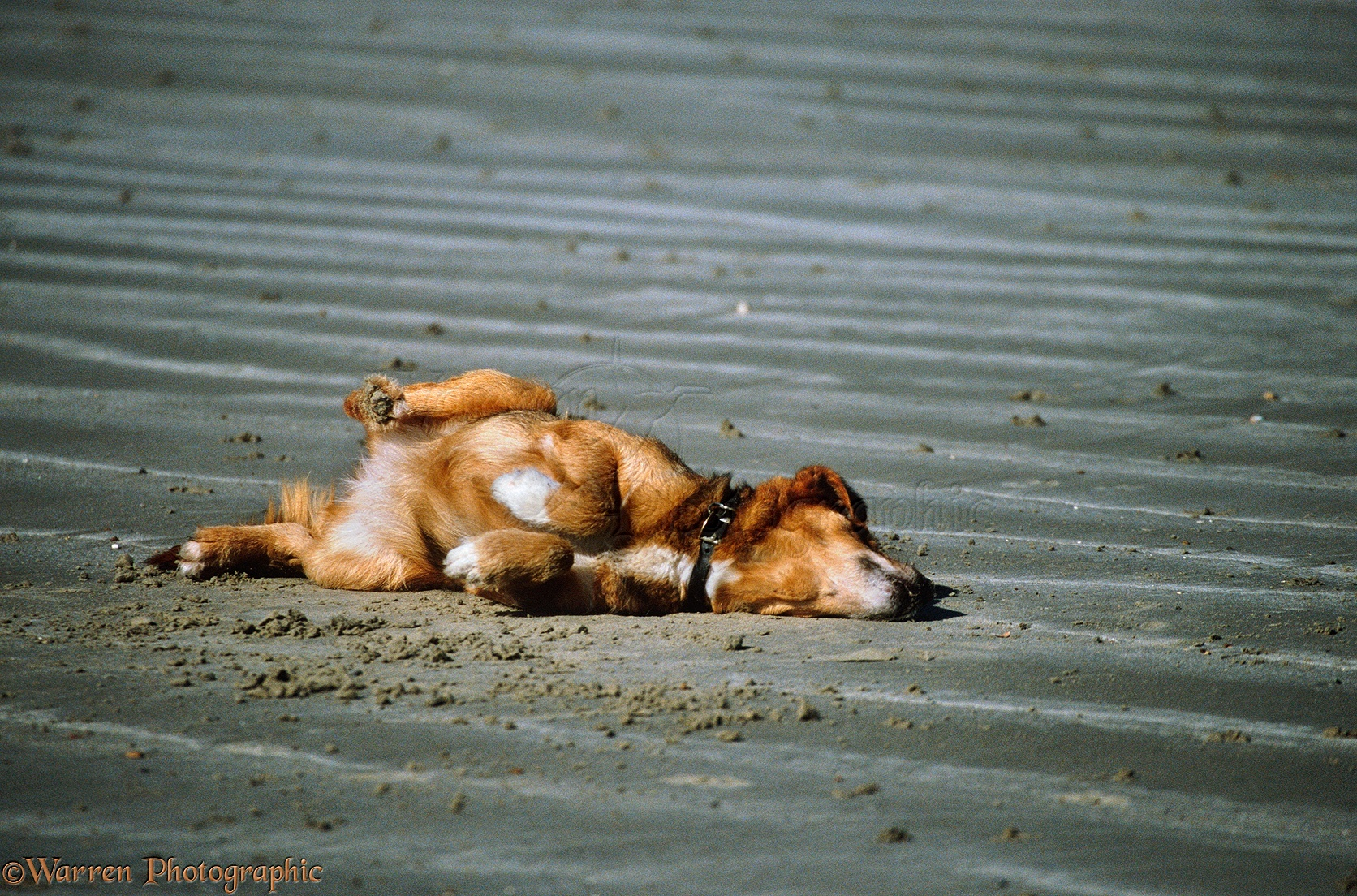
The Mysteries Behind Dogs’ Fascination with Rolling in Feces

Dogs’ puzzling habit of rolling in foul-smelling substances, such as animal feces, has intrigued scientists and pet owners alike. This behavior, which can leave dogs smelling of unpleasant odors, may have deeper evolutionary or social roots than initially assumed.

Simon Gadbois, a researcher studying wild canids in Nova Scotia, Canada, often witnessed his border collie, Zyla, rolling in beaver feces during their fieldwork. Despite the strong odor, Zyla’s ability to track and perform tasks was unaffected. Gadbois, who specializes in understanding how canids experience their environment through scent, remains perplexed by this behavior.

Humans domesticated dogs from wolves around 23,000 years ago, yet our understanding of why dogs enjoy rolling in feces is limited. One theory suggests that this behavior is an evolutionary remnant from their wild ancestors. For wolves and other canids, rolling in scents could have originally served as a form of camouflage, masking their own scent while hunting. However, a 1986 study on captive wolves found that wolves preferred to roll in artificial odors and were less interested in herbivore feces, challenging the idea that scent masking is the primary purpose.

The behavior may also serve as a method of social communication. Pat Goodmann, an animal curator at Wolf Park in Indiana, observed that wolves rolled in various scents, including those of other predators. This might indicate a form of communication or a strategy to avoid other predators, rather than simply disguising their scent from prey.

Further research by Max Allen, an ecologist, revealed that grey foxes in California rubbed themselves with the urine of mountain lions, possibly using the scent as camouflage to evade coyotes. This supports the idea that scent-rolling might help smaller animals avoid larger predators.

For domestic dogs, the behavior might also be tied to social interactions. Just as spotted hyenas and Ethiopian wolves roll in strong odors after meals, dogs might roll in feces to share interesting scents with their human families or pack members. The act of scent-rolling could strengthen social bonds and communicate information about food or territory.

Recent studies suggest that scent-rolling might be part of a more complex communication system. For example, wolves in a Croatian zoo showed selective interest in unusual scents, indicating that scent-rolling could help communicate with other pack members.

Roberto Cazzolla Gatti, a biologist, proposes that scent-rolling might serve multiple functions, including social bonding and identity recognition. Dogs might also find pleasure in strong smells, similar to humans enjoying perfumes. This sensory stimulation could be akin to humans wearing colorful clothing for aesthetic pleasure.

In summary, while the exact reasons behind dogs’ fascination with rolling in feces remain unclear, the behavior likely involves a mix of evolutionary traits, social communication, and sensory enjoyment. As researchers continue to explore these aspects, we might better understand why our canine companions revel in such odorous activities.


 

Why the Value Meal is Making a Comeback

Amid rising fast-food prices and growing consumer sentiment that fast food has become a luxury, major chains like McDonald’s, Burger King, and Wendy’s are reintroducing value meals to attract cost-conscious customers. A recent LendingTree survey found that nearly 80% of Americans perceive fast food as a luxury and are dining out less frequently.

To counteract this trend, these fast-food giants are reviving their value meal offerings, reminiscent of past strategies that emphasized affordability. This move has sparked what analysts describe as a “value menu war,” as chains vie to lure back budget-conscious diners.

Sara Senatore, a senior analyst at Bank of America Securities, notes that the focus on value is a return to familiar industry practices. “Value has always been crucial in this industry,” she explains. “We’re seeing a bit more of a return to normal.”

Early indications suggest that the strategy is effective. McDonald’s, for instance, reports increased customer traffic and has extended its value meal promotions. Restaurant analysts predict that these value deals will persist to continue drawing in cost-sensitive consumers while encouraging purchases of regular-priced items.


Russia Demands More Objectivity from IAEA After Nuclear Plant Visit

Russia has called on the International Atomic Energy Agency (IAEA) to adopt a “more objective and clearer” stance on nuclear safety following a visit by IAEA chief Rafael Grossi to a nuclear plant near ongoing hostilities with Ukraine. The call for a more decisive stance came a day after Grossi’s inspection of the Kursk nuclear facility, which is situated close to the area where Ukraine has recently conducted military incursions.

During his visit, Grossi highlighted the risks of a potential nuclear accident at the Kursk plant, noting damage from a recent drone strike, which Russia has attributed to Ukraine. He refrained from assigning blame but emphasized the heightened risk to the facility. Russian Foreign Ministry spokesperson Maria Zakharova criticized the IAEA for not presenting a clearer position on nuclear safety, though she denied that Russia was seeking a pro-Russian bias from the agency. “We want a more objective and clearer expression of the IAEA’s position,” Zakharova said, stressing the need for fact-based assessments to ensure safety and prevent catastrophic scenarios.

The IAEA has yet to comment on the request, but the appeal reflects growing pressure from Moscow on the agency, which has consistently urged restraint to avoid incidents around nuclear facilities during the 30-month conflict. Kremlin spokesperson Dmitry Peskov stated that while the IAEA lacks the mandate to assign blame, there is no doubt about Ukraine’s responsibility for escalating nuclear risks.

On Wednesday, Russia’s National Guard reported finding unexploded U.S.-supplied munitions near the Kursk plant, including a shell from a HIMARS rocket system and a rocket fragment containing 180 unexploded rounds. The Russian military claimed the munitions were shot down by its defenses and partially exploded in mid-air. Ukraine has not yet responded to these allegations, and the authenticity of the Russian report could not be independently verified.

Grossi’s visit revealed vulnerabilities in the Kursk plant, designed without a modern containment dome, which could offer protection in the event of a military strike. Asked whether the drone damage constituted a “nuclear provocation” by Ukraine, Grossi emphasized the importance of a careful and impartial approach, acknowledging the connection between recent military activities and the safety concerns raised.