
Yazılar

China tightens rare earths export rules, adds semiconductor and defense curbs

China sharply expanded its rare earths export restrictions on Thursday, adding five new elements and imposing stricter controls on semiconductor and defense users, in a move seen as tightening Beijing’s grip on critical materials ahead of Trump–Xi talks later this month.

The Ministry of Commerce said the new rules include holmium, erbium, thulium, europium, and ytterbium, bringing the total number of restricted rare earths to 12. Dozens of refining technologies were also added to the control list, while foreign companies using Chinese materials or equipment will now need a Chinese export licence — even if the finished product is made abroad.

China produces over 90% of the world’s processed rare earths, which are vital for EVs, aircraft engines, radars, and advanced chips. The new curbs come amid escalating U.S.–China tech tensions, following American calls to expand chip export bans.

Beijing said the rules will take effect November 8, with extra measures for foreign users from December 1. It also stated that defense-related users will not be granted licences, and chipmakers working on 14-nanometer or smaller chips and AI with military potential will face case-by-case reviews.

“The move helps Beijing gain leverage ahead of the Trump–Xi summit,” said Tim Zhang of Edge Research. Analysts described the controls as part of a global supply chain split, with China localizing production while the U.S. and allies accelerate their own.

Shares in Chinese and U.S. rare earth firms surged on the news, as investors braced for a new phase of strategic competition over the world’s most critical materials.
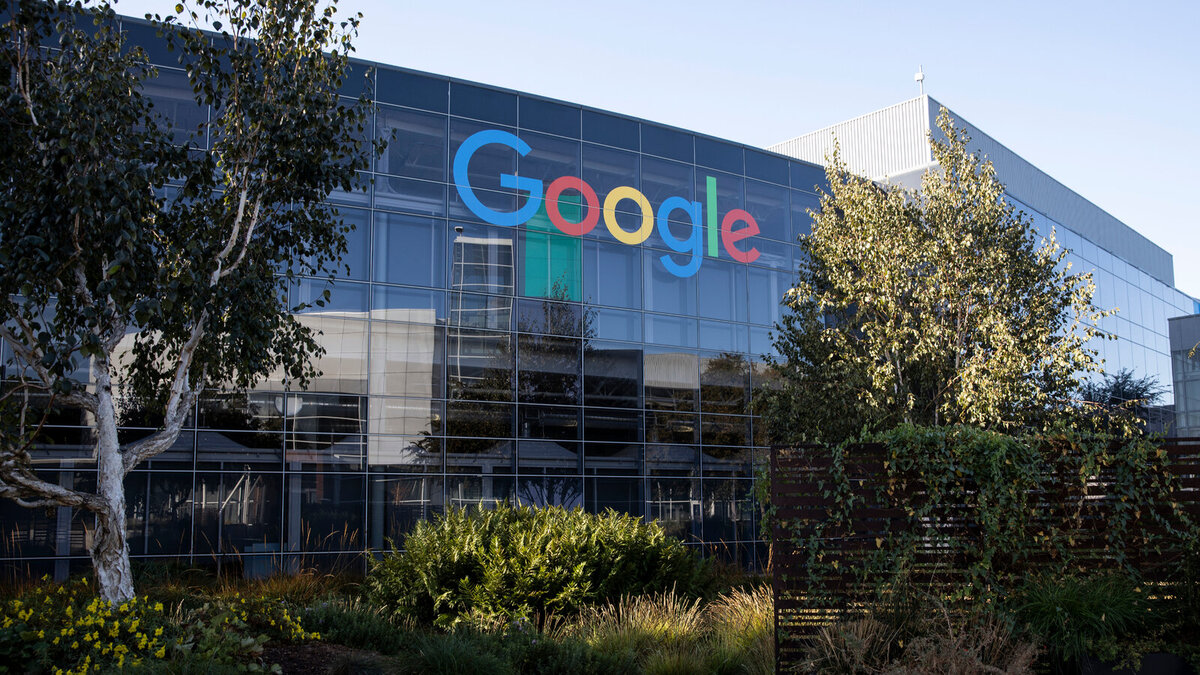
Google to power LA28 Olympics with cloud and AI technology

Google has been named the official cloud provider for the Los Angeles 2028 Olympic and Paralympic Games, joining LA28 as a founding partner in a deal that also includes Team USA and NBCUniversal’s broadcast coverage. The collaboration will leverage Google Cloud’s infrastructure and AI tools, including its Gemini model and a new AI Mode in Search, to enhance both event operations and the fan experience.

Casey Wasserman, LA28 chairperson and president, said the partnership will help deliver “a technologically advanced, engaging, and digitally accessible Games.” Google’s systems will support venue navigation, real-time updates, and interactive digital experiences for millions of spectators and volunteers.

Marvin Chow, Google’s VP of marketing, said the collaboration will make the Games “more personal and interactive,” while NBCUniversal’s ad chief Mark Marshall noted that integrating Google’s AI with NBCU’s content would create “a world-class viewing experience.”

YouTube will also partner with NBCUniversal to host exclusive Games-related content, expanding audience reach across platforms.

With more than 70,000 workers and volunteers expected, Google’s technology will serve as a digital backbone for the Olympics. It becomes LA28’s fifth founding partner, alongside Starbucks, Honda, Comcast, and Delta.

The LA28 organizers, a private non-profit, aim to secure up to $1 billion in new sponsorships next year — bringing total deals to around $2 billion as the city prepares to host its third Olympics and first Paralympics.

Cascadia Capital Expands Into Tech M&A With New Silicon Valley Office

Cascadia Capital, a U.S.-based boutique investment bank, is making a strategic push into technology mergers and acquisitions (M&A) with the opening of a new Silicon Valley office and the appointment of veteran banker Jonathan Cantwell to lead its new technology group, company executives told Reuters.

NEW LEADERSHIP AND STRATEGIC FOCUS

Cantwell, previously partner and head of software investment banking at GP Bullhound, will oversee the firm’s technology advisory practice, focusing on enterprise Software-as-a-Service (SaaS) and artificial intelligence (AI) companies.

He will lead recruitment for the new office and aims to build a 20-member team specializing in advising growth-stage technology firms with enterprise values of up to $2 billion.
Cascadia plans to leverage Cantwell’s strong M&A track record, which includes PeakAI’s sale to UiPath (PATH.N) and Compendium’s sale to Oracle (ORCL.N).

“We’re at this inflection point where many high-growth software and AI companies will need experienced advisors,” Cantwell said. “It’s the right moment to build a new practice focused on enterprise automation, data analytics, and digital applications.”

INVESTMENT BACKING AND GROWTH PLANS

Cascadia’s expansion is supported by Atlas Merchant Group, led by former Barclays CEO Bob Diamond, which made an eight-figure investment in Cascadia in 2022 to fuel its growth.
Diamond highlighted that the move aligns with the convergence between digital assets, traditional finance, and the increasing dominance of AI-driven innovation in financial markets.

“You have the importance of software, the importance of AI, and the merging of traditional finance with digital technologies,” Diamond said. “It couldn’t be a better time to enter the tech M&A space.”

EXPANDING BEYOND CORE SECTORS

Cascadia Capital, led by CEO Michael Butler, a former Morgan Stanley executive, already operates successful M&A practices in consumer goods, food and agribusiness, industrials, and business services.
With its new Silicon Valley hub, the firm aims to position itself as a go-to advisor for mid-market software and AI companies, helping them navigate consolidation, fundraising, and acquisition opportunities amid a surge in sectoral deal activity.

As global demand for AI-driven enterprise software and automation technologies accelerates, Cascadia’s new practice underscores a broader trend of boutique advisory firms pivoting toward high-value, data-centric industries.