Yazılar

Anduril Sees Positive Outlook with Trump Administration’s Defense Strategy

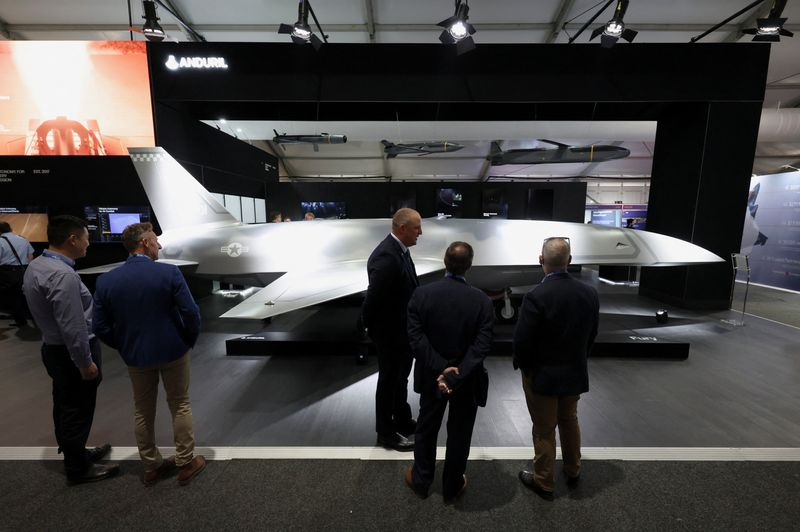
Anduril, the AI-powered defense start-up, is optimistic about its position under the new Trump administration, with its president, Christian Brose, stating that the company feels positive “vibes” from the Pentagon’s recent defense shakeup. Brose, who has previously worked with Republican Senator John McCain, emphasized that Anduril’s focus on low-cost autonomous defense systems aligns well with the Trump administration’s preferences for innovation and efficiency in defense procurement.

Anduril’s Alignment with Trump’s Defense Priorities

Brose noted that Anduril’s approach to autonomous defense technology fits well with the administration’s goals to shake up the military’s traditional procurement processes. The start-up, co-founded by Palmer Luckey—who is a known supporter of Donald Trump—has built strong relationships within the current government. According to Brose, the administration’s willingness to do things differently creates significant opportunities for companies like Anduril.

In December, Anduril announced a partnership with OpenAI to deploy advanced artificial intelligence solutions for national security missions, further aligning itself with emerging defense strategies. Brose also pointed out the Pentagon’s recent $50 billion budget cut directive, speculating that this could be an effort to shift resources into new forms of military capabilities rather than merely reduce spending.

Expansion Plans and International Collaborations

Anduril, which is constructing a mass manufacturing facility for autonomous systems in Ohio, is also eyeing international growth, including potential expansion into Australia. The Australian Defence Force (ADF) is currently trialing Anduril’s AI-driven intrusion detection software at RAAF Base Darwin, where U.S. Marines are stationed.

In addition, Anduril Australia is bidding to produce solid rocket motors for the ADF’s Guided Weapons and Explosive Ordnance Enterprise. The company is also working with the ADF to produce the Ghost Shark underwater autonomous machine, with plans to ramp up production soon. Brose indicated that Anduril could expand its production footprint to other countries if the business case justifies such an investment, with Australia being a potential location.

Defense Technology and the Future of AUKUS

Under the AUKUS treaty, which involves the U.S., the U.K., and Australia, the U.S. and Britain will assist Australia in developing nuclear-powered submarines. Australia plans to spend over A$360 billion on this initiative. Brose emphasized that while autonomous systems like Anduril’s Ghost Shark can be produced faster, in larger quantities, and at a lower cost, they should complement—not replace—crewed submarines in a well-rounded defense strategy.

Anthropic Wins Early Round in Music Publishers’ AI Copyright Case

Artificial intelligence company Anthropic has successfully defended itself against a motion to block its use of lyrics owned by Universal Music Group (UMG) and other publishers in training its AI-powered chatbot, Claude. A California federal judge ruled on Tuesday that the publishers’ request for a preliminary injunction was too broad and did not demonstrate that Anthropic’s actions had caused “irreparable harm.”

The Legal Dispute

The music publishers, including UMG, Concord, and ABKCO, filed a lawsuit against Anthropic in 2023, accusing the company of copyright infringement. The suit claims that Anthropic used lyrics from at least 500 songs—by artists such as Beyoncé, the Rolling Stones, and the Beach Boys—without permission to train its chatbot, Claude, which can generate human-like responses to prompts.

In rejecting the motion, U.S. District Judge Eumi Lee stated that the publishers had not shown that Anthropic’s actions had caused the alleged harm, particularly in terms of a potential impact on their licensing market. Judge Lee emphasized that the question of fair use, which remains a key issue in these lawsuits, was not addressed in this specific ruling.

Publishers’ Response and Future Outlook

While the judge’s decision was a setback, the publishers remained confident in their broader case against Anthropic. They expressed that they are “very confident” in their legal position moving forward.

Anthropic also responded positively, with a spokesperson noting their satisfaction that the court rejected the publishers’ “disruptive and amorphous request.”

Industry Context

This case is part of a broader legal trend involving the use of copyrighted material to train AI systems. Several tech companies, including OpenAI, Microsoft, and Meta Platforms, have faced similar lawsuits, with defendants arguing that their AI systems’ use of copyrighted works falls under “fair use” provisions of U.S. copyright law, which permits the study of materials to create new, transformative content.

While the legal questions around fair use will likely determine the outcome of these lawsuits, this particular ruling focused on the immediate request for an injunction, not the broader issue of copyright infringement.

China to Lead in Chipmaking Investment in 2025, SEMI Reports

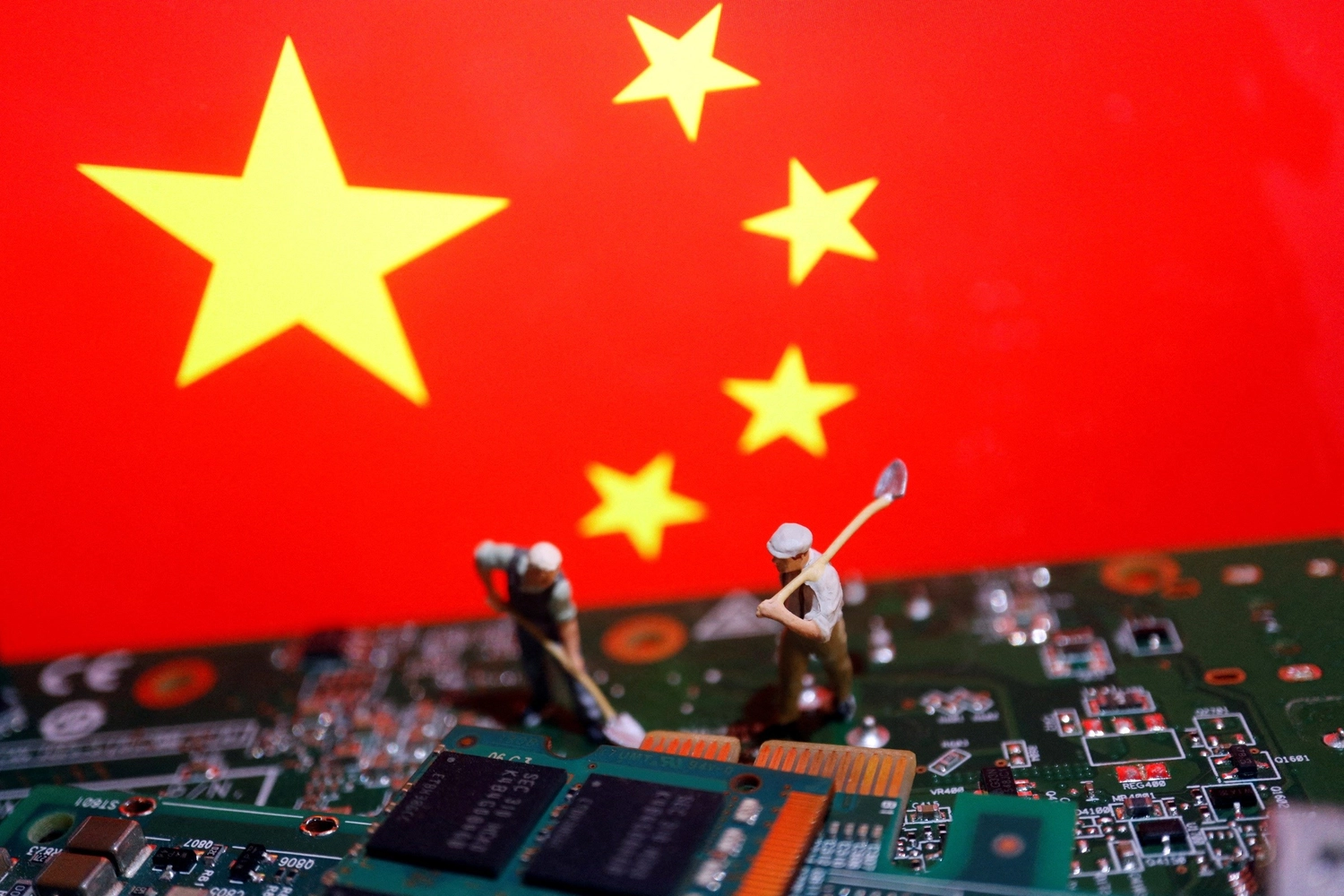
China is set to continue its dominance in global chipmaking investments in 2025, despite a notable year-over-year decline, according to a report from industry group SEMI. The country is expected to outpace all other regions in spending on new computer chipmaking equipment, followed by Taiwan and Korea.

Global Investment Growth

SEMI’s forecast for global fabrication plant investments shows a 2% increase in 2025, reaching $110 billion. This marks the sixth consecutive year of growth, driven largely by the demand for tools needed to produce chips for artificial intelligence (AI). SEMI predicts that the AI boom will have an even stronger impact on the industry in 2026, with an expected investment growth of 18%.

China’s Strategic Push and Decline in Investment

China has been the largest consumer of chips for years, and its chipmaking sector saw a massive push starting in mid-2023. With government support, China has accelerated efforts to reduce its dependence on imported chips, particularly in response to U.S. restrictions. Despite this surge, SEMI forecasts that China’s chipmaking spending will drop by 24% in 2025, falling to $38 billion from $50 billion in 2024. However, this still keeps China ahead of other major chip-producing countries like Korea, where SK Hynix and Samsung are expanding memory chip production, with investments projected at $21.5 billion.

Spending in Other Key Regions

Taiwan, home to TSMC, a major foundry for AI chips, is projected to spend $21 billion on chipmaking equipment in 2025. In comparison, spending in Korea will be significant, but not as high as China’s, with $21.5 billion expected. The Americas and Japan are each expected to invest $14 billion, while Europe’s investment is projected at $9 billion.

Key Players in the Equipment Market

The top players in the chip equipment market include ASML, Applied Materials, KLA, LAM Research, and Tokyo Electron. ASML, the largest chip equipment manufacturer, anticipates sales of €32-38 billion in 2025, maintaining a dominant market share in the lithography sector. Chinese equipment makers, such as Naura, AMEC, and SiCarrier (affiliated with Huawei), are also gaining traction in the market.