Yazılar

Waymo to launch driverless ride-hailing service in London in 2026

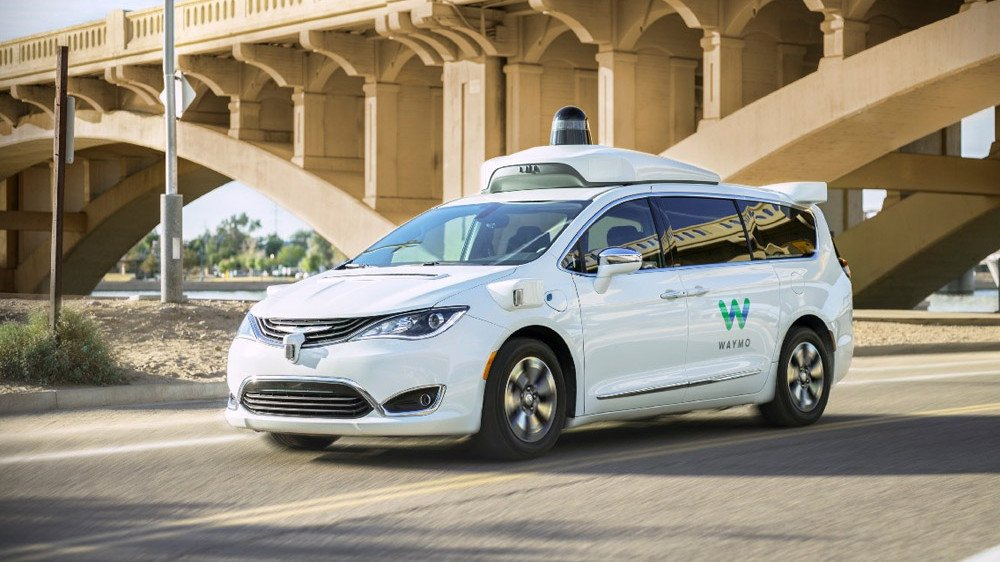
Alphabet’s autonomous vehicle subsidiary, Waymo, announced plans to launch its fully driverless ride-hailing service in London next year, marking its first major expansion into Europe. The company, which has been gradually scaling operations in the United States, aims to bring its robotaxi technology to one of the world’s most densely regulated urban environments.

Waymo said it will partner with vehicle financing firm Moove to manage fleet operations, facilities, and charging infrastructure in London. The company is also working closely with local and national authorities to obtain the necessary regulatory approvals ahead of the launch. According to a spokesperson, vehicles are already en route to London, where they will initially be tested with safety drivers before transitioning to full autonomy in 2026.

In the U.S., Waymo currently provides over 250,000 paid trips weekly across cities including San Francisco, Los Angeles, Phoenix, Atlanta, and Austin, with a fleet of roughly 1,500 vehicles. The company has also been expanding internationally, collecting data in Tokyo earlier this year in collaboration with Japanese partners Nihon Kotsu and Go.

The move comes amid intensifying competition in the autonomous transport sector, as Tesla prepares to debut its long-promised robotaxi service and Uber plans to trial fully driverless rides in the UK in partnership with AI startup Wayve. Despite regulatory challenges and technical setbacks in the U.S., Waymo’s London project signals renewed momentum for commercializing self-driving technology.

UK moves to curb Google’s search dominance under new Big Tech powers

Britain’s competition regulator has designated Google as having strategic market status in online search — a landmark ruling that gives the Competition and Markets Authority (CMA) sweeping new powers to reshape how the tech giant operates in the UK.

The CMA said Google controls over 90% of all UK search traffic, cementing a dominant position in both search and search advertising. The designation, announced Friday, does not imply wrongdoing but allows the regulator to intervene directly to ensure fairer competition and impose fines for non-compliance.

The CMA outlined potential changes earlier this year, including fairer ranking systems, easier switching to alternative search engines, and greater publisher control over how their content is used in AI-generated responses. These measures could particularly affect Google’s AI Overviews and AI Mode features, though its Gemini AI assistant remains outside the current scope.

Google’s Senior Director for Competition, Oliver Bethell, argued the proposals “would inhibit UK innovation and growth” at a time of “profound AI-based innovation.” The company recently announced a £5 billion investment in Britain.

The ruling marks the CMA’s first use of its expanded Big Tech authority, introduced to address the dominance of firms like Google, Apple, and Amazon. The regulator’s second probe—into mobile operating systems—could also lead to another designation targeting Android.

The move follows mounting global scrutiny: the EU fined Google $3.45 billion for antitrust violations in ad tech last month, while U.S. regulators are pressing to break up parts of its advertising empire.

Competition lawyer Tom Smith, a former CMA director, said the decision could rebalance the market by “giving website operators more control over how their content is used for AI training,” curbing Google’s advantage in artificial intelligence.

OpenAI warns EU regulators of Big Tech dominance in AI market

OpenAI has raised competition concerns with European Union regulators, warning that entrenched tech giants such as Google are using their market power to dominate the fast-growing artificial intelligence sector.

The company confirmed Thursday that its arguments to EU officials last month “mirrored its public positions” on the need to ensure fair competition in AI. During a September 24 meeting with EU antitrust chief Teresa Ribera, OpenAI said it faced major hurdles competing against vertically integrated platforms that control both infrastructure and distribution, according to meeting notes cited by Bloomberg News.

The firm urged regulators to prevent large companies from “locking in users” through their ecosystems — a reference to concerns that firms like Alphabet and Microsoft could tie AI products to existing search, cloud, and software services.

The European Commission has already been investigating how major technology platforms are extending dominance into AI through intercompany agreements and exclusive data access. Neither the Commission nor Google responded to requests for comment.

OpenAI’s outreach to EU authorities comes as it cements its own global influence. Following a secondary share sale last week, the ChatGPT-maker is now valued at $500 billion, making it the world’s most valuable startup with over 800 million weekly users.

Analysts say the move signals that OpenAI wants to shape the regulatory debate in Europe — not only to challenge rivals like Google and Anthropic, but also to secure its place in a market increasingly defined by antitrust scrutiny and AI sovereignty policies.