Yazılar

Brazil Employs Forensic Technology to Combat Illegal Amazon Gold Trade

Brazil is leveraging advanced forensic technology to tackle the illicit gold trade in the Amazon, where illegal mining accounts for nearly half of the country’s gold production. One of the first high-profile cases utilizing this technology involved Harley Sandoval, an evangelical pastor and mining entrepreneur, who was arrested in July 2023 for illegally exporting 294 kilograms of gold to the United States, Dubai, and Italy.

While Sandoval claimed the gold originated from a legal mining site in Tocantins, authorities determined through satellite imagery and forensic analysis that it was sourced from wildcat mines in Pará, including some on Indigenous lands. This breakthrough stems from Brazil’s “Targeting Gold” program, which analyzes gold’s unique elemental “fingerprints” using radio-isotope scans and fluorescence spectroscopy.

Unveiling the DNA of Gold

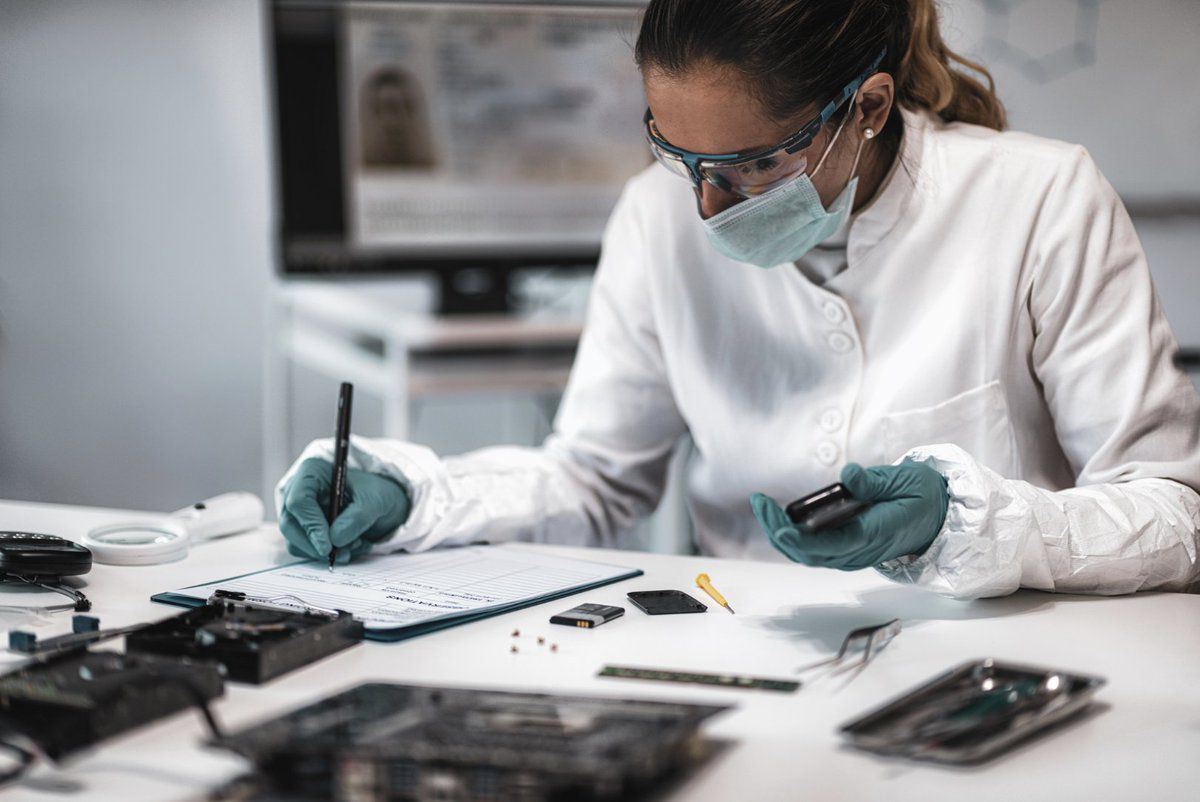
Tracing gold has long been a challenge, as smelting erases visible origins. However, advancements in forensic science have changed that. By examining nano-sized impurities in gold, such as traces of lead or copper, scientists can pinpoint its source. Federal Police Director Humberto Freire described this process as analyzing the “DNA of Brazilian gold.”

The technology, developed in collaboration with university researchers, has already bolstered gold seizures by 38% since President Luiz Inácio Lula da Silva took office in 2023. Lula’s administration has also introduced stricter regulations, such as mandatory electronic tax receipts and enhanced monitoring of gold transactions.

Brazil exported 110 tons of gold in 2020, valued at $5 billion. However, tighter enforcement has reduced exports to 77.7 tons in 2023, highlighting efforts to curb illegal mining.

The Environmental and Social Toll of Illegal Mining

Illegal mining, spurred by high global gold prices, has devastating consequences for the Amazon rainforest and its Indigenous communities. Satellite images reveal a record 80,000 wildcat mining sites, where industrial-scale operations employ heavy machinery and river dredgers, leaving behind mercury-contaminated sludge.

In the Yanomami Indigenous territory, miners have caused widespread violence, disease, and malnutrition, leading to a humanitarian crisis. While Lula deployed troops to expel the miners, many returned after the military withdrew, prompting further environmental agency operations.

Criminal organizations play a significant role in this illegal trade, using clandestine airstrips and helicopters to transport equipment and gold. Their activities feed international markets, with Switzerland buying 70% of Brazil’s exported gold.

Global and Regional Impact

Brazil’s efforts to trace and regulate gold are gaining international attention. Neighboring countries like Colombia and French Guiana are considering adopting similar forensic methods, while European nations, including Switzerland and Britain, are exploring anti-counterfeiting measures.

Despite progress, challenges remain. A strong mining lobby in Brazil’s Congress is pushing for legislation to legalize wildcat mining, complicating enforcement efforts. Meanwhile, researchers aim to expand the national gold database, analyzing 30,000 samples collected by the Geological Service to map Brazil’s 24 gold-producing regions.

Geologist Maria Emilia Schutesky, a key player in this initiative, emphasized the significance of forensic evidence: “We seek a 100% ability to trace gold, but for the police, it’s enough to prove that the gold does not come from where the suspect claims it does.”

With forensic science uncovering the secrets of gold’s origins, Brazil is strengthening its fight against illegal mining, aiming to protect the Amazon and its people while setting a global standard for responsible gold trade.


Amazon Web Services (AWS) Unveils Nova Family of Multimodal AI Models

Amazon Web Services (AWS) has officially unveiled its new Nova family of artificial intelligence (AI) models at its ongoing re:Invent conference. The Nova series features a range of large language models (LLMs) designed to enhance capabilities in text, image, and video generation. With five distinct models currently available, AWS promises improved intelligence and competitive pricing, aiming to meet the growing demand for advanced AI solutions. These models are now accessible through Amazon Bedrock, AWS’s managed service for building AI applications.

The Nova family introduces five models, each catering to different user needs. Among them, three models—Nova Micro, Nova Lite, and Nova Pro—are designed specifically for text generation. Despite their shared focus on text, each model has its own unique capabilities. For instance, Nova Micro is the smallest and fastest in terms of response time, offering extremely low latency. It has a context window of 1,28,000 tokens, enabling it to process and generate concise text with minimal delay, making it ideal for quick applications.

In addition to the text-generation models, AWS has expanded the Nova series with more advanced capabilities. The series also includes an image-generation model and a video-generation model, both designed to push the boundaries of multimodal AI. These models enable users to create high-quality visuals and videos from simple text prompts, providing a new level of creative freedom for developers and businesses. This multimodal approach marks a significant step forward in AI technology, combining different forms of content generation under one umbrella.

AWS’s CEO, Andy Jassy, also mentioned that the Nova family will be further expanded in 2025 with the launch of a sixth AI model, called Nova Premier. This upcoming addition is expected to bring even more advanced features to the Nova lineup, further solidifying AWS’s position in the competitive AI landscape. With the new series, AWS is positioning itself as a leader in the field of AI, offering powerful tools that can cater to a wide range of industries and applications.

Samsung Challenges India’s Antitrust Probe, Citing Illegal Seizures

Samsung Electronics has accused India’s Competition Commission (CCI) of unlawfully detaining its employees and seizing confidential data during a raid linked to an antitrust investigation involving Amazon and Flipkart, according to a legal filing. The case stems from a CCI probe that found Samsung and other smartphone companies colluded with the e-commerce giants to launch products exclusively online, breaching antitrust laws.

In an October 11 filing submitted to the High Court in Chandigarh, Samsung requested the quashing of CCI’s findings against it. The company argued that material seized during a 2022 raid at an Amazon vendor was obtained illegally. Samsung stated that three of its employees were detained during the raid, their phones confiscated, and confidential data copied without proper authority.

“The entire search exercise…is patently illegal, and any material collected thereunder should not be relied upon and should be promptly returned,” Samsung wrote in its 32-page petition. The filing also called for the CCI to be prohibited from using or relying on the unlawfully obtained data.

While Samsung secured an injunction from the High Court, temporarily halting the proceedings, the court has yet to decide on returning the seized data or barring the CCI from using it. The watchdog has faced similar injunctions from 22 other companies across India, prompting the CCI to seek a Supreme Court intervention to consolidate the challenges. The regulator claims the firms are attempting to derail its investigation.

The CCI probe centers on allegations that Amazon and Flipkart violated competition laws by favoring specific sellers on their platforms, disadvantaging competitors and brick-and-mortar retailers. Samsung, despite cooperating with the investigation as a third party, has been accused of enabling exclusivity in business practices by launching phones exclusively on Amazon and Flipkart. The watchdog labeled such practices as antithetical to free and fair competition.

Samsung, one of India’s leading smartphone makers with a 14% market share, denies any wrongdoing. The inclusion of smartphone manufacturers in the probe is expected to escalate legal and compliance risks for companies like Samsung.

The case underscores the growing tension between global tech firms and Indian regulators. Online sales have grown significantly in India, with 50% of phones sold online in 2022, compared to just 14.5% in 2013, according to Datum Intelligence. This shift has increased scrutiny on e-commerce platforms and their partnerships with tech firms.