Yazılar

ASML’s $1.5B Investment in Mistral AI Fuels Europe’s Tech Sovereignty Push

ASML’s $1.5 billion investment in French AI firm Mistral AI has been hailed as a turning point for Europe’s technological sovereignty, signaling stronger ambition to challenge U.S. and Asian dominance in artificial intelligence and advanced semiconductors.

Deal Highlights

  • ASML will become Mistral’s top shareholder with an 11% stake.

  • Mistral, valued at nearly $12 billion, is often presented as Europe’s AI champion.

  • The partnership is framed as uniting Europe’s semiconductor strength with cutting-edge AI innovation.

Political & Strategic Significance

The deal comes amid rising trade tensions with U.S. President Donald Trump and growing European unease over reliance on American tech giants like OpenAI, Microsoft, Google, Meta, and Nvidia.

  • EU lawmaker Stephanie Yon-Courtin called the investment a “game-changer,” strengthening Europe’s digital sovereignty and sending a message that the region intends to lead, not follow.

  • Leaders including Emmanuel Macron and Friedrich Merz have emphasized the need for digital independence, echoing Mario Draghi’s extensive EU competitiveness report.

Industry Perspective

Analysts note that while practical outcomes of the ASML-Mistral tie-up are still unclear, the political symbolism is powerful.

  • Venture capitalist Sten Tamkivi highlighted a “mindset shift” in Europe, where assets like chipmaking are now being strategically paired with AI.

  • Mistral CEO Arthur Mensch welcomed the move but urged the European Commission and governments to match ambition with policy and funding.

Challenges Ahead

Despite momentum, Europe still faces hurdles:

  • Slow adoption of local start-ups by large European corporates.

  • Heavier regulations compared to the U.S. and Asia.

  • Continued talent and capital outflows to Silicon Valley.

Outlook

The deal signals Europe’s intent to retain its AI champions and align them with industrial strengths like semiconductors. Whether this symbolic leap translates into global competitiveness will depend on policy follow-through and corporate buy-in across the continent.

ASML to Become Top Shareholder in Mistral AI With $1.5B Investment

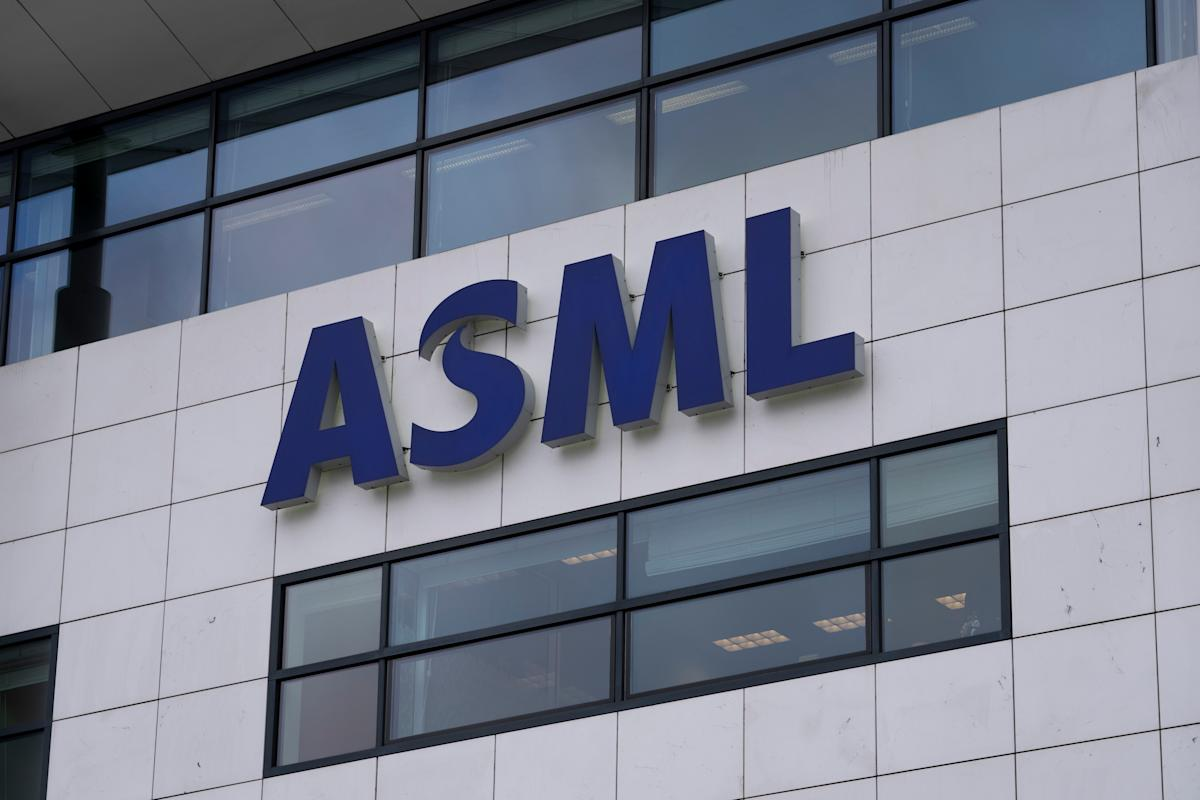
ASML, the Dutch maker of cutting-edge chipmaking equipment, will become the top shareholder in French startup Mistral AI after leading its latest €1.7 billion (~$2B) Series C funding round, sources told Reuters. ASML is committing €1.3 billion ($1.5 billion), securing a board seat at Mistral in the process.

The funding values Mistral at €10 billion ($11.7 billion) pre-money, making it the most valuable AI company in Europe. The deal underscores Europe’s push for technological sovereignty, reducing reliance on U.S. and Chinese AI models.

Founded in 2023 by Arthur Mensch (ex-DeepMind) along with Timothée Lacroix and Guillaume Lample (ex-Meta), Mistral has quickly positioned itself as Europe’s AI champion, competing with giants like OpenAI and Google. It was last valued above $6 billion in 2023 and has backing from Nvidia.

ASML, the sole supplier of extreme ultraviolet (EUV) lithography machines—vital for advanced chipmaking by firms like TSMC and Intel—could integrate Mistral’s AI-driven data analytics to improve its €180 million EUV systems. The partnership could bolster both firms: Mistral gains capital and industrial ties, while ASML sharpens its AI-enabled chipmaking capabilities.

The move highlights a rare strategic alignment of two European tech powerhouses. By tying together semiconductor infrastructure and AI model development, the partnership signals Europe’s intent to carve out a sovereign AI ecosystem in a field dominated by U.S. and Chinese players.

Applied Materials Shares Drop on Weak China Demand and Tariff Uncertainty

Applied Materials (AMAT.O) shares fell roughly 12% in Friday morning trading after the chip-equipment maker issued a disappointing revenue and profit forecast, raising investor concerns about the impact of U.S.-China trade tensions on demand. The decline follows warnings from Dutch rival ASML (ASML.AS), highlighting continued uncertainty over the effects of U.S. tariffs on the semiconductor industry.

CEO Gary Dickerson cited “wide-ranging implications for the semiconductor industry” during a post-earnings call, pointing to lower visibility and heightened uncertainty in the near term due to dynamic policy developments. China, which represented 35% of Applied Materials’ July-quarter sales, has become a key risk as U.S. export restrictions weigh on new equipment orders.

Smaller peer KLA Corp (KLAC.O), which also has a strong presence in China, expects softer demand amid ongoing Sino-U.S. trade tensions, while Deutsche Bank strategists warned that volatility in China is clouding visibility into earnings potential both geopolitically and cyclically.

Applied Materials forecast fourth-quarter revenue of $6.70 billion, plus or minus $500 million, below analysts’ consensus of $7.33 billion. Its projected profit also fell short of expectations. If losses persist, the company could shed over $18 billion from its $151.06 billion market value as of Thursday’s close.

J.P. Morgan analyst Harlan Sur suggested that the slowdown in China reflects timing of spending rather than structural weaknesses. Applied’s stock has risen 1.2% year-to-date, trailing the Nasdaq (.IXIC) up 12.3% and the S&P 500 (.SPX) up 10%.

Shares of other chip-equipment makers, including KLA Corp and Lam Research (LRCX.O), also fell following Applied’s results, down 5.5% and 4.3%, respectively. Applied reported third-quarter revenue of $7.30 billion, up 8% year-on-year and above the $7.22 billion consensus. Its stock trades at a forward price-to-earnings ratio of 19, lower than ASML’s 26.04, Lam’s 23.56, and KLA’s 26.82.