Yazılar

Marvell Postpones Investor Day, Narrows Revenue Forecast Amid Trade-Driven Economic Uncertainty

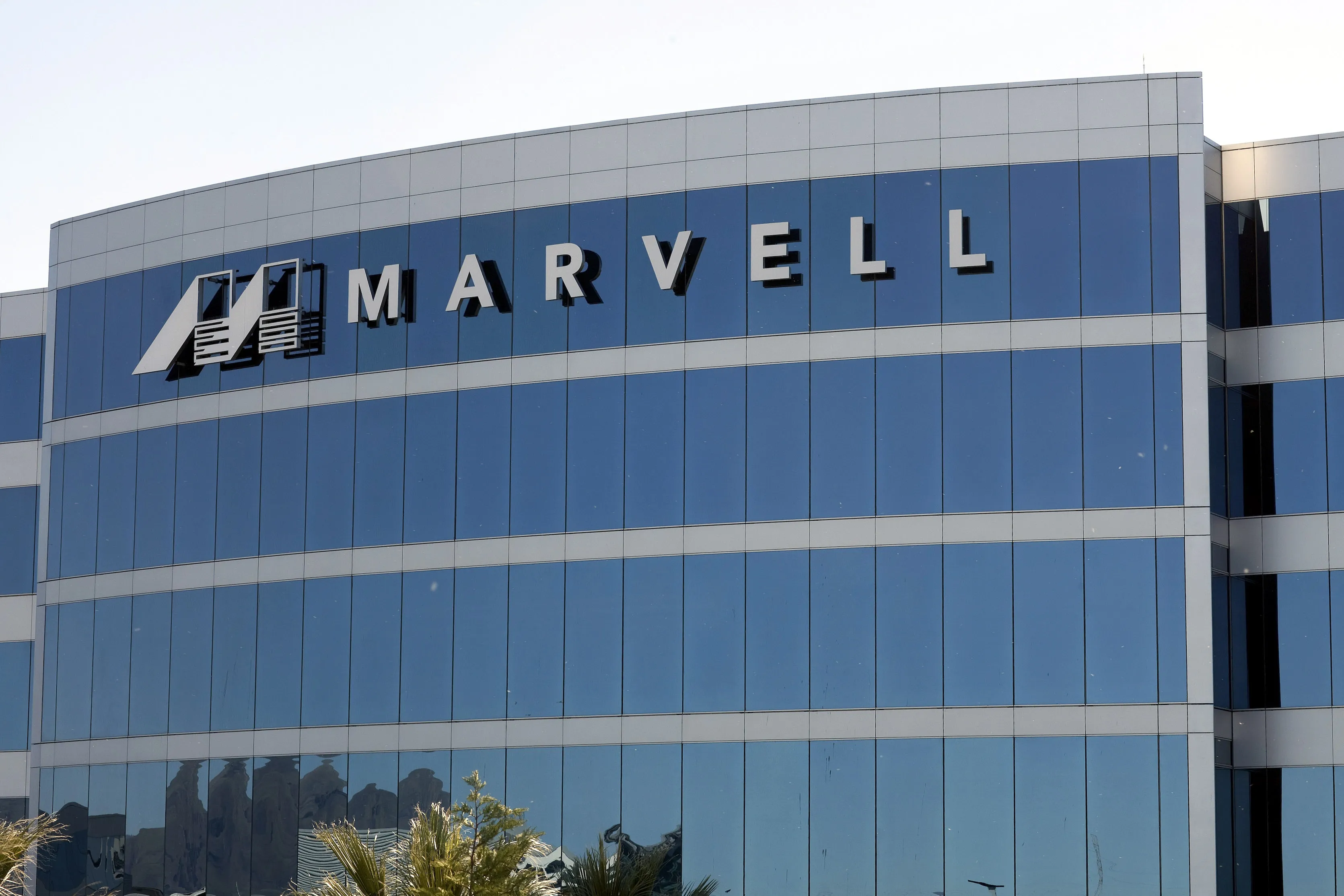
Marvell Technology, a major player in networking and custom AI chips, announced Tuesday it is postponing its upcoming investor day due to what it called a “dynamic macroeconomic environment,” citing ongoing global trade tensions and economic uncertainty. The decision spooked investors, sending Marvell shares down more than 6% in after-hours trading.

The company also narrowed its Q1 fiscal 2026 revenue guidance, now expecting approximately $1.875 billion, within a tighter range of ±2%, compared to its prior forecast of ±5%. The midpoint of the outlook remains unchanged.

The announcement comes as semiconductor and computing firms navigate turbulent waters driven by shifting U.S. trade policy under President Donald Trump. Although Trump paused a sweeping new import tariff plan for 90 days starting April 9 to allow negotiations, a baseline 10% tariff and additional duties on key partners remain in place, impacting global supply chains and corporate planning.

Marvell’s COO Chris Koopmans previously stated that tariffs had not yet affected the company’s data center segment, but broader concerns linger industry-wide. Nvidia recently warned of a $5.5 billion impact due to U.S. export restrictions on AI chips bound for China, while ASML raised caution over its future sales outlook.

The postponement of Marvell’s investor day suggests the company may be waiting for greater clarity on trade policies and economic stability before providing long-term strategic updates to shareholders.
Former Intel CEO Pat Gelsinger Joins Playground Global as General Partner

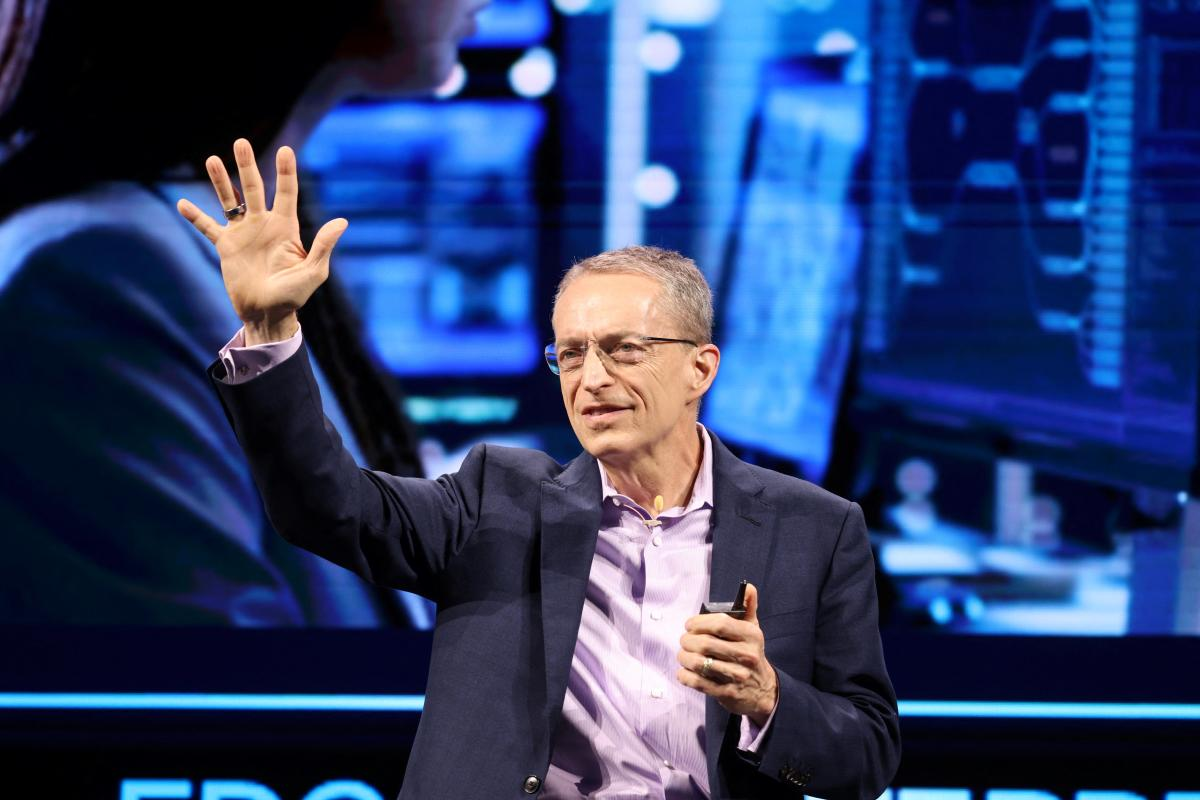
Pat Gelsinger, the former CEO of Intel, has joined venture capital firm Playground Global as a general partner. In addition to his new role, Gelsinger has also joined the board of xLight, a startup focused on developing advanced chip manufacturing technology.

Playground Global and Gelsinger’s Role

Founded in 2015, Playground Global is a Silicon Valley-based venture capital firm with $1.2 billion in assets under management. The firm specializes in deep technology investments, including semiconductors and AI. Playground’s notable investments include MosaicML, an AI firm sold to Databricks in a $1.3 billion stock deal, and PsiQuantum, a quantum computing firm raising funds to build quantum computers in the U.S. and Australia.

Gelsinger, who left Intel after disagreements with its board over his turnaround strategy, will focus on supporting 10 to 20 of Playground’s portfolio companies. His mission is to identify technologies that can deliver breakthroughs, specifically those that can perform at least 10 times better than current solutions.

Focus on Innovation in Semiconductor Technology

One of Gelsinger’s first moves is to join xLight, a Playground portfolio company, as executive chairman. xLight is developing a new type of laser technology to produce extreme ultraviolet (EUV) light for chip manufacturing. This technology aims to use significantly less electricity than current EUV lasers, which are produced by ASML Holding, the industry leader in lithography machines.

Gelsinger believes that this new laser technology could significantly enhance chip production capabilities, making chips smaller and faster—a continuation of the progress first outlined by Moore’s Law, which predicts the doubling of transistors on a chip approximately every two years. He emphasized the importance of advancing these technologies domestically, particularly in the U.S., to ensure continued innovation in the semiconductor industry.

Looking Ahead

Gelsinger’s move to Playground Global signals his commitment to driving innovation in the semiconductor and tech industries. His extensive experience at Intel and deep understanding of chip manufacturing will bring valuable insights as he works to accelerate advancements in cutting-edge technologies that could shape the future of computing.

China to Lead in Chipmaking Investment in 2025, SEMI Reports

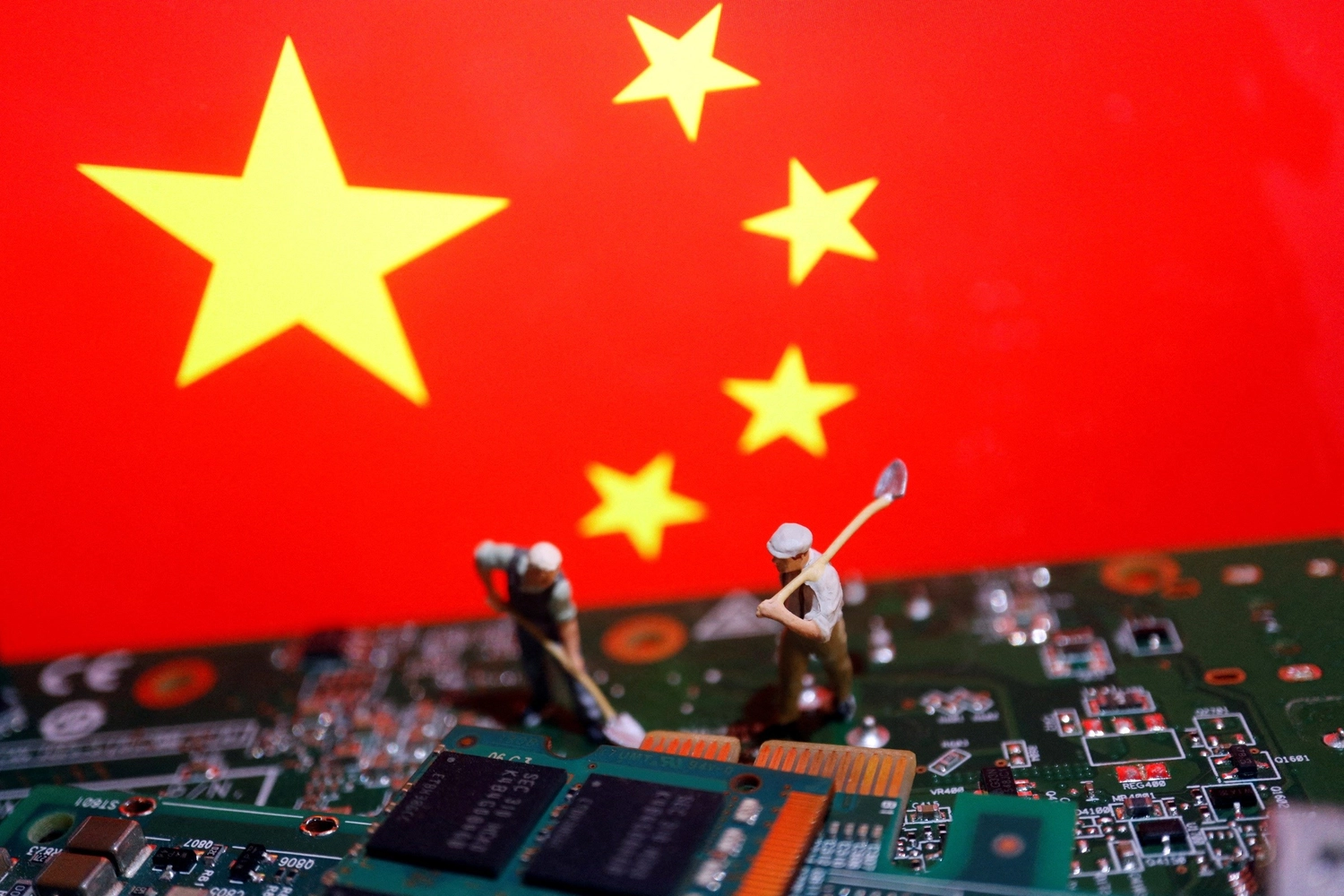
China is set to continue its dominance in global chipmaking investments in 2025, despite a notable year-over-year decline, according to a report from industry group SEMI. The country is expected to outpace all other regions in spending on new computer chipmaking equipment, followed by Taiwan and Korea.

Global Investment Growth

SEMI’s forecast for global fabrication plant investments shows a 2% increase in 2025, reaching $110 billion. This marks the sixth consecutive year of growth, driven largely by the demand for tools needed to produce chips for artificial intelligence (AI). SEMI predicts that the AI boom will have an even stronger impact on the industry in 2026, with an expected investment growth of 18%.

China’s Strategic Push and Decline in Investment

China has been the largest consumer of chips for years, and its chipmaking sector saw a massive push starting in mid-2023. With government support, China has accelerated efforts to reduce its dependence on imported chips, particularly in response to U.S. restrictions. Despite this surge, SEMI forecasts that China’s chipmaking spending will drop by 24% in 2025, falling to $38 billion from $50 billion in 2024. However, this still keeps China ahead of other major chip-producing countries like Korea, where SK Hynix and Samsung are expanding memory chip production, with investments projected at $21.5 billion.

Spending in Other Key Regions

Taiwan, home to TSMC, a major foundry for AI chips, is projected to spend $21 billion on chipmaking equipment in 2025. In comparison, spending in Korea will be significant, but not as high as China’s, with $21.5 billion expected. The Americas and Japan are each expected to invest $14 billion, while Europe’s investment is projected at $9 billion.

Key Players in the Equipment Market

The top players in the chip equipment market include ASML, Applied Materials, KLA, LAM Research, and Tokyo Electron. ASML, the largest chip equipment manufacturer, anticipates sales of €32-38 billion in 2025, maintaining a dominant market share in the lithography sector. Chinese equipment makers, such as Naura, AMEC, and SiCarrier (affiliated with Huawei), are also gaining traction in the market.