Yazılar

Lachlan Morton’s Epic Cycling Journey Around Australia: Headwinds, Hunger, and a Close Call with a Kangaroo

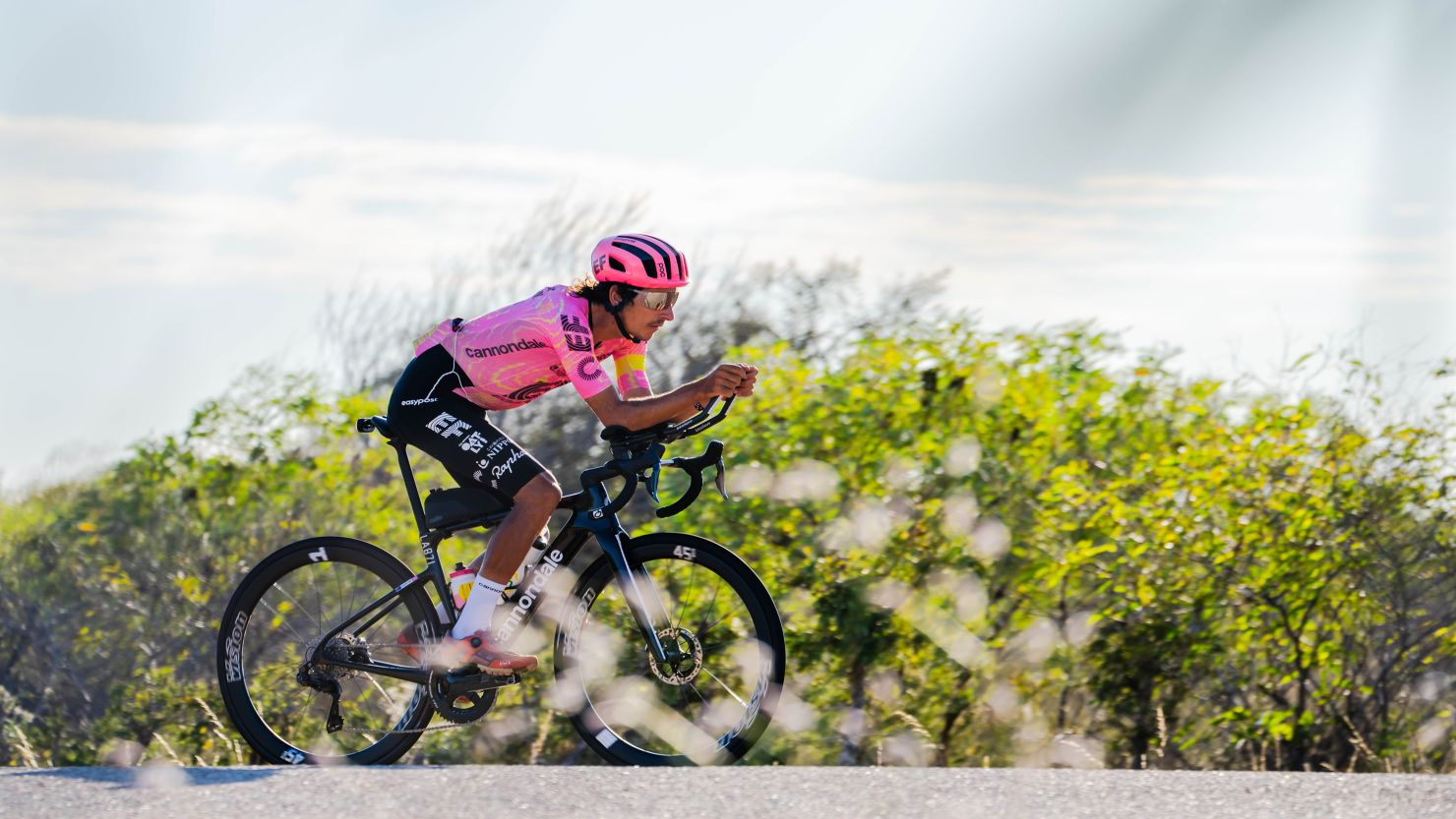
Professional cyclist Lachlan Morton is on the verge of completing a grueling 8,800-mile (14,200-kilometer) lap of Australia in record time. Despite battling fierce headwinds, intense heat, and even a near miss with a kangaroo, Morton is set to break the current record of 37 days, 20 hours, and 45 minutes, established by David Alley in 2011. Morton, known for his endurance cycling feats, began this epic journey a month ago from his hometown of Port Macquarie.

Enduring long, isolated days in the saddle—cycling up to 17 or 18 hours daily—Morton has faced numerous physical and mental challenges. “It feels like a lifetime I’ve been out here,” Morton told CNN Sport, reflecting on the extreme fatigue he’s endured throughout his journey.

One of the biggest hurdles has been braving Australia’s notoriously unpredictable weather. Morton highlights the mental difficulty of riding straight into relentless headwinds for hours on end. “It’s very loud. You can very quickly convince yourself that it’s someone working against you, like it’s some sort of plot,” he said, emphasizing the importance of reminding himself that “you’re just on a bike ride.”

To mitigate the extreme heat in northern Australia and avoid the dangers posed by heavy trucks, Morton would often start cycling at midnight after going to bed around 5 p.m. Despite these efforts, safety remained a challenge, as Morton joked about his constant effort to “complete the route and also not get run over.”

Morton’s journey follows the strict guidelines set by the Road Record Association of Australia, which mandates that riders must cover a distance of 14,200 kilometers or more and pass through at least six key cities, such as Adelaide, Brisbane, Darwin, and Perth.

The emotional toll of solitude has also weighed heavily on Morton. “It can be very monotonous,” he explained, detailing the mental tricks he uses to endure the long, straight roads. Yet, amid the struggles, Morton has also found moments of beauty, from birdsong at dawn to awe-inspiring landscapes.

Fueling his body for such an intense endeavor has been another challenge, with Morton relying on “regular food” like sandwiches, eggs, and cookies to sustain him, along with six cups of coffee per day. He notes that some days his appetite is enormous, devouring much more food than on others.

Throughout the expedition, Morton has been supported by his EF Education–EasyPost team, which has documented the journey on social media. He’s also raised over A$100,000 (approximately $68,500) for the Indigenous Literacy Foundation, which provides books and educational resources for Indigenous children in remote areas of Australia.

Morton’s endurance cycling background is marked by extraordinary achievements. In 2021, he completed the Alt Tour, riding every stage of the Tour de France solo, and in 2022, he cycled from Munich to the Polish-Ukrainian border in a 42-hour non-stop push, raising funds for Ukrainian refugees. His current record-breaking attempt around Australia, however, presents its own unique challenges due to the country’s vast and unforgiving terrain.

Among the many memorable moments of the trip, Morton recalls a close encounter with a kangaroo that almost sent him flying over his handlebars and run-ins with snakes on the desolate Nullabor Plain. Despite these challenges, he continues to view the journey as an adventure, a new way to push the boundaries of cycling and explore life beyond the competitive peloton.

As Morton nears the end of his remarkable expedition, his achievements serve as a testament to the power of endurance and a deep love for adventure. “The different experiences you can have just using bikes are pretty remarkable,” he reflects. “It’s just been a journey, you know?”

 

Australia Proposes Minimum Age Requirement for Social Media Use, Sparking Controversy Among Youth Advocates

Australia boasts a highly connected digital landscape, with approximately 80% of its 26 million citizens actively engaging on social media platforms. Devamını Oku

Quad Expands Maritime Security Cooperation at Biden’s Final Summit

Leaders of the Quad nations—Australia, India, Japan, and the United States—strengthened joint security measures in the strategically vital Indo-Pacific region during U.S. President Joe Biden’s final summit as president. The meeting, held near Biden’s Delaware hometown on Saturday, focused on maritime cooperation, reflecting shared concerns over China’s assertiveness in Asia’s waters.

Biden, alongside Japanese Prime Minister Fumio Kishida, Indian Prime Minister Narendra Modi, and Australian Prime Minister Anthony Albanese, highlighted the importance of maintaining the Quad partnership, which he considers a key foreign policy success of his presidency. The group announced plans for joint coast guard operations next year, with Australian, Japanese, and Indian personnel set to work aboard a U.S. coast guard vessel. Enhanced military logistics cooperation was also discussed, although the exact locations of these operations were not specified.

The leaders plan to expand the Indo-Pacific Partnership for Maritime Domain Awareness, initially launched two years ago. This move signals a shift in the Quad’s focus toward security, a response to increasing concerns about China’s influence in the region. In their joint statement, the leaders condemned “coercive and intimidating maneuvers” in the South China Sea, although they avoided directly naming China. Analysts believe the Quad’s maritime initiatives send a clear message to Beijing, which views the Quad as an attempt to encircle China and increase regional tensions.

Picture background

Biden acknowledged that while China may be adjusting its tactics, its strategy remains unchanged, continuing to challenge the U.S. in the South and East China Seas and the Taiwan Strait. He suggested that Chinese President Xi Jinping is prioritizing domestic economic issues while seeking diplomatic space to advance China’s interests.

China claims nearly the entire South China Sea, overlapping with territories claimed by the Philippines, Brunei, Malaysia, and Vietnam, as well as contested areas in the East China Sea with Japan and Taiwan. The Quad leaders also took a firm stance on North Korea, condemning its missile launches and “malicious cyber activity,” while expressing concern over Russian support for North Korea.

In addition to security, the Quad is expanding its efforts in critical technologies, including an open radio access network, to benefit the Pacific Islands and Southeast Asia—regions where competition with China is intensifying. A new health initiative aimed at combating cervical cancer was also announced.

India, which has traditionally been cautious about military alliances, is reportedly becoming more open to Quad security cooperation in light of China’s recent maritime actions. Lisa Curtis, an Asia policy expert, suggested that India’s stance on the Quad’s military role could be evolving due to these increasing tensions.

Biden’s hosting of the summit is seen as part of an effort to institutionalize the Quad as a lasting framework, especially as leadership transitions approach in Japan, Australia, and the U.S. Asked about the Quad’s future, Biden confidently declared the group “here to stay.”

Australian Prime Minister Albanese praised the Quad’s joint coast guard initiative, emphasizing the importance of interoperability between the four nations. Before the summit, Albanese met with Biden at his home to discuss defense and security cooperation, particularly in the Indo-Pacific.

Since its elevation to a leader-level group in 2021 under Biden, the Quad has enjoyed bipartisan support in the U.S., exemplified by the formation of a congressional Quad Caucus ahead of the summit.