Yazılar

Amazon’s Zoox Issues Software Recall After Self-Driving Robotaxi Crash in Las Vegas

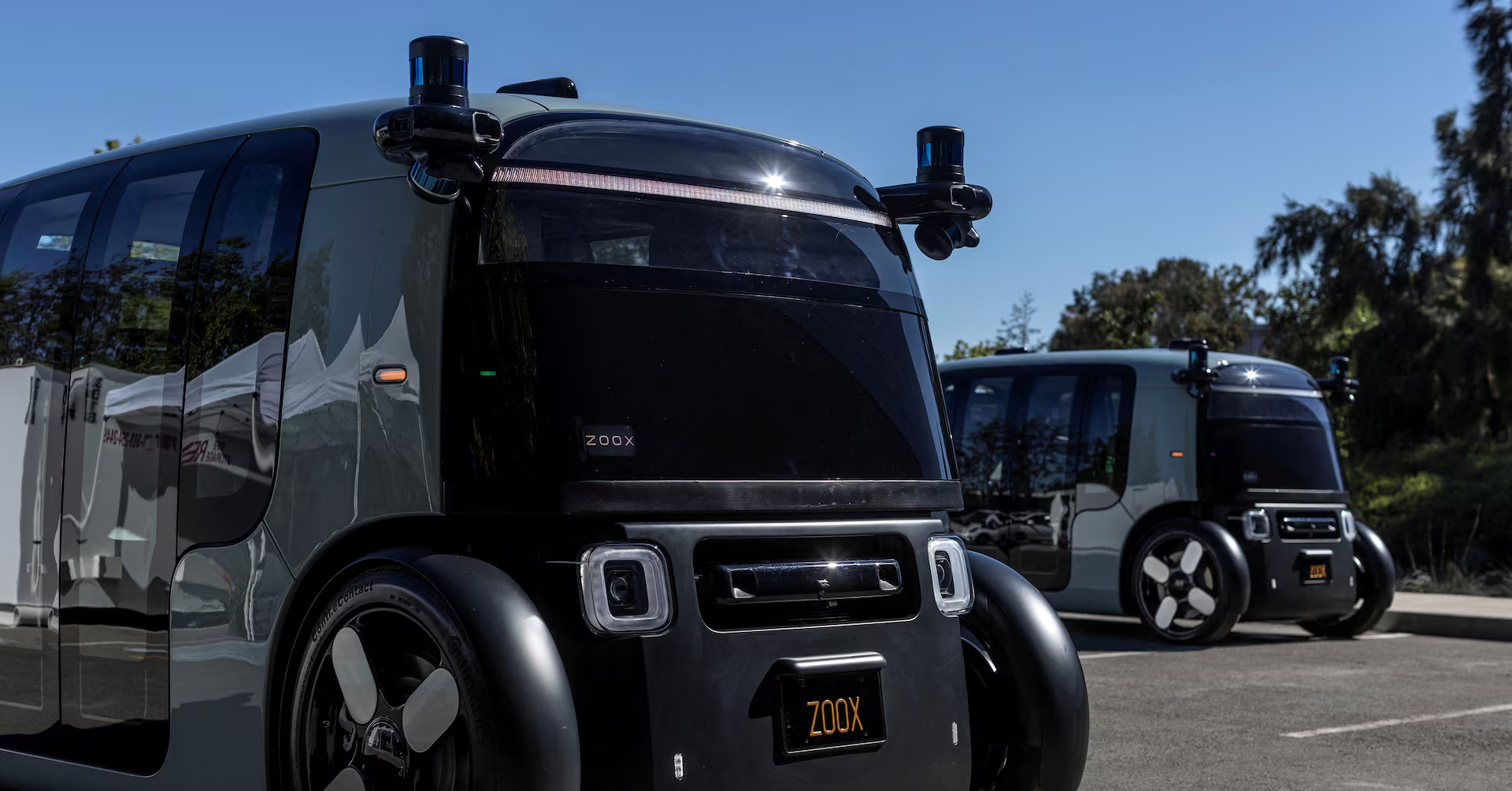
Zoox, the self-driving vehicle subsidiary of Amazon, has agreed to recall 270 autonomous vehicles following an April 8 crash in Las Vegas involving one of its unoccupied robotaxis and a passenger car. No injuries were reported, but the incident prompted a temporary suspension of operations and a subsequent software update to correct the issue.

According to Zoox, the crash occurred when the robotaxi misjudged a perpendicular vehicle’s behavior, incorrectly anticipating that the oncoming car would continue moving. Instead, the car stopped and yielded, but the Zoox vehicle had already slowed and shifted right, leading to a collision despite hard braking.

The company identified that the issue arises when its vehicles travel at over 40 mph (64 km/h) and encounter vehicles that slowly encroach from perpendicular driveways. The system’s failure to accurately predict the yielding vehicle’s stop was the root cause of the incident.

Zoox has since rolled out a software fix to prevent similar errors and stated that the vehicle behavior has been addressed. This marks the second recall in recent months: in April, the National Highway Traffic Safety Administration (NHTSA) closed a probe into 258 Zoox vehicles following two rear-end collisions caused by unexpected braking, after Zoox issued a software update.

However, Zoox remains under NHTSA scrutiny. The agency is still investigating the company’s 2022 self-certification of a robotaxi without traditional controls, such as a steering wheel or pedals.

The incident underscores ongoing regulatory and technical hurdles faced by autonomous vehicle developers as they approach broader deployment.

Uber Teams Up with Pony AI to Launch Self-Driving Taxis in Middle East Pilot Program

Uber announced on Tuesday a new partnership with China-based autonomous driving company Pony AI, marking its latest move to expand into the robotaxi market. The collaboration will begin with a pilot launch in a key Middle Eastern market later this year, with plans for further international rollout.

During the pilot phase, Pony AI vehicles will operate with onboard safety drivers, with the goal of transitioning to fully autonomous commercial service as regulatory and technical milestones are met.

The deal is part of Uber’s growing portfolio of partnerships aimed at strengthening its foothold in self-driving mobility, as it competes with rivals like Lyft and Tesla. In recent weeks, Uber also announced collaborations with May Mobility and Momenta, and expanded its strategic alliances with WeRide and Alphabet’s Waymo.

Pony AI shares rose nearly 13% in premarket trading following the news, while Uber shares dipped slightly by 1%. Pony AI, which went public on Nasdaq in November, is backed by Toyota and has active robotaxi licenses in major Chinese cities including Beijing, Shanghai, Guangzhou, and Shenzhen. The company is also exploring expansions into South Korea, Luxembourg, Hong Kong, and other international markets.

As the U.S. government continues to ease certain regulatory barriers for self-driving vehicles—while requiring incident reporting—companies like Uber and Pony AI are accelerating efforts toward large-scale robotaxi deployment.

Aurora Plans to Tackle Harsh Weather with Self-Driving Trucks Ahead of Commercial Launch

Aurora Innovation has announced plans to enable its self-driving trucks to operate in inclement weather conditions as part of its preparations for launching commercial trips in Texas, New Mexico, and Arizona in 2025. The autonomous trucks are set to begin operations on public roads, marking a significant milestone in Aurora’s path to becoming a leader in autonomous freight transportation.

Expansion of Operational Design Domain (ODD)

Aurora intends to expand the Operational Design Domain (ODD) for its autonomous trucks to include harsher weather conditions. The ODD defines the specific conditions under which a vehicle is designed to operate safely, taking into account factors like geography, weather, and traffic patterns. The trucks will be able to operate in suburban and urban environments, dense traffic, highway construction zones with cones and barriers, as well as in both daytime and nighttime conditions.

The company is enhancing its testing strategy for the trucks to ensure their readiness for these more complex environments. This includes extensive simulations in virtual environments, evaluations on closed tracks, and real-world performance monitoring to fine-tune the vehicles before their commercial launch.

Launch and Expansion Plans

Aurora previously confirmed that it plans to initiate its service in Texas in April 2025. The service will operate within speed limits ranging from 25 miles per hour to 75 miles per hour, allowing for a wide range of operating conditions across the three states.

Partnerships and Technological Advancements

In an effort to accelerate the deployment of its autonomous trucks, Aurora has signed long-term partnerships with key players in the tech and automotive industries, including Nvidia and Continental. These collaborations are expected to enhance Aurora’s capabilities in developing and deploying driverless trucks for freight transport.

Conclusion

With plans to navigate both standard and harsh weather conditions, Aurora Innovation is positioning itself to be a major player in the autonomous trucking industry. The company’s focus on rigorous testing and strategic partnerships is expected to ensure the success of its commercial launch in 2025.