Yazılar

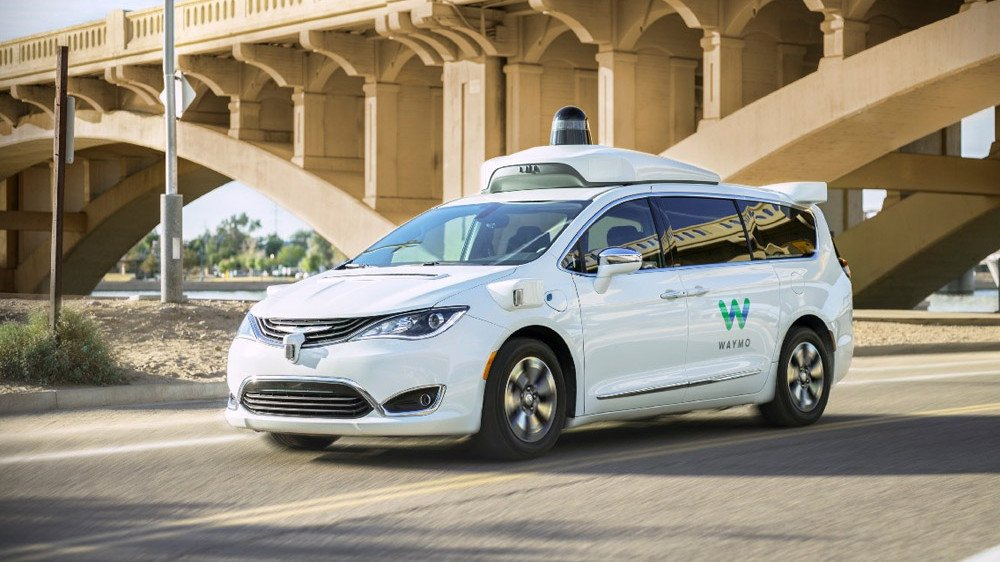
U.S. Safety Regulators Probe Waymo Robotaxis Over School Bus Incident

U.S. auto safety regulators have opened a preliminary investigation into Waymo, Alphabet’s self-driving car unit, after reports that one of its robotaxis failed to stop properly for a school bus in Georgia. The probe, launched by the National Highway Traffic Safety Administration (NHTSA), covers about 2,000 vehicles equipped with Waymo’s fifth-generation Automated Driving System.

The investigation follows a media report showing a Waymo vehicle maneuvering around a stopped school bus with its red lights flashing and stop arm extended while children were disembarking — a clear violation of school bus safety protocols. NHTSA said the vehicle initially stopped before moving around the bus, suggesting a potential software or perception failure.

Regulators noted that given Waymo’s extensive operations — the company’s autonomous cars have logged over 100 million miles and currently drive 2 million miles per week — similar incidents could have occurred previously. The agency emphasized the need to evaluate how Waymo’s technology responds to critical real-world safety cues, particularly around children and pedestrians.

Waymo acknowledged the event, saying it has already implemented software improvements to enhance behavior around school buses and will issue further updates soon. “Driving safely around children has always been one of our highest priorities,” a company spokesperson said, explaining that the vehicle’s sensors may not have initially detected the flashing signals due to its angle of approach.

The company operates a fleet of over 1,500 driverless vehicles in Phoenix, San Francisco, Los Angeles, and Austin. The new probe comes months after NHTSA closed another 14-month investigation into Waymo’s earlier collisions with stationary objects, which led to two vehicle recalls.

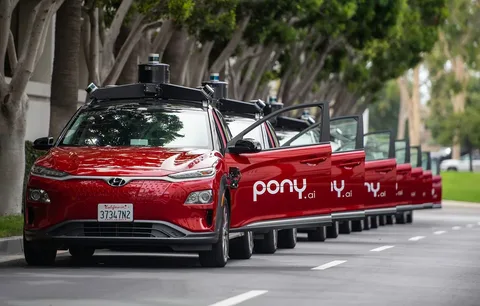
Stellantis partners with Pony.ai to develop self-driving vehicles in Europe

Stellantis and Pony.ai announced on Friday a new partnership to jointly develop and test autonomous electric vehicles across Europe. The collaboration aims to bring SAE Level 4 self-driving capabilities—meaning hands-off and eyes-off driving—to Stellantis’ next-generation electric vans.

The project will integrate Pony.ai’s advanced autonomous driving software with Stellantis’ battery-electric medium-sized van platform, beginning with the Peugeot e-Traveller model. Initial testing will take place in Luxembourg before expanding to multiple European cities starting in 2026.

Founded in 2016, Pony.ai operates fully driverless robotaxi services in several major Chinese cities and will manage the European initiative through its Luxembourg-based division.

The partnership will initially focus on light commercial vehicles (LCVs)—a segment where Stellantis’ Pro One division already holds a dominant market position in Europe. Both companies said the collaboration will prioritize safety, performance, and regulatory compliance, ensuring the technology meets Europe’s evolving standards for autonomous mobility.

The move underscores Stellantis’ ambition to lead the electrification and automation of commercial transport, blending software innovation from Asia with European engineering expertise.

Waymo to launch driverless ride-hailing service in London in 2026

Alphabet’s autonomous vehicle subsidiary, Waymo, announced plans to launch its fully driverless ride-hailing service in London next year, marking its first major expansion into Europe. The company, which has been gradually scaling operations in the United States, aims to bring its robotaxi technology to one of the world’s most densely regulated urban environments.

Waymo said it will partner with vehicle financing firm Moove to manage fleet operations, facilities, and charging infrastructure in London. The company is also working closely with local and national authorities to obtain the necessary regulatory approvals ahead of the launch. According to a spokesperson, vehicles are already en route to London, where they will initially be tested with safety drivers before transitioning to full autonomy in 2026.

In the U.S., Waymo currently provides over 250,000 paid trips weekly across cities including San Francisco, Los Angeles, Phoenix, Atlanta, and Austin, with a fleet of roughly 1,500 vehicles. The company has also been expanding internationally, collecting data in Tokyo earlier this year in collaboration with Japanese partners Nihon Kotsu and Go.

The move comes amid intensifying competition in the autonomous transport sector, as Tesla prepares to debut its long-promised robotaxi service and Uber plans to trial fully driverless rides in the UK in partnership with AI startup Wayve. Despite regulatory challenges and technical setbacks in the U.S., Waymo’s London project signals renewed momentum for commercializing self-driving technology.