Yazılar

Musk’s new Tesla pay deal could earn billions even without “Mars-shot” breakthroughs

Elon Musk’s record-breaking $878 billion Tesla pay package, pitched as contingent on “Mars-shot” achievements, could still grant him tens of billions of dollars even if he misses the most ambitious goals, according to a Reuters analysis of the deal’s structure and expert evaluations.

When Tesla’s board approved the 10-year compensation plan in September, it told investors Musk would only earn shares by transforming Tesla and society through advances in AI, robotics, and autonomy. Yet performance experts say the plan’s vague definitions and lenient milestones could see Musk earning massive payouts without revolutionizing the company.

By achieving only a handful of easier targets—such as modest vehicle sales and incremental growth in Full Self-Driving (FSD) subscriptions—Musk could collect more than $50 billion in Tesla stock. Even two minor achievements, paired with a $2.5 trillion valuation, would grant him $26 billion, more than the lifetime pay of several top U.S. CEOs combined.

Critics argue that goals like selling 1.2 million cars annually or reaching 10 million FSD subscriptions are achievable without breakthroughs in autonomy or robotics. Experts also noted that definitions of “advanced driving system” and “robot” are so broad that Musk could qualify for payouts without delivering true self-driving or humanoid robots.

Tesla’s board insists the package is “worth zero unless value doubles,” yet corporate governance analysts warn that the structure grants Musk huge rewards with minimal accountability. The hardest targets—profit milestones up to $400 billion—may be out of reach, but Tesla’s market value could still reach $2–3 trillion over a decade with average stock growth.

Morningstar analyst Seth Goldstein said the company’s valuation already hinges on “future products that don’t exist today.” Whether Musk delivers them—or merely the promise—will decide if shareholders’ faith pays off.

U.S. investigates 2.9 million Teslas over Full Self-Driving traffic violations

The U.S. National Highway Traffic Safety Administration (NHTSA) has launched an investigation into 2.88 million Tesla vehicles equipped with the company’s Full Self-Driving (FSD) software after receiving more than 50 reports of traffic violations and crashes linked to the system.

The agency said the FSD feature — which requires driver attention and intervention — has in some cases “induced vehicle behavior that violated traffic safety laws,” including driving through red lights and making illegal lane changes. So far, 58 incidents have been reported, 14 resulting in crashes and 23 injuries, according to NHTSA.

In at least six cases, Teslas running FSD reportedly entered intersections against red signals, leading to collisions, four of which caused injuries. The regulator said it is also examining FSD’s behavior at railroad crossings following concerns raised by U.S. lawmakers over near-miss incidents.

The probe marks a preliminary evaluation, the first stage before a potential vehicle recall if safety risks are confirmed. Tesla shares slipped 2.1% following news of the investigation, first reported by Reuters.

Tesla recently issued a software update for FSD, though the company has not publicly commented on the probe. The system has been under continuous federal scrutiny amid concerns that its branding and performance blur the line between driver assistance and full automation.

Experts say the U.S. action may pressure other regulators to examine the growing use of semi-autonomous technologies in vehicles worldwide.

Waymo Launches Corporate Robotaxi Accounts to Target Business Travel

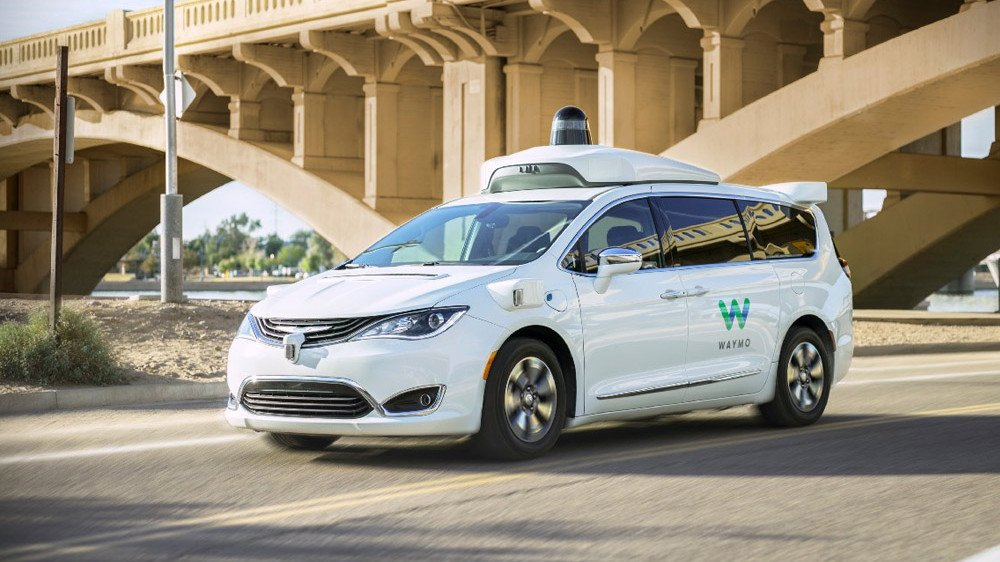
Alphabet-owned Waymo announced on Wednesday the launch of “Waymo for Business,” a corporate program that allows companies to set up accounts for employees to use its robotaxi service across Los Angeles, Phoenix, San Francisco, Austin, and Atlanta.

The initiative is aimed at tapping into recurring corporate travel demand, giving employers tools to control when, where, and how staff use autonomous rides. It marks another step in Waymo’s efforts to expand the commercial use of its driverless fleet.

Waymo said it now completes more than 1 million rides per month, with nearly one in six riders in San Francisco, Los Angeles, and Phoenix using the service for commuting. The company has recently expanded operations, launching paid driverless rides in Atlanta and broadening coverage in Austin.

Through an administrative portal, organizations can manage employee access, issue promo codes, and generate reports to track ride usage and expenses. Early adopters include Carvana, the Phoenix-based online used-car retailer.

The business service is still in its early stages, but Waymo said more features will be added over time to support companies of various sizes.

A key focus for Waymo is airport access, a priority for frequent business travelers. The company already serves Phoenix Sky Harbor Airport, recently gained approval to operate at San José Mineta International Airport, and holds a testing permit at San Francisco International Airport ahead of possible commercial service.