Yazılar

China-Europe Rivalry Heats Up at Paris Car Show as EV Tariffs Loom

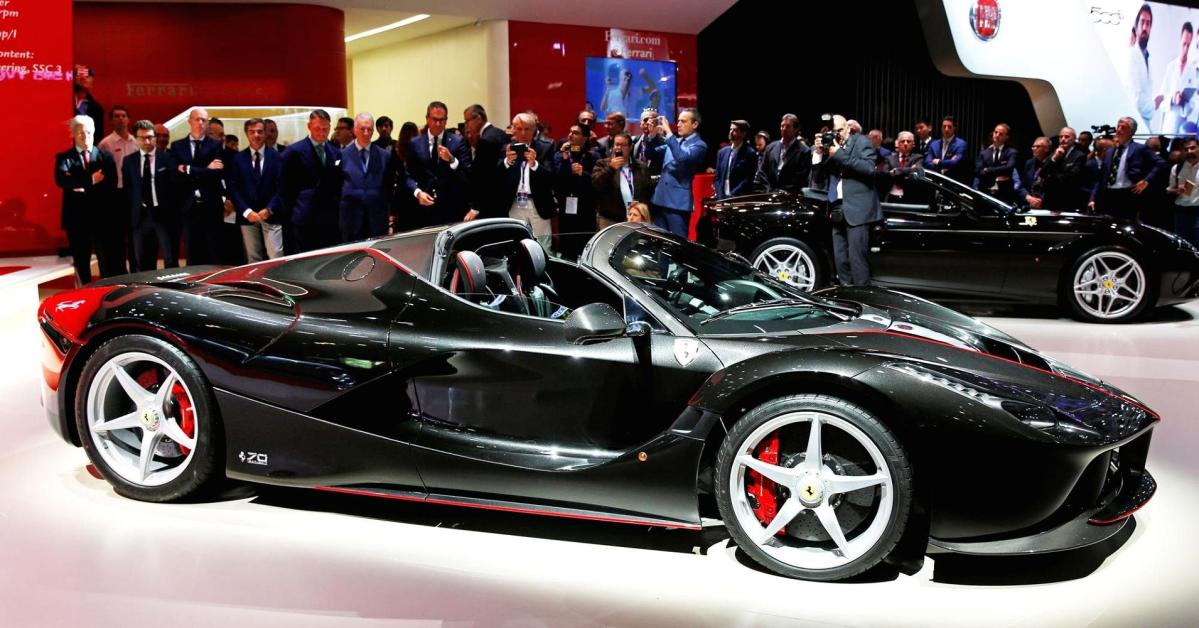
The Paris car show, one of Europe’s largest automotive events, has become a battleground for Chinese and European automakers. Tensions are rising as the European Union prepares to impose significant tariffs on Chinese-made electric vehicles (EVs), a move that could reshape the future of the industry amid already weak demand.

Chinese automotive giant BYD voiced concerns over the planned tariffs, which could reach 45%, warning that these levies would push up prices and deter consumers. Stella Li, executive vice president of BYD, highlighted that the higher costs would disproportionately affect lower-income buyers. “It will stop poorer people from buying,” she said, underlining the impact on affordability and consumer access.

This year’s Paris show, while showcasing major players from both sides, reflects a critical moment for the auto industry. European manufacturers, struggling with declining sales and profitability, are trying to prove they can compete with their Chinese counterparts, who have been rapidly gaining ground.

Tariff Debate and Chinese Expansion

The EU’s impending tariffs are aimed at countering what it describes as unfair subsidies from Beijing to Chinese automakers. European leaders argue that these subsidies give Chinese companies an edge by artificially lowering production costs, allowing them to flood the European market with cheaper EVs. However, Beijing denies these claims and has threatened retaliatory measures against the EU.

Despite the controversy, Chinese automakers are pressing ahead with their plans to expand into Europe. BYD, along with eight other Chinese brands, including Leapmotor, are debuting their latest models at the Paris show. Chinese companies accounted for nearly half the brands present in 2022, but this year they represent about one-fifth, reflecting a stronger response from European carmakers determined to defend their market share.

One of the key attractions at the event is BYD’s Sea Lion 07 SUV, which is expected to generate buzz among European consumers. However, while Chinese automakers like BYD are selling across Europe, they still struggle with brand recognition. That lack of awareness is something they aim to overcome with more aggressive marketing strategies and product launches.

Other Chinese automakers, such as Leapmotor and GAC, are also making their European debut, with plans to establish hundreds of sales points by 2025. While these companies have gained a foothold by undercutting their European rivals on price, they are also trying to differentiate themselves by offering better equipment and features as standard.

Picture background

Europe’s Response

On the European front, car manufacturers face an uphill battle. Industry giants like Volkswagen, BMW, and Mercedes-Benz have all issued profit warnings, largely due to declining sales in China, their biggest market. These companies are feeling the pressure to innovate and reduce costs in the face of Chinese competition, which can bring new models to market in just two years—half the time it typically takes traditional Western automakers.

The European car market itself is struggling. Sales hit a three-year low in August 2024, and automakers like Stellantis have been forced to slash earnings forecasts due to inventory issues in the U.S. market. The European auto industry is now grappling with potential job cuts and factory closures, as companies like Volkswagen consider shutting down plants in Germany to cut costs.

As automakers scramble to remain competitive, Stellantis CEO Carlos Tavares hinted at tough decisions ahead, including potential job cuts or even offloading underperforming brands. Speaking on French radio, Tavares emphasized that it would ultimately be up to consumers to determine which brands survive, saying, “It’s the clients, not me, but there is no taboo.”

Adding to the pressure, European consumers are becoming more price-conscious. The French government recently announced that it would reduce its subsidies for EV buyers, following in the footsteps of Germany, which ended its EV subsidy program in 2023. These moves are likely to further strain the EV market as manufacturers try to close the price gap between electric vehicles and their cheaper gasoline-powered counterparts.

The Broader Context: Chinese and U.S. Relations

For Chinese automakers, the European market is critical, as they have largely been shut out of the U.S. market. The Biden administration has imposed a 100% tariff on Chinese-made EVs and proposed restrictions on key Chinese software and hardware in connected vehicles. With limited opportunities in the U.S., Chinese automakers are turning to Europe as their next big growth market.

Chinese companies have been able to leverage their lower production costs and fast development cycles to gain an advantage over European automakers. However, the upcoming EU tariffs could slow down their momentum, depending on how Chinese brands respond. So far, no Chinese automaker has announced plans to raise prices to offset the expected tariffs, but industry analysts warn that increased costs may be inevitable.

Future Outlook: A Battle for Market Supremacy

As EV adoption continues to rise, the competition between Europe and China is intensifying. While Chinese automakers have gained a reputation for producing affordable, feature-rich EVs, they still face hurdles in brand recognition and consumer trust. On the other hand, European automakers must quickly innovate and cut costs if they want to defend their home turf.

Industry insiders predict that price parity between electric and gasoline-powered vehicles could be achieved within the next two to three years, a milestone that could level the playing field for all manufacturers. However, the race is on, and European automakers have only a short window to catch up to their Chinese rivals.

As John Dunne, an automotive expert at Stax, noted, “The Europeans have massive alarm bells ringing. They have recognized they need to do something pretty radical, and they only have a couple of years to do it.”
China’s Car Sales Rebound in September, Driven by Subsidies for EVs

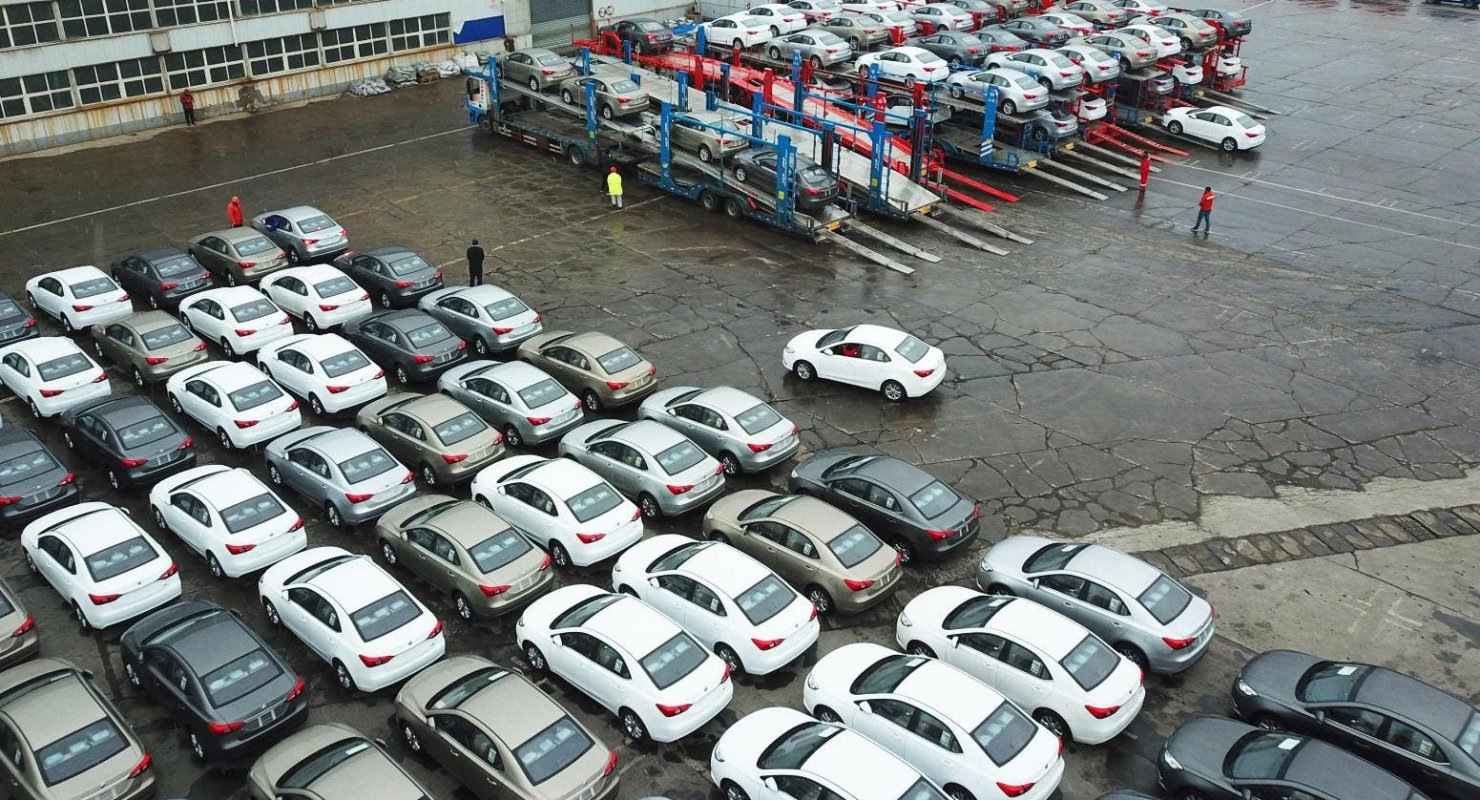
After five consecutive months of decline, China’s passenger vehicle sales rebounded in September, posting a 4.3% year-on-year increase. The uptick was largely fueled by a government subsidy program aimed at encouraging the trade-in of older vehicles, part of a broader economic stimulus package. The world’s largest automotive market saw sales rise to 2.13 million vehicles, up from 2.04 million in the same period last year, with electric vehicles (EVs) and plug-in hybrids driving the growth.

Surge in Electric Vehicle Sales

While sales of gasoline-powered cars continued to decline, the rise in new energy vehicles (NEVs)—which include both electric and plug-in hybrid models—was striking. NEV sales jumped 50.9%, accounting for 52.8% of total car sales in China. September marked the third consecutive month where sales of battery-powered cars outpaced traditional gasoline vehicles. In total, 1.12 million EVs and plug-in hybrids were sold in September alone, bringing the total for the first nine months of the year to 7.13 million.

Tesla, a major player in China’s EV market, saw its sales surge by 66% year-on-year, selling over 72,000 vehicles in China during September. Chinese EV makers, such as BYD and Xpeng, also experienced record-breaking sales, further solidifying their position in the market.

Government Subsidies: A Key Driver

China’s government played a significant role in boosting NEV sales through the expansion of its subsidy program in July 2024. Under the program, consumers who scrap older vehicles and replace them with EVs can receive a subsidy of over $2,800, double the amount introduced in April. For those opting for more fuel-efficient combustion vehicles, the subsidy is $2,100. By late September, 1.1 million consumers had already registered to take advantage of the trade-in incentives.

Cui Dongshu, the secretary-general of the China Passenger Car Association (CPCA), anticipates a strong fourth quarter for the auto market, spurred by these subsidies and increased support from local governments.

Challenges in the Broader Market

Despite the rise in passenger vehicle sales, data from the Chinese Association of Automobile Manufacturers (CAAM) painted a more mixed picture. Overall vehicle sales in China, including commercial vehicles, dropped by 1.7% in September compared to the previous year. The commercial vehicle segment, in particular, saw a sharp decline, with wholesale exports plunging by 23.5%.

This downturn in commercial vehicle sales highlights ongoing challenges in China’s automotive sector, as well as the broader economic struggles the country is facing. In response, the Chinese government has introduced a series of economic measures, including interest rate cuts and liquidity injections, in an effort to reignite growth.

Export Growth Amid Global Backlash

China’s car exports remain a bright spot for the industry, growing by 22% in September and bringing the total number of vehicles exported in the first nine months of the year to 3.55 million. This growth comes despite rising political opposition in key export markets. Last year, China overtook Japan to become the world’s largest vehicle exporter.

However, international scrutiny of China’s automotive dominance is intensifying. In September, the European Union (EU) voted to impose tariffs of up to 45% on Chinese-made EVs, citing concerns over past subsidies that have allegedly given Chinese automakers an unfair advantage. Germany, an EU member with strong ties to the automotive industry, opposed the move, while China has expressed its hope to resolve the dispute through negotiations that would establish minimum sales prices for Chinese EVs in Europe.

The United States and Canada have already taken more drastic measures, imposing tariffs of 100% on Chinese-made EVs, effectively blocking them from these markets.

Looking Ahead

As China moves into the final quarter of 2024, its automotive market is poised for further growth, thanks to ongoing government support and consumer demand for EVs. The country’s focus on bolstering its EV industry—seen as a critical element of its economic strategy—has reshaped the global automotive landscape. However, the long-term outlook for China’s auto industry remains uncertain, particularly as international trade tensions and questions about the sustainability of stimulus measures persist.

EU Tariffs Unlikely to Deter Chinese EV Makers from Expanding in Europe

Despite the European Union’s new tariffs on Chinese electric vehicles (EVs), Chinese automakers remain well-positioned to expand in the European market. Recent revisions have slightly reduced the tariffs, with BYD seeing a cut to 17% from 17.4%, Geely to 19.3% from 19.9%, and SAIC from 37.6% to 36.3%.

Research by Rhodium suggests that tariffs would need to be as high as 50% to make Europe unattractive to Chinese EV exporters, and potentially even higher for vertically integrated manufacturers like BYD. At their current levels, these tariffs will not significantly hinder Chinese EV manufacturers from entering the European market. Joseph McCabe, president and CEO of AutoForecast Solutions, noted that while the tariffs introduce hurdles, they do not act as barriers, given the strong interconnections between European and Chinese original equipment manufacturers (OEMs).

In contrast to the EU, North America has taken a more aggressive stance, with the U.S. imposing a 100% tariff on Chinese EVs, followed by a similar move from Canada. McCabe highlighted that the EU is attempting to balance promoting domestic production without severely impacting its interconnected Chinese operations.

Chinese automakers, particularly BYD, are also targeting the European market with competitively priced models. In May, BYD announced its Dolphin model, priced at under $21,550—significantly cheaper than Tesla’s China-imported Model 3, which faces a 9% tariff and sells for $44,480 in the UK. Even with the EU’s 17% tariff, the Dolphin remains about $23,270 cheaper than Tesla’s Model 3.

To compete, Volkswagen plans to release a low-cost electric vehicle priced similarly to BYD’s offerings by 2027. However, McCabe noted that new, innovative EV players are often valued more for their potential than short-term financial performance, which is the focus for legacy manufacturers like Volkswagen.

William Ma, CIO of GROW Investment Group, pointed out that tariffs would need to rise to 300% to significantly impact Chinese EV makers, which is unlikely. The risk of retaliatory tariffs from China also complicates the EU’s approach, especially given ongoing tensions over perceived unfair subsidies for Chinese EV manufacturers.

Ma suggested that geopolitical factors and sanctions could persist for another year or two, making the situation difficult to resolve in the short term.