Yazılar

Tesla’s Sales Rise in Parts of Europe but Pressure Mounts From Rivals

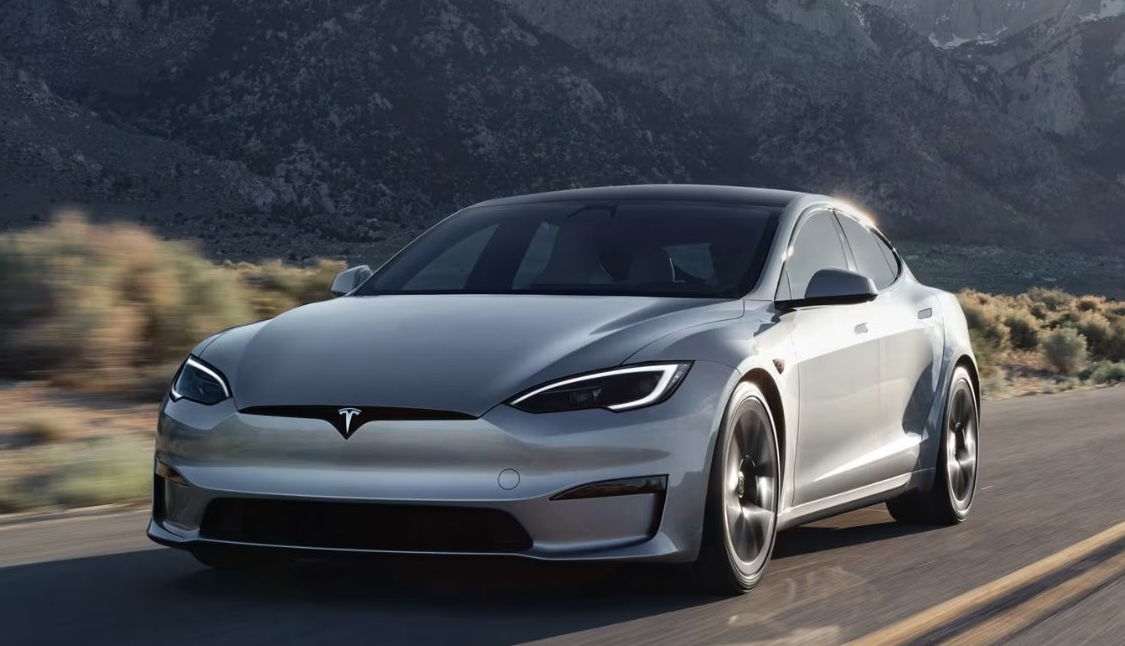
Tesla recorded a modest rebound in several European markets in September, buoyed by sales of its updated Model Y, but analysts warn the U.S. automaker faces mounting challenges from both European and Chinese competitors amid an ageing product lineup.

According to local industry data released Wednesday, Tesla’s sales rose in France, Denmark, Norway, and Spain, with the Model Y emerging as Denmark’s best-selling vehicle. However, new car registrations fell in Sweden and the Netherlands—the latter marking its ninth consecutive monthly decline.

Despite recent gains, Tesla’s broader European performance remains weak. Between January and August, Tesla’s sales fell 42.9% year-on-year in the European Union and 32.6% across Europe overall, even as the region’s total EV sales jumped 24.8%.

Matthias Schmidt of Schmidt Automotive Research described the September uptick as “a bottoming out of the downward trend rather than any real signs of an expected uplift.” He said an affordable Model Y variant, expected in 2026, could help, but Tesla’s prospects remain “tough in a more competitive market environment.”

Once dominant in Europe, Tesla now faces an influx of new EVs from Volkswagen, BMW, Renault, and Chinese players like BYD, which outsold Tesla in the EU in August for the second time this year.

The automaker’s reputation has also been affected by political backlash against CEO Elon Musk, whose support for Donald Trump’s re-election campaign and European far-right parties has alienated some consumers.

Andy Palmer, chairman of Electric Vehicles UK, said Tesla is still “a big fish, but the pond is now full of serious competitors.” Unless it refreshes its range soon, he warned, “it will keep losing market share.”

Performance varied sharply across Europe in September:

  • France: +2.74% year-on-year

  • Denmark: +20.5%, with the Model Y leading sales

  • Norway: +14.7%, with Model Y and Model 3 ranking top two

  • Spain: +3.4%, boosted by a 60% surge in Model Y registrations

  • Sweden: –64% year-on-year, though higher than August levels

  • Netherlands: –48%

Analyst Andy Leyland of SC Insights said Tesla’s biggest challenge lies ahead: “Chinese automakers are rapidly building distribution networks in Germany, the UK, and France. It will be critical to see whether Tesla can still compete.”

Chinese automakers outsell Renault and Audi in Europe on plug-in hybrid surge

Chinese carmakers outpaced Renault and Audi in European sales in August, driven by soaring demand for plug-in hybrids (PHEVs), according to new data from JATO Dynamics.

Chinese brands, including BYD, Jaecoo (a Chery brand), and MG (owned by SAIC), placed models in Europe’s top-ten PHEV sellers, with the BYD Seal U, Jaecoo J7, and MG HS leading the charge.

By the numbers:

  • Chinese brands’ market share: 5.5% in August, with 43,500 sales (+121% year-on-year).

  • Audi sales: 41,300

  • Renault sales: 37,800

  • PHEV sales in Europe (28 countries): nearly 84,000 units, up 59% year-on-year.

  • Chinese PHEV sales: 11,000 units, up 14-fold.

  • BEV sales overall: up 27%, beating overall market growth of 5%.

Tesla’s Model Y remained Europe’s top battery-electric vehicle (BEV), though sales fell 37% from August 2024 despite rising BEV demand overall.

Why it matters:

Chinese automakers are using PHEVs as a stepping stone into the European market, where they are seen as a practical compromise between combustion and fully electric vehicles. With EU tariffs looming on Chinese-made EVs, carmakers like BYD are preparing to localize European production by 2028, reducing tariff risks and strengthening competitiveness.

Analyst view:

“There was strong demand for BEVs in August, however a 27% increase is less significant than it looks when you consider how widely they are being promoted,” said JATO’s Felipe Munoz, noting that growth is moderating despite heavy industry backing.

The surge in Chinese sales reflects how rapidly they are reshaping Europe’s auto market, challenging established brands with aggressive pricing, hybrid offerings, and plans for local expansion.

China Urges Cautious but Rapid Development of Assisted-Driving Technology

China’s automakers are rapidly advancing assisted-driving technology, eager to capture a growing market. However, Beijing is pushing for a balanced approach—accelerate innovation but ensure safety and accountability.


Key Points:

  • Rapid Innovation, Careful Oversight: Chinese regulators are finalizing new safety rules for driver-assistance systems following a fatal crash involving a Xiaomi SU7 sedan in March, which killed three occupants shortly after the driver resumed control from the system.

  • Regulatory Approach:

    • China bans terms like “smart” and “autonomous” in marketing to avoid overselling capabilities.

    • Current rules allow automatic steering, braking, and acceleration only with driver engagement.

    • New regulations will require hardware/software to monitor driver alertness and control readiness.

  • Collaboration and Public Input:

    • Regulators worked with Dongfeng and Huawei to draft rules, with public consultation ending recently.

    • Plans to resume Level 3 validation tests this year after being paused post-Xiaomi crash; the first Level 3 vehicle approval expected in 2026.

  • Level 3 Ambitions:

    • Level 3 allows drivers to take eyes off the road under certain conditions—midway between basic driver-assist and full autonomy.

    • China has promoted Level 3 tests and aims to be a global leader in assisted-driving tech.

  • Industry Competition:

    • China’s automakers like BYD and Zeekr are aggressively pushing Level 2 and Level 3 tech, often offering features at low or no additional cost.

    • At the Shanghai auto show, Huawei and Geely’s Zeekr highlighted Level 3 readiness.

    • Traditional foreign automakers like Mercedes-Benz and Volkswagen focus on advanced driver-assist features but hold back on Level 3 due to higher costs and liability concerns.

  • Safety and Liability:

    • New regulations hold manufacturers and suppliers liable for accidents caused by system failures, similar to recent UK legislation.

  • Strategic Context:

    • China is using this push to support its domestic auto industry, much like its earlier backing of electric vehicles.

    • Over 60% of new cars sold in China this year are estimated to include Level 2 driver-assist features.


Expert Insights:

Markus Muessig of Accenture Greater China notes that China’s “feel the stones to cross the river” approach—steady, cautious exploration of new tech—has been effective. Meanwhile, Mercedes-Benz’s CTO Markus Schaefer highlights the ongoing challenges with balancing cost and safety requirements for Level 3 systems.