Yazılar

Global EV Sales Jump 24% in May as China Reaches Record High

Global electric and plug-in hybrid vehicle (EV) sales surged by 24% in May year-over-year, according to market research firm Rho Motion. The strong performance was led by China, where monthly EV sales exceeded one million units for the first time this year, driven by robust domestic demand and aggressive export strategies.

Chinese automaker BYD played a key role in expanding EV sales, exporting large volumes to markets such as Mexico, Southeast Asia, and Uzbekistan. “BYD’s exports to Mexico and Southeast Asia, along with Uzbekistan, have significantly boosted sales in these regions,” noted Charles Lester, data manager at Rho Motion.

In Europe, fleet incentives in Germany and strong growth in Southern European markets contributed to a 36.2% rise in EV sales, reaching 330,000 units. However, North America showed more modest growth, with sales increasing just 7.5% to 160,000 units, partly due to the expiration of Canadian subsidies and broader policy uncertainties.

Global automakers continue to face challenges in the U.S., where new 25% import tariffs have prompted several companies to reconsider their 2025 forecasts. Tesla’s Berlin-based Model Y production remains shielded from these tariffs, but the company faces intensifying global competition as production volumes increase worldwide.

Meanwhile, President Donald Trump’s policies on emissions standards and tariff uncertainties have further slowed EV adoption in North America. U.S. tax credits for EVs remain in place but are scheduled to begin phasing out in 2026, adding another layer of hesitation for potential buyers.

By the numbers, global sales of battery-electric vehicles and plug-in hybrids totaled 1.6 million units in May. China’s sales grew over 24% year-over-year to 1.02 million vehicles. Europe recorded a 36.2% increase, while North America lagged with a 7.5% gain. The rest of the world saw a 38% rise, reaching 150,000 vehicles.

Summing up the global picture, Charles Lester stated, “The story this month with global vehicle sales is the continued chasm between Chinese market growth versus the faltering market in North America.”

Tesla’s Self-Driving Strategy Threatened by Chinese Auto and Tech Giants

Chinese electric vehicle (EV) makers, led by BYD, are increasingly challenging Tesla not only in the affordable EV sector but now also in the race to develop self-driving technology. BYD’s aggressive pricing strategy—offering its advanced “God’s Eye” driver-assistance system for free—poses a direct threat to Tesla’s expensive Full Self-Driving (FSD) package, priced at nearly $9,000 in China.

According to Shenzhen-based BYD investor Taylor Ogan, God’s Eye outperforms Tesla’s FSD. Other Chinese competitors such as Leapmotor and Xpeng are also offering highly capable driver-assistance systems in vehicles costing as little as $20,000. This surge in advanced autonomous technology is heavily backed by the Chinese government, creating fierce competition within the world’s largest auto market.

Teardown analyses reveal that BYD’s assisted-driving hardware costs are similar to Tesla’s, despite BYD’s systems incorporating additional components like radar and lidar that Tesla omits in favor of a camera-only approach. Lower sensor costs in China—up to 40% cheaper than in Europe and the U.S.—helped Chinese firms maintain a cost advantage while delivering more comprehensive systems.

The competitive pressure from China coincides with broader challenges for Tesla CEO Elon Musk, whose global EV sales have been slipping. As Tesla shifts its focus toward robotaxis and autonomy to sustain its market valuation—currently around $1 trillion—the company now faces stiff competition from Chinese firms who are also advancing rapidly in autonomous vehicle development.

Huawei has emerged as a key player by partnering with major Chinese automakers such as Chery, SAIC, and Changan to supply driver-assistance technology. Reuters journalists recently observed Huawei’s Aito M9 autonomous system successfully navigating the congested streets of Shenzhen, showcasing China’s significant progress in real-world autonomous driving conditions.

Meanwhile, Tesla faces regulatory hurdles in China that prevent the company from using locally collected driving data to improve its AI models abroad. Negotiations to transfer such data to the U.S. have so far been unsuccessful. In contrast, Chinese companies benefit from Beijing’s policy support, government subsidies, and the massive scale of domestic EV sales, which provide extensive on-road data to refine their autonomous systems.

BYD’s decision to offer God’s Eye for free may reduce its 22% gross margins but is expected to boost sales volume, enhancing its AI capabilities through expanded data collection. The company sold 4.2 million vehicles last year—more than twice Tesla’s output—further improving its economies of scale and bargaining power with suppliers.

The intense competition in China’s EV sector has driven rapid technological innovation and reduced costs, allowing companies like BYD to pressure suppliers for further price reductions. This aggressive environment is viewed as entering a “knockout round” of competition, as described in a recent BYD communication to its supply chain partners.

Tesla, preparing to launch a limited robotaxi trial in Austin, Texas, with 10 to 20 vehicles, remains behind its Chinese rivals in delivering fully autonomous solutions. Tesla has yet to release a fully unsupervised version of FSD capable of true hands-off driving, while Chinese companies are advancing toward Level 3 autonomy certification under new regulatory frameworks.

China’s BYD to Nearly Triple Dealership Network in South Africa by 2026

Chinese electric vehicle (EV) manufacturer BYD plans to significantly expand its presence in South Africa, aiming to nearly triple its dealership network by next year as it pushes to grow its market share in Africa’s largest automotive market. The company currently operates about 13 dealerships in the country.

Steve Chang, General Manager of BYD Auto South Africa, told Reuters that BYD expects to increase its dealerships to around 20 by the end of 2025 and further expand to between 30 and 35 locations by the end of 2026. This expansion supports BYD’s goal of becoming a well-known brand across South Africa amid a growing interest in new energy vehicles (NEVs).

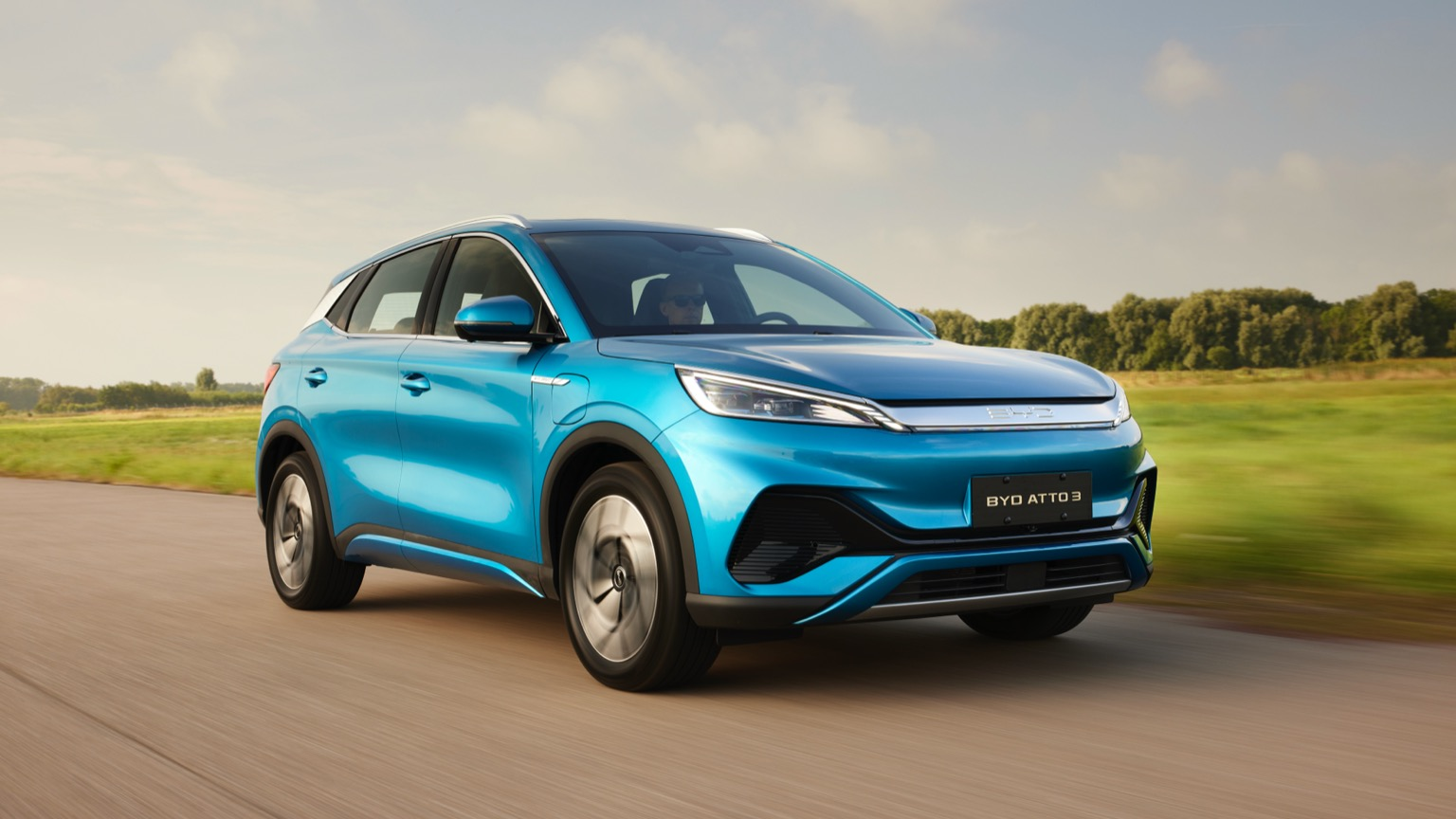
BYD launched in South Africa in 2023 with its all-electric ATTO 3 model. It now offers six models locally, including the plug-in hybrid Shark pickup, hybrid SEALION 6, and all-electric SEALION 7 SUVs introduced in April, reflecting its strategy to offer both hybrid and electric powertrains.

Sales of NEVs in South Africa nearly doubled in 2024, reaching 15,611 units compared to 7,782 units in 2023, according to the National Association of Automobile Manufacturers of South Africa (NAAMSA). Despite the low overall share of NEVs, BYD is focused on capturing early market share as the country gradually transitions toward electrified transportation.

Chang emphasized the importance of educating consumers about EVs to align South Africa with global trends. However, challenges remain, including limited charging infrastructure, unstable power supply, and relatively high import duties on EVs compared to conventional vehicles.

BYD views South Africa as a critical market in the southern hemisphere and the largest in Africa. The company’s planned expansion aims to tap into this potential and accelerate EV adoption on the continent.