Yazılar

Foxconn Open to Buying Stake in Nissan for Potential Cooperation

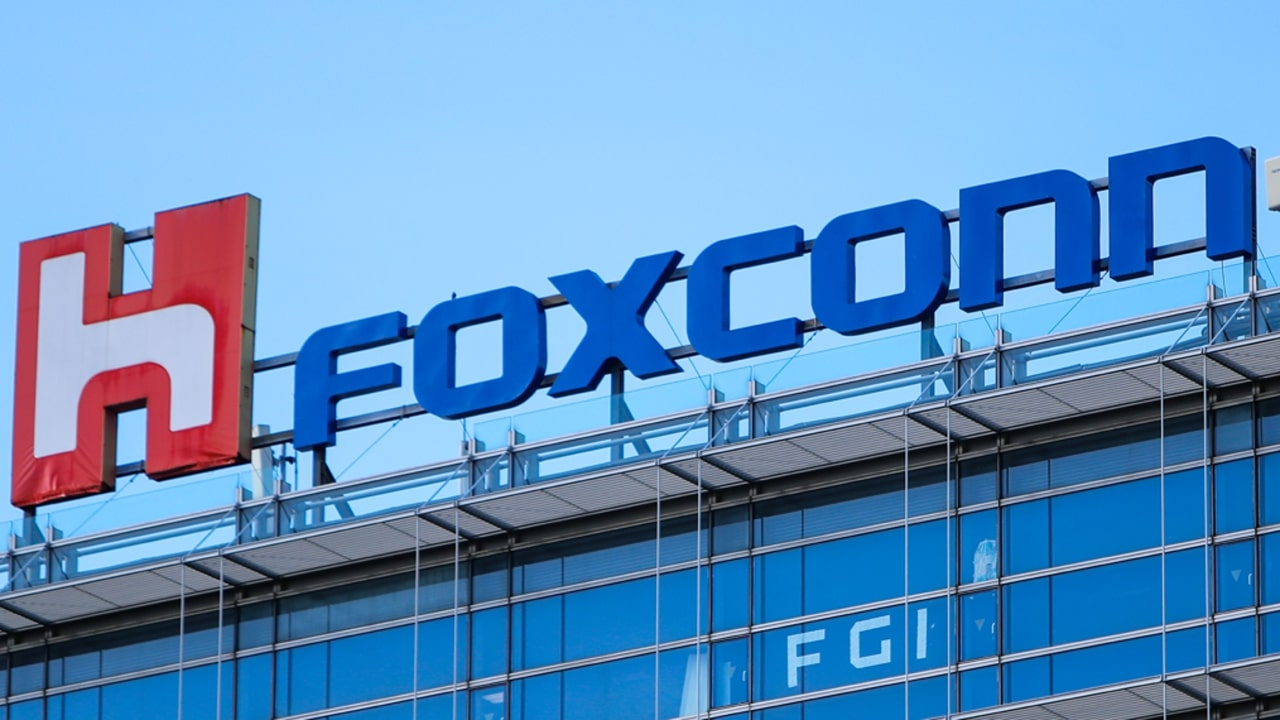
Foxconn (2317.TW), Taiwan’s leading electronics manufacturer, has expressed interest in purchasing a stake in Nissan (7201.T), but emphasized that its primary goal is to collaborate rather than invest in the automaker. Chairman Young Liu stated on Wednesday that Foxconn would consider buying shares if cooperation with Nissan required it, but reiterated that acquiring shares was not their main focus.

Foxconn is in discussions with Renault (RENA.PA), Nissan’s largest shareholder, about potential collaboration. These comments come amid uncertainty surrounding Nissan’s future after it stepped away from merger talks with rival Honda (7267.T), which would have created the world’s fourth-largest automaker.

Sources have indicated that Nissan and Honda, who had been exploring a merger, are expected to announce the end of their talks on Thursday due to growing differences between the two companies. This deal would have been a significant shift in an automotive industry facing mounting pressure from electric vehicle (EV) manufacturers, particularly China’s BYD (002594.SZ).

In light of the changing landscape, Nissan is reportedly open to partnerships with new players, including Foxconn, which is best known for its role as Apple’s primary iPhone manufacturer. While Foxconn seeks to diversify its business, it is not looking to establish itself as an automotive brand. Instead, it intends to offer commissioned design and manufacturing services for electric vehicles.

Neither Nissan nor Renault has commented on Foxconn’s chairman’s statements regarding potential collaboration.

Explainer: What Autonomous Driving Features Are Available in China?

China, the world’s largest auto market, is seeing significant advancements in autonomous driving features, with several companies introducing innovative technologies in their vehicles. Chinese electric vehicle (EV) maker BYD recently launched its proprietary advanced driver-assistance system, “God’s Eye,” in a range of models, signaling the start of a potential price war in a highly competitive market.

BYD’s Autonomous Driving Features:

BYD’s “God’s Eye” system is a three-tier platform based on computing power. The most affordable entry-level version, the C model, is available on vehicles priced between 69,800 yuan ($9,500) and 219,800 yuan, under the Dynasty and Ocean series. The system includes features such as:

  • Automatic highway ramp exit/entry
  • Lane keeping and cruise driving
  • Autonomous lane changes and obstacle avoidance
  • Autonomous emergency braking and self-parking upon exit
  • Remote parking

This version of the system uses 12 cameras, five-millimeter wave radars, and 12 ultrasonic radars. Higher-end variations of the system, God’s Eye A and B, are available on more premium models such as Denza and Yangwang brands, utilizing advanced computing and lidar to create 3D images of a vehicle’s surroundings, assisting in navigation around obstacles.

Tesla’s Full-Self Driving (FSD):

Tesla offers its full self-driving (FSD) software for subscription in China, though the features are limited compared to other markets. Tesla vehicles come with basic autopilot features, such as traffic-aware cruise control and in-lane autosteer.

  • Enhanced autopilot, priced at 32,000 yuan, includes auto lane change and auto parking.
  • FSD, priced at 64,000 yuan, will soon allow navigation on city streets and recognition of traffic lights and stop signs, with plans for a release later this year.

Huawei-backed AITO:

AITO, another key player in China’s EV space, equips its M7 model with two versions of Huawei’s advanced driving system. The base version includes navigation on highways, auto ramp entry/exit, and partial auto lane changes, priced at 249,800 yuan. The advanced version, priced at 289,800 yuan, includes lidar-powered features, such as city street navigation and automatic emergency braking for special-shaped obstacles.

AITO’s advanced driving software is also available for subscription on EVs from other brands, including Changan’s Avatr, for approximately $4,100.

Xpeng’s MONA Series:

Xpeng introduced its most affordable EV with advanced autonomous driving capabilities through its MONA sub-brand. The MONA M03 Max, priced from 155,800 yuan, includes a vision-only solution with lane-keeping control, adaptive cruise control, navigation on highways, and smart parking. The vehicle will also feature smart exit from parking spaces.

Xiaomi’s Autonomous Driving System:

Xiaomi has introduced its own smart driving system in the SU7 EVs, priced from 215,900 yuan. The lower-end version of the system includes auto parking and highway navigation. The higher-end version, equipped with lidar, enables additional features like urban navigation, collision avoidance, and special vehicle recognition, available in SU7 trims priced above 245,900 yuan.

China’s BYD Cuts Entry Price for Smart EVs, Sparking Potential Price War

China’s electric vehicle giant, BYD, made waves on Monday by launching its advanced autonomous driving features on a wide range of models, with prices starting as low as $9,555. This aggressive move, which analysts predict will ignite a price war, significantly undercuts competitors like Tesla. BYD now offers its proprietary “God’s Eye” advanced driver-assistance system (ADAS) on models priced above 100,000 yuan ($13,688), with three models priced below 100,000 yuan, starting at just 69,800 yuan for the Seagull. These new models went on sale immediately following the event.

Previously, BYD only included these high-tech features in EVs priced from $30,000. In comparison, Tesla offers similar features in China on vehicles starting at $32,000. This shift marks a significant democratization of technology, as BYD aims to make smart driving accessible to a broader audience. “Technology does not need to be high-end, and they can fight a price war here,” said Yale Zhang, managing director at Automotive Foresight.

BYD’s move is likely a strategic response to sales plateauing, as the company reached 4 million units sold last year. Industry expert John Zeng from GlobalData believes that smart driving technology could elevate BYD’s sales and put pressure on competitors, especially brands like Xpeng, which may struggle to offer similarly priced EVs with comparable smart features.

The introduction of these affordable smart driving cars comes after a period of aggressive price cuts by BYD, which had already stirred a price war in China’s automotive market. Shares of BYD surged 16% after reports of the smart driving plans surfaced. The company’s founder, Wang Chuanfu, suggested that smart driving will become as essential as seatbelts and airbags, pushing China’s AI-driven auto industry forward. The integration of DeepSeek’s AI models into BYD’s Xuanji smart car platform adds an additional layer to its technological advancements.