Yazılar

China Takes Steps to Protect Potatoes From Rising Temperatures and Climate Change Effects

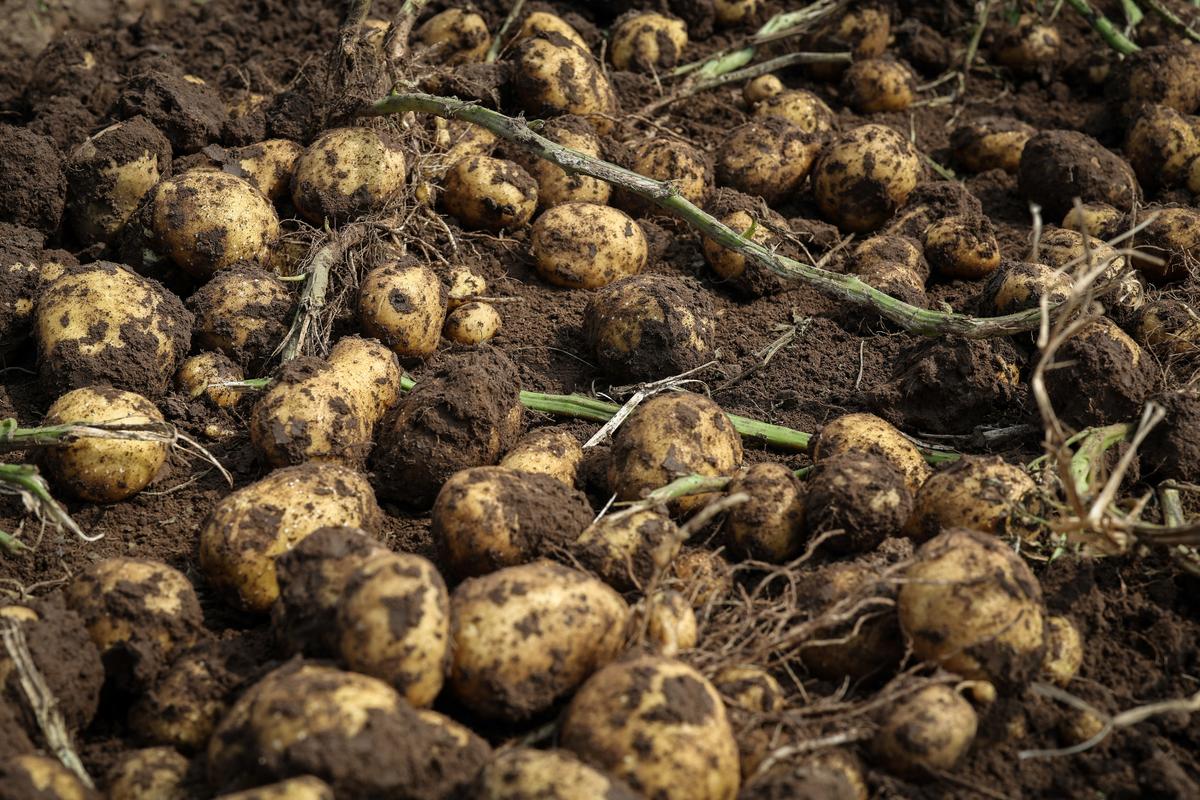
Chinese scientists are urgently working to safeguard potatoes, a crucial food crop, from the growing impacts of climate change. Research conducted by the International Potato Center (CIP) in Beijing has revealed concerning reductions in potato yields when exposed to higher temperatures. Potatoes grown in simulated future climate conditions were found to weigh less than half of what typical varieties in China weigh, highlighting the pressing need for adaptation measures to preserve this essential crop.

The findings, published in the Climate Smart Agriculture journal, come from a three-year research project led by molecular biologist Li Jieping. The study focused on potatoes grown in Hebei and Inner Mongolia under temperatures 3°C above current averages. The results showed a dramatic yield reduction of over 50%, with the potatoes growing faster but at the expense of size and weight. Li Jieping emphasized that this trend raises serious concerns about future food security in China, which is currently the world’s largest potato producer.

Farmers in regions like Inner Mongolia are already feeling the effects of climate change. Erratic rainfall patterns have been delaying harvests, while the warmer temperatures have also contributed to an increase in crop diseases. Wang Shiyi, a manager at Hebei Jiuen Agricultural Development Company, highlighted that this year’s heavy rains have significantly slowed down harvesting, further complicating efforts to maintain stable potato production.

As China grapples with these challenges, the research underscores the need for urgent climate adaptation strategies to protect agricultural productivity. With potatoes being a staple crop both domestically and globally, the findings serve as a warning that more proactive steps will be necessary to mitigate the negative effects of climate change on food security.

Rising Global Heatwave Hotspots Challenge Climate Model Predictions

A recent study published in the Proceedings of the National Academy of Sciences has revealed that many regions around the world are experiencing extreme heatwaves that exceed the predictions of current climate models. These temperature anomalies have been observed across every continent, except Antarctica, and are linked to significant impacts, including thousands of deaths, widespread agricultural failures, and devastating wildfires. The findings point to a growing concern over the limitations of existing climate models, which may not fully account for the increasingly intense and unpredictable heat events occurring globally.

The research, led by Dr. Kai Kornhuber from Columbia Climate School and the International Institute for Applied Systems Analysis, analyzed data from the past 65 years to explore the intensification of extreme heat events. The study found that certain regions are seeing much higher rates of temperature increase compared to moderate zones, resulting in more frequent and extreme heatwaves. These findings suggest that the pace of climate change may be accelerating in ways that were not fully captured by earlier climate models.

One striking example highlighted in the study is the Pacific Northwest heatwave of June 2021, where temperatures in Lytton, British Columbia, reached an unprecedented 121.3°F (49.6°C). This record-breaking heat not only shattered temperature records but also contributed to a wildfire that devastated the town, leaving lasting damage to both the community and the environment. Such extreme events are becoming more common, underscoring the need for better predictive models and increased attention to the growing risks posed by climate change.

The study also underscores the critical need for a deeper understanding of the physical processes behind these temperature extremes. While current models can predict general trends in global warming, they often fail to accurately capture the localized and more extreme weather patterns. This gap in understanding presents challenges for policymakers and communities trying to prepare for and mitigate the impacts of these unprecedented heat events. As climate change continues to disrupt weather patterns, more accurate predictions and robust adaptation strategies will be essential in safeguarding vulnerable populations and ecosystems.

NASA Satellites Show Decline in Freshwater Reserves Amid Ongoing Global Droughts and Warming

NASA Satellites Reveal Alarming Decline in Freshwater Reserves Amid Global Climate Challenges

Data from NASA’s Gravity Recovery and Climate Experiment (GRACE) satellites has revealed a concerning trend: Earth’s freshwater supplies have been significantly declining since May 2014. Published in Surveys in Geophysics, the findings show a marked shift in global water availability, underscoring the impact of prolonged droughts and rising temperatures. The research, conducted by an international team of scientists, highlights that freshwater reserves are persistently below average, indicating a drier phase for the planet that shows little sign of abating.

Global Freshwater Reserves Drop Significantly

The GRACE mission, a collaboration between NASA and German research institutions, tracked global freshwater reserves from 2015 to 2023, finding a reduction of approximately 1,200 cubic kilometers. To put this into perspective, this amount of water is about two-and-a-half times the volume of Lake Erie, one of the largest freshwater lakes in the world. The GRACE satellites measured not only surface water but also groundwater and other freshwater sources, providing a comprehensive view of the planet’s water reserves.

Impact of Drier Conditions on Water Availability

Matt Rodell, a hydrologist at NASA’s Goddard Space Flight Center, noted that the data points to a significant departure from the pre-2014 water availability averages. This shift is indicative of a continuing trend of global freshwater scarcity, exacerbated by ongoing climate change. As droughts become more frequent and intense, many regions are facing challenges in securing reliable water sources for both drinking and agricultural use.

Addressing the Freshwater Crisis

The ongoing decline in freshwater reserves presents a serious challenge for governments, industries, and communities around the world. While the GRACE satellite data offers crucial insight into the state of global water resources, it also underscores the urgent need for sustainable water management and climate change mitigation strategies. With global temperatures continuing to rise, the pressure on freshwater systems is expected to grow, making it more vital than ever to implement solutions that can help preserve and replenish these critical resources.