Yazılar

Bitcoin surges to record near $112,000 amid rising institutional interest

Bitcoin soared to a new all-time high late Wednesday, nearly touching $112,000, driven by growing risk appetite and sustained demand from institutional investors embracing the world’s largest cryptocurrency. The digital asset reached an intraday peak of $111,988.90 and was last trading around $111,259, marking an 18% gain since the start of the year.

Anthony Pompliano, founder and CEO of Professional Capital Management, highlighted bitcoin’s increasing appeal to large investors in a letter to clients:
“Bitcoin is the only asset I am aware of where it becomes less risky as it grows in size… With its market cap now measured in trillions, almost every capital allocator on the planet can put exposure on.”

The rally has been supported by crypto-friendly policies from the Trump administration, which have unlocked more capital for digital assets. For example, Trump Media & Technology Group recently filed to launch an exchange-traded fund investing in multiple cryptocurrencies, including bitcoin, ether, solana, and ripple.

Bitcoin’s surge also boosted the broader cryptocurrency market. Ether, the second-largest token, climbed to a one-month high of $2,794.95, last up 5.4% at $2,740.99. Shares in crypto-related companies also gained, with MicroStrategy rising 4.7% to $415.41 and Coinbase Global up 5.4% to $373.85.
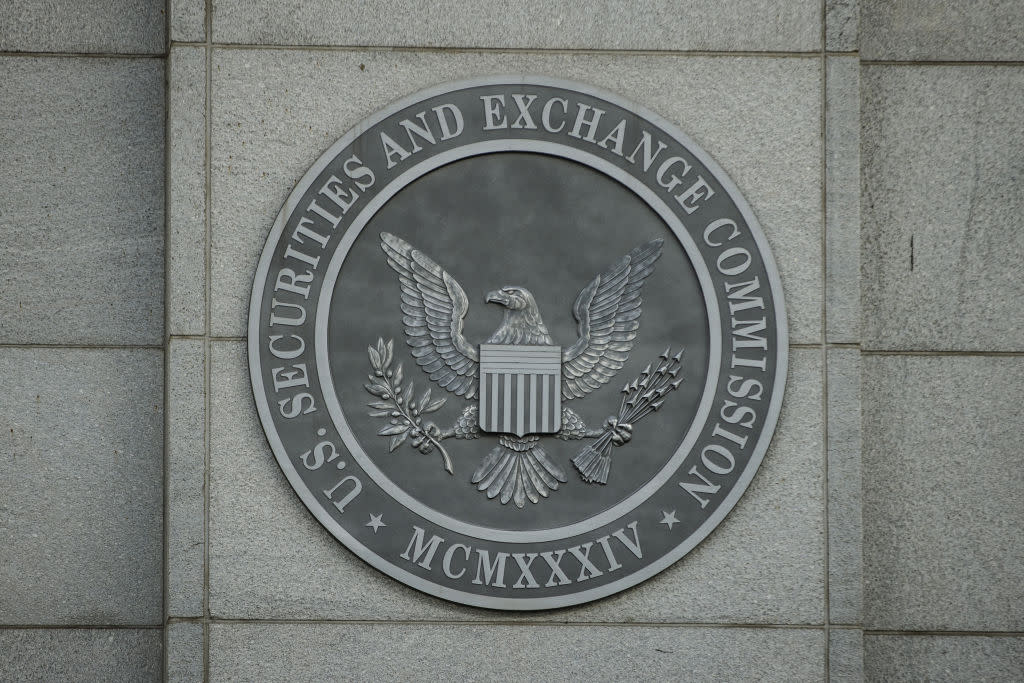
US SEC Issues First Guidance Toward Rules Governing Crypto ETFs

The U.S. Securities and Exchange Commission (SEC) took an important first step last week toward formalizing regulations for exchange-traded products (ETPs) linked to cryptocurrencies. The new 12-page guidance document lays out disclosure requirements for crypto ETFs, marking a shift in approach by the regulator under Republican leadership. This signals progress on approving dozens of pending applications for ETFs tied to cryptocurrencies such as Solana, XRP, and even former President Donald Trump’s meme coin.

The SEC has also formed a task force to develop detailed rules, revamped its crypto enforcement team, and stepped back from some high-profile enforcement cases previously seen as wins. This new guidance aims to create a clearer regulatory framework, helping asset managers and exchanges navigate the approval process more efficiently.

Industry experts welcomed the guidance as an essential step. Matt Hougan, CIO of Bitwise Asset Management, emphasized that its existence acknowledges crypto ETFs as part of the mainstream and begins to set “rules of the road” that benefit both issuers and the SEC. The guidance stresses issuers must explain in plain language key factors like custody arrangements and the unique risks within the competitive crypto market.

A more significant upcoming development will be a new SEC listing template to replace the current requirement for exchanges to submit a special exemption request (known as a 19(b)4 filing) for each crypto ETF listing. Eliminating this form could drastically shorten the approval timeline from up to 240 days to about 75 days, accelerating product launches.

While crypto ETFs linked to coins like XRP, Polkadot, Dogecoin, and the Trump meme coin await approval, many expect the next wave of products will focus on Solana. Some firms are already innovating around regulatory hurdles: last week, REX Financial and Osprey Funds launched the first U.S. ETF providing Solana exposure via an indirect structure involving staking—a process where crypto holders validate blockchain transactions for rewards—allowing them to bypass some commodity fund regulations.

REX’s Solana ETF raised $12 million on its first day, with CEO Greg King acknowledging ongoing regulatory uncertainty but optimistic about the SEC’s forward progress. He also hinted at plans to launch a spot Solana ETF once the SEC finalizes the relevant rules.

J.P. Morgan Revises Stablecoin Growth Forecast, Cuts Projections by Half

J.P. Morgan has lowered its forecast for the stablecoin market, predicting growth to reach only $500 billion by 2028—half the size projected by some analysts. The investment bank called trillion-dollar estimates “far too optimistic,” citing limited mainstream adoption of dollar-pegged stablecoins beyond crypto trading.

While stablecoins have attracted fintechs and banks seeking faster payments and settlements, their actual use in everyday transactions remains minimal. J.P. Morgan estimates that stablecoin payments account for just 6% of demand, roughly $15 billion, with the majority of activity concentrated in crypto trading, decentralized finance, and collateral usage.

This cautious outlook contrasts sharply with earlier projections from Standard Chartered, which expected the market to grow to $2 trillion by 2028, and Bernstein, which forecasted a $4 trillion market over the next decade.

J.P. Morgan noted several challenges limiting stablecoin adoption outside crypto markets, including a lack of broad use cases, fragmented regulation, and the global focus on national digital currencies or improvements to existing payment systems.

In line with this trend, China’s central bank continues to promote the digital yuan (e-CNY) for international use, while Ant Group—Alibaba’s affiliate—plans to seek a license for stablecoin issuance in Hong Kong. However, J.P. Morgan emphasized that the success of platforms like Alipay and WeChat Pay, or the rise of the e-CNY, do not necessarily predict stablecoin expansion.

“The idea that stablecoins will replace traditional money for everyday use is still far from reality,” the bank said.