Yazılar

Yelp Disables Comments for Pennsylvania McDonald’s Following Trump Visit

In response to a surge of contentious reviews, Yelp has temporarily disabled comments for a Pennsylvania McDonald’s that former President Donald Trump visited on Sunday. The influx of reviews, many of which were deemed inauthentic, criticized both the restaurant and Trump.

Controversial Reviews

After Trump’s visit to a Feasterville-Trevose McDonald’s, Yelp became inundated with reviews targeting the former president and the franchise. One user commented:

“Convicted felon sh*t-talking customers, especially women, did not wear gloves while preparing french fries, and only worked five minutes at a time before having to sit down or take a nap.”

Another review took a more humorous jab, stating:

“The fries were too salty as if someone who lost a major election had been crying over them for an hour.”

Some reviewers expressed their dissatisfaction with the franchise’s decision to host a Trump event, saying:

“If you make managerial decisions this bad I certainly am never going to eat anything you make.”

However, not all reviews were negative. One five-star review noted:

“I’ve been to this McDonald’s long before Trump came by and I’ll keep coming by long afterwards.”

McDonald’s Political Spotlight

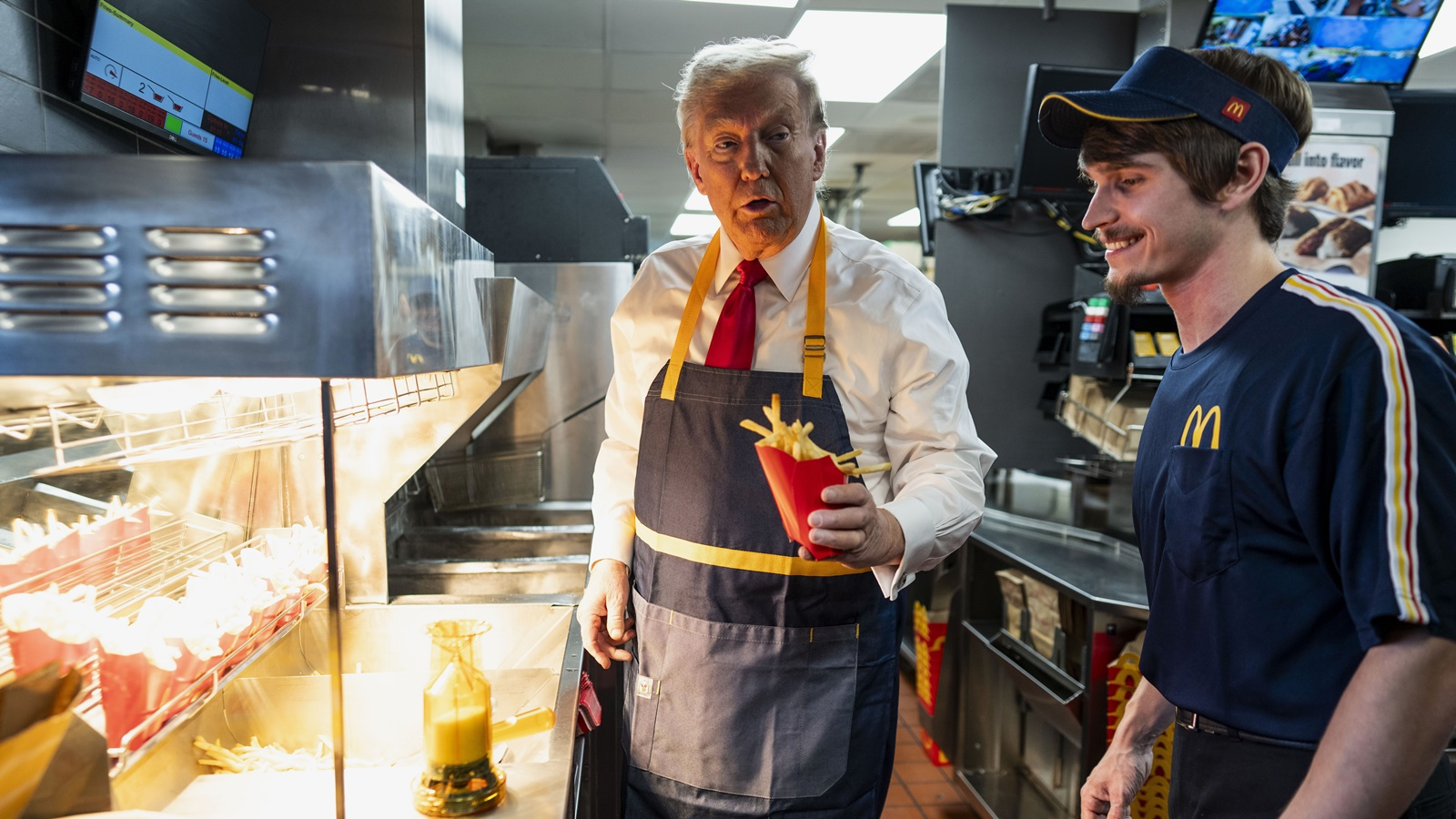
Trump served fries at the McDonald’s location, bringing the franchise into the political spotlight, even as the company attempted to distance itself from the event. Vice President Kamala Harris mentioned that she had briefly worked at a McDonald’s during the summer of 1983, a claim that Trump disputed without evidence.

Yelp responded to the heightened attention by flagging the McDonald’s page. In 2023, Yelp reported placing 986 alerts on business pages due to increased public interest and has removed nearly 50,000 reviews as a result.

A notice on the McDonald’s Yelp page stated:

“While we don’t take a stand one way or the other when it comes to this incident, we’ve temporarily disabled the posting of content to this page as we work to investigate whether the content you see here reflects actual consumer experiences rather than the recent events.”

Yelp’s Approach to Reviews

Yelp clarified that the disabling of reviews is temporary, stating that once the activity subsides, moderators would clean up the page to ensure only genuine consumer experiences are represented. Noorie Malik, Yelp’s VP of User Operations, noted:

“When we see the activity dramatically decrease or stop, our moderators will clean up the page so reviews describing only firsthand consumer experiences are reflected.”

McDonald’s Stance

Most McDonald’s locations operate as independently owned franchises, meaning franchise owners can decide whom to host. Following Trump’s visit, McDonald’s issued an internal memo asserting that they did not invite him. The memo stated:

“As we’ve seen, our brand has been a fixture of conversation this election cycle. While we’ve not sought this, it’s a testament to how much McDonald’s resonates with so many Americans.”

The memo also explained that Derek Giacomantonio, the franchise owner, was approached by local law enforcement regarding Trump’s visit, which he accepted. The company emphasized its core value of inclusivity, saying:

“We open our doors to everyone.”

Conclusion

Yelp’s action to disable reviews underscores the intersection of fast food and politics, especially during an election cycle. As the situation evolves, it remains to be seen how the reviews will be handled once the dust settles from this politically charged event.
China’s Exporters Brace for U.S. Election Impact

As the U.S. presidential election draws near, Chinese exporters are preparing for a potential shift in trade policies, particularly if Donald Trump returns to the White House. Mike Sagan, vice-president of supply chains at KidKraft, a toy-making company, plans to halve his China-based supply chain within a year if Trump wins, in response to the potential imposition of 60% tariffs on Chinese goods. This significant increase in tariffs is seen as a game-changer for many companies reliant on Chinese manufacturing.

Trump’s initial tariffs in 2018, which ranged from 7.5% to 25%, already prompted some firms, including KidKraft, to move production to countries like Vietnam and India. However, a new round of tariffs could further disrupt supply chains, leading to higher production costs and prices for U.S. consumers. Sagan notes that moving production outside of China is costly and comes with concerns over quality control, but the need to diversify supply chains is becoming urgent.

The sentiment is echoed by many other Chinese exporters. Of the 27 Chinese companies Reuters interviewed, 12 plan to accelerate relocation if Trump is re-elected, while others are considering opening overseas factories. Higher tariffs are expected to negatively impact Chinese exporters by shrinking profits, disrupting supply chains, and exacerbating the country’s ongoing economic challenges.

Matt Cole, co-founder of m.a.d Furniture Design, also expresses concern about the potential tariff increases. Though he hasn’t yet moved his production out of China, he is contemplating relocating to Southeast Asia if Trump wins. Cole’s hesitation stems from the fact that even after moving, many components would still need to be sourced from China, making the shift less cost-effective.

Picture background

Tariff Impact and Global Supply Chains

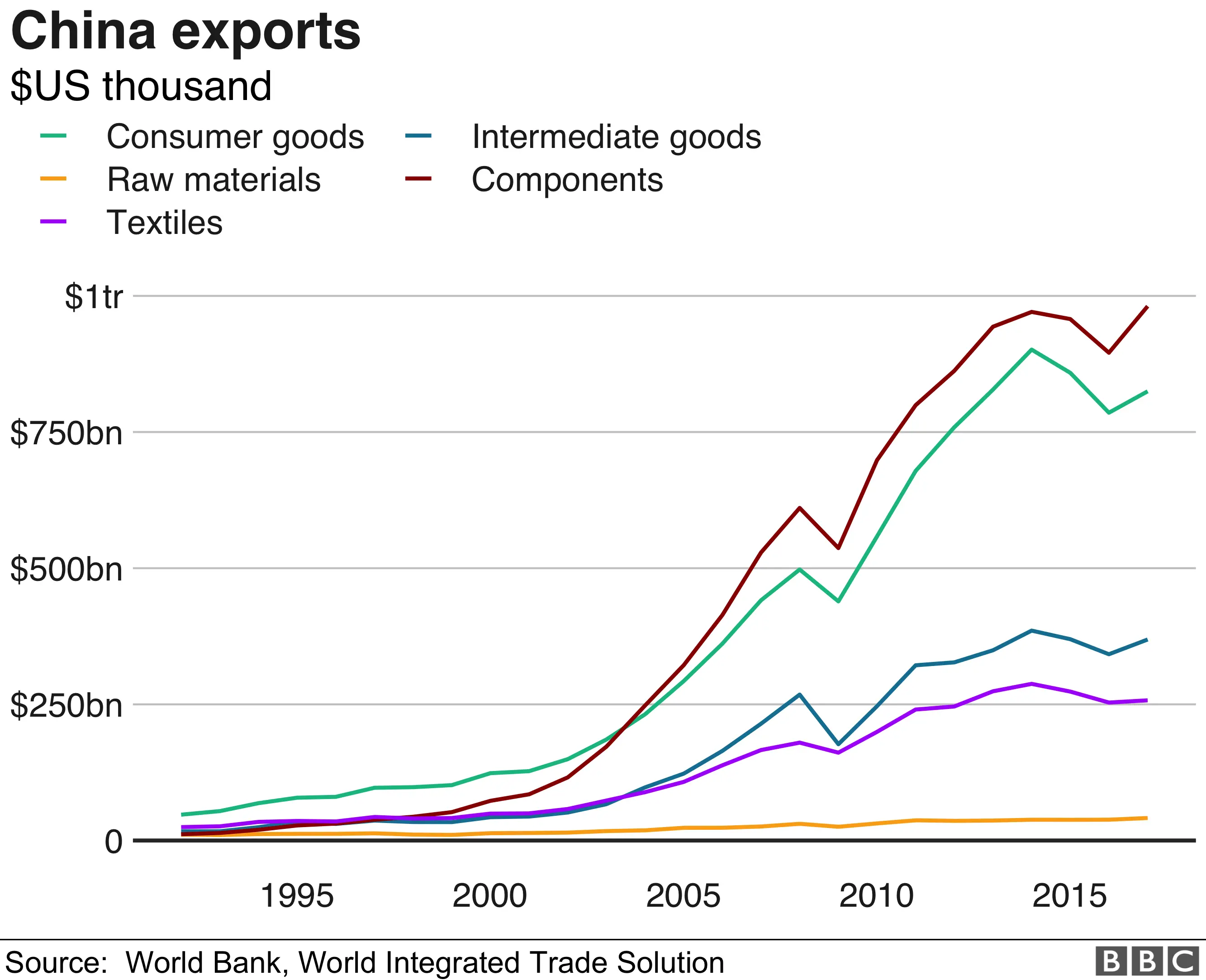
The 2018 tariffs, though beneficial for Southeast Asia as an assembly hub, did not significantly damage China’s overall economic growth or global manufacturing dominance. In fact, China has grown its share of global manufacturing as it redirected resources into factory production. However, the looming threat of 60% tariffs could have a more profound impact, especially on exporters operating with thin margins.

For instance, Zeng Zhaoliang, head of Guangzhou Liangsheng, which exports 30-40% of its cookers to the U.S., says a 60% tariff would be devastating. Many companies, like GL Wholesale, which has already lost 40% of its business since Trump’s presidency, are scouting alternative suppliers in countries like India and Vietnam. But even these regions are raising their prices, further complicating the situation.

The potential tariffs would not only hurt Chinese industries such as electric vehicles, solar panels, and batteries, but they also pose a risk to global supply chains. Trump’s aggressive stance on trade has caused Chinese companies to rethink their production strategies, with some opting to build factories overseas in anticipation of further global trade challenges.

China’s Response and Economic Outlook

Should Trump implement a new wave of tariffs, economists predict it could reduce Chinese economic growth by 0.4-0.7 percentage points in 2025 due to decreased investment and output cuts. In response, Beijing could deploy stimulus measures, export controls, or currency devaluation, but these steps carry their own risks, including debt accumulation and potential capital flight.

Most Chinese exporters hope Trump would moderate his stance on trade if he wins the presidency again. However, they acknowledge that further tariffs could severely impact their ability to operate. For instance, Yang Qiong, an executive at Chongqing Hybest Tools Group, states that her company would expand its facilities in Vietnam if Trump returns to office.

Experts warn that a second Trump term could disrupt China’s near-term economic growth and further challenge the global economic order that has benefited China. In contrast, Kamala Harris’s approach, while still expected to confront China on trade issues, is perceived as potentially less aggressive, allowing for a more measured response.

Conclusion

As the U.S. election nears, Chinese exporters are bracing for a potentially turbulent trade environment. While Trump’s return to power could lead to higher tariffs and significant supply chain shifts, a Harris presidency may offer a more tempered approach. Regardless, the prospect of further trade conflict underscores the need for companies to diversify their supply chains and adapt to an increasingly volatile global economic landscape.

Trump Campaign Accuses UK Labour Party of Interfering in U.S. Election

Donald Trump’s presidential campaign has accused the UK’s Labour Party, led by Prime Minister Keir Starmer, of “blatant foreign interference” in the U.S. election, after several volunteers from Labour traveled to support Kamala Harris’s campaign. The Trump campaign has filed a complaint with the Federal Election Commission (FEC), requesting an investigation into what it claims are illegal contributions from Labour to the Harris campaign.

While Labour Party volunteers have traditionally supported the Democrats in U.S. elections, this recent collaboration has sparked controversy. According to U.S. law, foreign nationals may volunteer for campaigns but are prohibited from making financial contributions. The Trump campaign’s complaint referenced media reports and a now-deleted LinkedIn post from a Labour official, which indicated that nearly 100 Labour staff would be assisting Harris’s campaign in the coming weeks.

The complaint further accused Labour of inspiring what it described as Harris’s “dangerously liberal policies and rhetoric.” Starmer, however, defended the volunteers, stating that they were working in their personal time and that this type of support for U.S. elections has been a long-standing practice.

Despite the controversy, experts suggest that even if Trump wins the presidency in November, the incident is unlikely to significantly affect U.S.-UK relations. Greg Swenson, chairman of Republican Overseas UK, believes Trump may move past the issue, though some “scar tissue” could remain.

This situation mirrors a previous case where Bernie Sanders’s campaign was fined by the FEC after Australia’s Labour Party funded flights and food for its volunteers supporting Sanders. Trump’s camp argues that Labour’s actions represent foreign interference in plain sight and is calling for accountability.