Yazılar

Chinese Firms Control Around 75% of Indonesian Nickel Refining Capacity, Report Finds

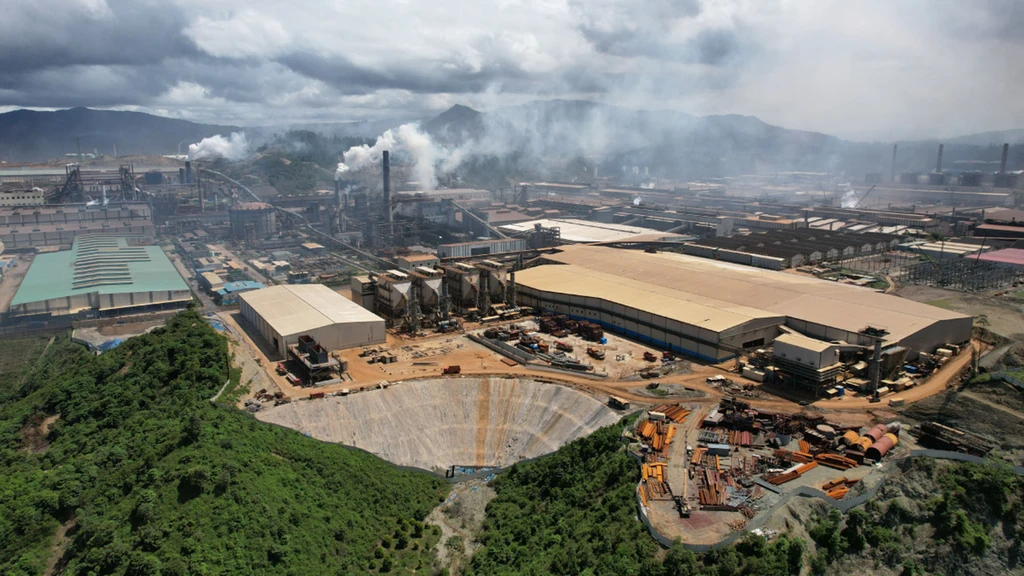
A report from C4ADS, a global security nonprofit based in Washington, has revealed that Chinese companies control approximately 75% of Indonesia’s nickel refining capacity, raising concerns about supply chain control and environmental risks. As of 2023, Indonesia’s refining capacity, which totals 8 million metric tons, is distributed across 33 companies. However, shareholder overlap shows that Chinese firms effectively control about three-quarters of the smelting capacity.

The report highlights that, while Indonesia aims to use its nickel industry as a key driver for economic growth, the substantial foreign influence could limit the country’s ability to fully control and shape the industry for its own benefit. The dominance of Chinese-controlled nickel production is also seen as a competitive disadvantage for U.S. and European automakers, especially in the growing electric vehicle (EV) market. Nickel, a key component in EV batteries, is crucial for the development of green technologies, but increasing restrictions on trade with China could affect access to this vital resource.

An Indonesian official noted last year that Chinese companies were seeking partnerships with Indonesian and South Korean firms to reduce their stakes in smelters, making their products more accessible to the U.S. market. To address these concerns, President Prabowo Subianto formed a task force to develop Indonesia’s downstream mineral industry with domestic financing, aiming to reduce the perception that foreigners benefit the most from the country’s resources.

The C4ADS report pointed out that two Chinese companies, Tsingshan Holding Group and Jiangsu Delong Nickel Industry Co Ltd, were responsible for over 70% of Indonesia’s refining capacity as of 2023. These companies were among the first investors in Indonesia’s push for domestic processing of nickel ore, a move that has helped make Indonesia the world’s dominant producer of nickel.

The report also mentions safety issues tied to Chinese-owned facilities. In December 2023, two workers at a Tsingshan Stainless Steel facility in Central Sulawesi were sentenced to jail for negligence related to a fire that caused fatalities. Additionally, in early 2023, two workers died in clashes at the PT Gunbuster Nickel Industry smelter in North Morowali, owned by Jiangsu Delong Nickel Industry.

Despite these concerns, Tsingshan has been selling stakes in some of its smelters. In October 2023, the company reached a deal with Indonesian state miner Aneka Tambang to sell 30% of PT Jiu Long Metal Industry.


Mobileye Predicts Lower 2025 Revenue Amid China Market Challenges

Mobileye has forecast lower-than-expected revenue for 2025, citing continued weakness in the Chinese market due to increasing competition from local self-driving technology providers. The company expects revenue between $1.69 billion and $1.81 billion, falling short of the $1.94 billion analyst consensus from LSEG data.

Chinese manufacturers have been developing their own advanced driver-assistance systems (ADAS) at lower costs, limiting Mobileye’s shipments to the region. In December, the company noted that its major automotive customers were losing market share in China as local automakers ramped up production of more affordable electric vehicles (EVs).

While shipment volumes of Mobileye’s EyeQ chips in China have improved compared to 2024, they remain sluggish, executives stated in a post-earnings call on Thursday. The recent reintroduction of Chinese government EV subsidies could stimulate demand, but the impact remains uncertain.

Despite these challenges, Mobileye reported fourth-quarter revenue of $490 million, surpassing the $477.8 million estimate but marking a 23% decline from the previous year. The drop was attributed to lower demand for its EyeQ chips as automakers continue to work through excess inventory.

Looking ahead, Mobileye remains optimistic about 2025, stating that its ongoing tests with potential customers for its assisted driving technology “will bear fruit” next year. The company also dismissed concerns that legacy automakers will fully develop their own in-house driver assistance systems, as many are reassessing their EV strategies amid slowing demand.

On an adjusted basis, Mobileye posted earnings of 13 cents per share in the fourth quarter, exceeding estimates of 11 cents. However, gross profit declined by 30% during the same period.


Tesla Shares Rise as Musk Promises Cheaper EVs and Autonomous Ride-Hailing

Tesla shares climbed more than 2% on Thursday after CEO Elon Musk announced plans to launch lower-cost electric vehicles (EVs) in the first half of 2025 and begin testing an autonomous ride-hailing service in June. These commitments helped investors look past a weaker-than-expected fourth quarter, which saw declining revenue and shrinking margins due to delayed model upgrades and rising competition.

Despite Tesla’s first annual decline in deliveries in 2024, the company assured investors that its vehicle business would return to growth in 2025. However, Tesla did not reaffirm Musk’s earlier forecast of a 20-30% sales increase for next year.

Morgan Stanley analysts noted that Tesla is shifting from being a traditional automotive company to a diversified player in AI and robotics. Investors remain optimistic, especially as Musk’s support for U.S. President Donald Trump could lead to more favorable regulatory conditions for Tesla’s robotaxi ambitions.

Musk revealed that Tesla will begin unsupervised testing of its autonomous ride-hailing service in Austin, Texas, though he did not provide specific details on how it would function. The company also did not share pricing details for its upcoming affordable EV models.

If Tesla’s stock gains hold, its market value could rise by approximately $28 billion. The stock surged 62.5% in 2024 and is currently trading at 118 times its 12-month forward earnings, significantly higher than Ford (6.07) and General Motors (4.48).

At least 19 brokerages have raised their price targets for Tesla stock, with a median target of $300, up from $278 at the end of December. Analysts believe that Tesla’s growth will be fueled by Full Self-Driving technology and the introduction of an affordable EV. However, some experts remain cautious about Musk’s timeline for launching robotaxis, citing regulatory challenges, particularly in Europe and China.

Tesla also announced an increase in its capital expenditure forecast, expecting to spend over $11 billion in 2025 and the following two fiscal years.