Yazılar

Foxconn Open to Buying Stake in Nissan for Potential Cooperation

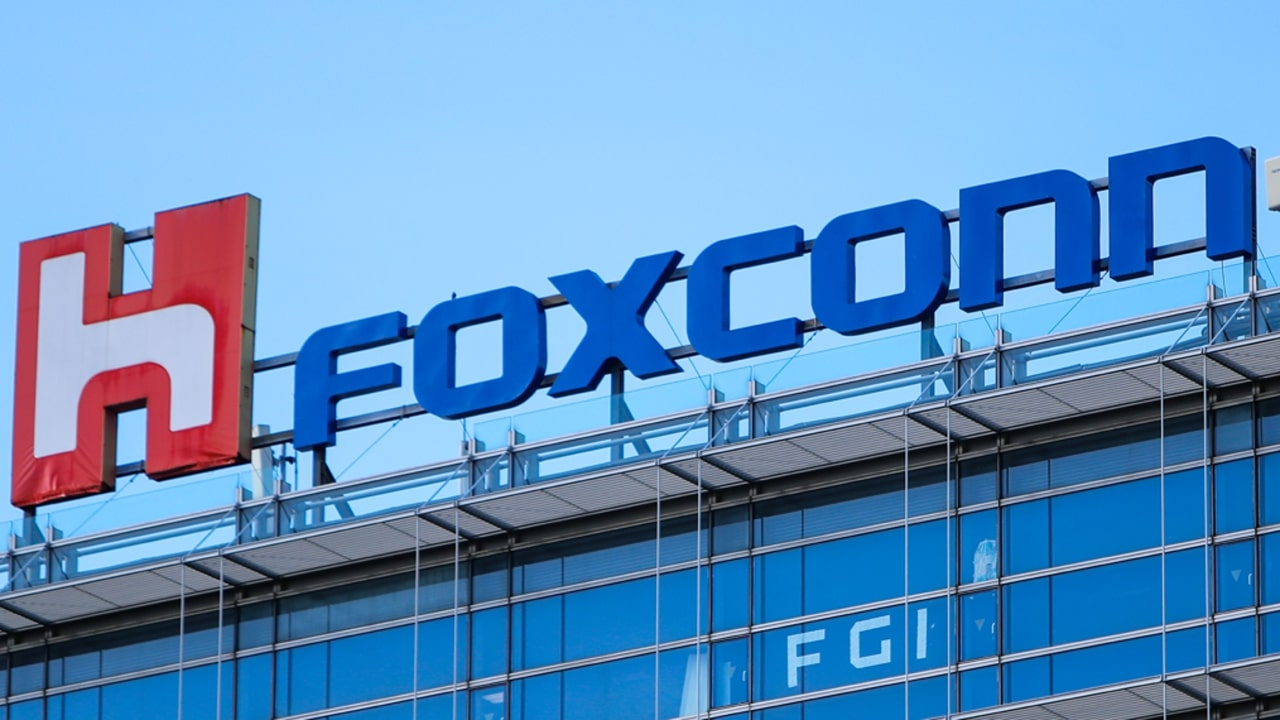
Foxconn (2317.TW), Taiwan’s leading electronics manufacturer, has expressed interest in purchasing a stake in Nissan (7201.T), but emphasized that its primary goal is to collaborate rather than invest in the automaker. Chairman Young Liu stated on Wednesday that Foxconn would consider buying shares if cooperation with Nissan required it, but reiterated that acquiring shares was not their main focus.

Foxconn is in discussions with Renault (RENA.PA), Nissan’s largest shareholder, about potential collaboration. These comments come amid uncertainty surrounding Nissan’s future after it stepped away from merger talks with rival Honda (7267.T), which would have created the world’s fourth-largest automaker.

Sources have indicated that Nissan and Honda, who had been exploring a merger, are expected to announce the end of their talks on Thursday due to growing differences between the two companies. This deal would have been a significant shift in an automotive industry facing mounting pressure from electric vehicle (EV) manufacturers, particularly China’s BYD (002594.SZ).

In light of the changing landscape, Nissan is reportedly open to partnerships with new players, including Foxconn, which is best known for its role as Apple’s primary iPhone manufacturer. While Foxconn seeks to diversify its business, it is not looking to establish itself as an automotive brand. Instead, it intends to offer commissioned design and manufacturing services for electric vehicles.

Neither Nissan nor Renault has commented on Foxconn’s chairman’s statements regarding potential collaboration.

Global Electric Vehicle Sales Rise 18% in January

Global sales of electric and plug-in hybrid vehicles saw an 18% increase in January compared to the previous year, with Europe and the United States experiencing stronger growth than China for the first time since last February, according to research firm Rho Motion.

Europe began the year with robust sales as new CO2 emission targets took effect in the European Union, boosting demand. However, China experienced a 43% month-on-month sales decline in January, primarily due to the Chinese New Year holiday period. Despite this, the global market showed steady growth.

Governments worldwide are implementing policies to support electric vehicle (EV) adoption, which remains crucial amid ongoing trade tensions and challenges in the automotive industry, such as plant closures and job losses. In January, China extended its auto trade-in subsidies into 2025, while Europe began consultations on new CO2 emission targets.

BY THE NUMBERS:

  • Global EV and plug-in hybrid sales rose 17.7% year-on-year, reaching 1.3 million units in January.
  • Sales in China grew 11.8%, totaling 0.7 million vehicles.
  • European sales rose 21%, totaling 0.25 million, with Germany seeing a 40% increase.
  • The U.S. and Canada saw a 22.1% rise in sales, reaching 0.13 million units.
  • Sales in other global markets surged 50%.
  • On a monthly basis, global sales fell by 35%, primarily due to a sharp decline in China.

Tower Semiconductor Predicts Strong Q1 Revenue Amid Robust Auto Sector Demand

Tower Semiconductor (TSEM.TA), an Israeli contract chipmaker, has forecasted slightly higher-than-expected first-quarter 2025 revenue, driven by steady demand for its chips, particularly from the automobile sector. The company’s U.S.-listed shares rose by 1% in premarket trading following the announcement.

Tower specializes in manufacturing analog and mixed-signal semiconductors, which are primarily used in the automobile industry by “fabless” firms that design chips but outsource their production. Despite challenges within the automobile sector, such as difficulties in clearing excess inventory built up during the pandemic and a recent slowdown in demand for electric vehicles, Tower Semiconductor has remained resilient, continuing to supply its chips.

The company is now forecasting first-quarter revenue of $358 million, with a 5% margin of variability. This projection slightly exceeds analysts’ expectations of $357.5 million, according to LSEG data. For the fourth quarter, Tower reported revenue of $387.2 million, meeting analyst forecasts. However, its net profit for the quarter ending December 31 came in at $55.1 million, below the expected $58.7 million, mainly due to increased costs from its new greenfield chipmaking facility in Agrate, Italy.

On an adjusted basis, the company posted quarterly profit of 59 cents per share, surpassing analyst estimates of 52 cents per share.