Yazılar

Foxconn Sees AI Driving Growth as Q2 Profit Exceeds Forecast

Foxconn (2317.TW), the world’s largest iPhone assembler, reported second-quarter net profit of T$44.4 billion ($1.48 billion), surpassing the consensus estimate of T$38.8 billion, as strong demand for AI servers helped offset slower growth in smart electronics. The company on Thursday forecast a significant rise in third-quarter revenue, with AI server sales expected to jump more than 170% year-on-year.

Cloud and networking products, including servers, accounted for 41% of Q2 revenue, while smart consumer electronics contributed 35%. CEO Kathy Yang said, “AI has been the primary growth driver so far this year,” but cautioned that “close attention is needed due to the impact of changes in tariffs and exchange rates.”

Foxconn is increasing capital spending by more than 20% in 2025 to expand server production capacity at its facilities in Texas and Wisconsin. The company’s AI business benefits from rising demand as cloud computing giants such as Amazon (AMZN.O), Microsoft (MSFT.O), and Google (GOOGL.O) expand AI infrastructure.

Geopolitical uncertainty remains a risk, particularly from U.S.-China trade tensions, although a 90-day tariff truce has been extended. While most iPhones for Apple (AAPL.O) are assembled in China, production for the U.S. market has shifted mainly to India. Foxconn is also building factories in Mexico and Texas to manufacture AI servers for Nvidia (NVDA.O).

In its electric vehicle (EV) operations, Foxconn sold its former Lordstown, Ohio, factory for $375 million but will continue to occupy the site to produce cloud-related products. Initial production of its Model C EV for the U.S. market will take place in Taiwan.

Foxconn shares have risen 8.4% year-to-date, outperforming the broader Taiwan index (.TWII), which gained 5.2%, and closed up 0.5% on Thursday ahead of the earnings release.

VinFast Founder Pham Nhat Vuong to Invest $1.5 Billion in R&D Assets

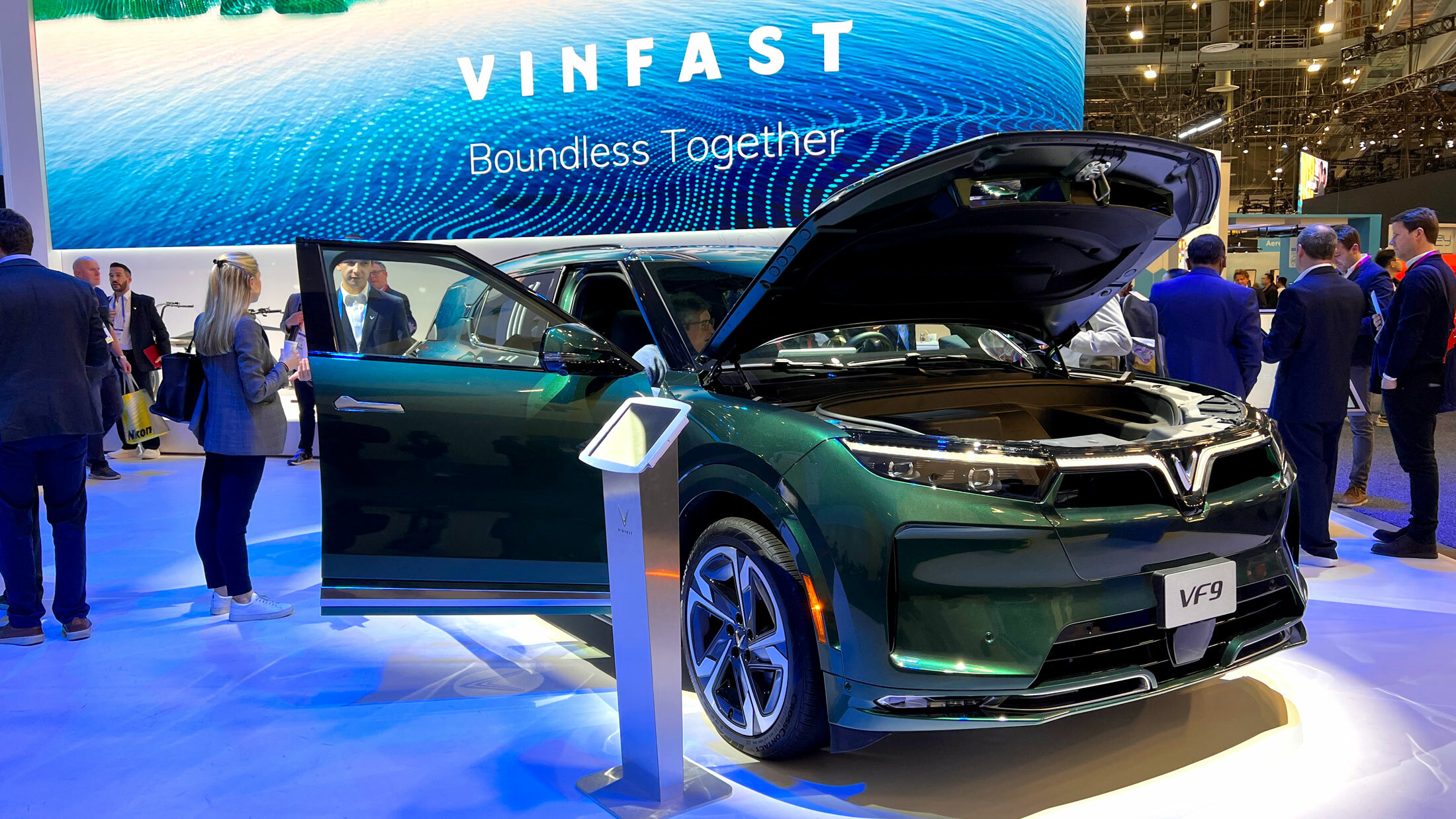
VinFast founder Pham Nhat Vuong has agreed to inject $1.52 billion into the electric vehicle (EV) maker by purchasing its research and development (R&D) arm, marking his latest financial support for the loss-making Vietnamese company. The move comes as VinFast aims to break even by the end of 2026.

The deal involves Novatech Research and Development JSC, a Vietnam-incorporated entity, being carved out of VinFast Trading and Production JSC (VFTP), the company’s domestic manufacturing unit, according to a filing with the U.S. Securities and Exchange Commission. Novatech will hold investment costs related to completed R&D projects, while VFTP will continue leading EV production and future research within Vietnam.

VinFast, which debuted on Nasdaq in 2023, has faced challenges such as weak consumer demand and intense competition. The company reported a net loss of $712.4 million for the first quarter, though revenue surged 150% to $656.5 million. Shares rose 1.4% in pre-market trading to $3.59.

Since its launch in 2017, VinFast has relied heavily on support from Vuong, who owns about 98% of VinFast and its parent company, Vingroup (VIC.HM), where he serves as chairman. The transfer of Novatech shares to Vuong, valued at nearly 40 trillion dong ($1.52 billion), includes a fair value assessment of 17.25 trillion dong plus a premium. Intellectual property tied to Novatech’s assets will be leased back to VinFast as needed for manufacturing purposes.

VinFast has completed development of its first-generation EVs. R&D expenses totaled $81.2 million in Q1 2025, down 22.3% year-on-year. The company targets delivering 200,000 cars in 2025, more than double its 2024 deliveries, with most sales concentrated in the Vietnamese market.

Lyten Acquires Bankrupt Northvolt, Aiming to Revive Europe’s Battery Ambitions

U.S.-based battery startup Lyten has agreed to purchase most of bankrupt Swedish battery maker Northvolt, potentially offering the fallen European giant a second chance. The Silicon Valley company, backed by Stellantis and FedEx, specializes in developing lithium-sulphur cells — a cleaner alternative to traditional lithium-ion batteries.

Northvolt, once seen as Europe’s strongest contender against major Asian EV battery makers, filed for bankruptcy in March, marking one of Sweden’s largest corporate failures. Lyten CEO Dan Cook told Reuters the deal, struck at a “substantial discount” to the original asset value, aims to continue the work Northvolt had started. Swedish Deputy Prime Minister Ebba Busch welcomed the agreement, calling it key to Europe’s energy independence.

Northvolt’s downfall was attributed to production challenges and failing to meet quality expectations, despite strong backing from customers like Scania. While Scania has not confirmed future orders from Lyten, it expressed satisfaction with the acquisition.

Lyten plans to restart Northvolt’s flagship Skelleftea plant in northern Sweden, with the goal of resuming lithium-ion battery deliveries by 2026. The acquisition also includes Northvolt’s energy storage business in Poland, its projects in Sweden and Germany, and its intellectual property. Work is underway to take over its Canadian operations as well.

Several former Northvolt executives will join Lyten, though not founder Peter Carlsson. The company will initially focus on securing high-yield production for a single customer before expanding to a broader market, targeting the automotive, defense, and energy storage sectors.

Lyten recently raised over $200 million in new equity to support its acquisitions and expansion, and Cook expressed confidence that automakers like BMW, Volkswagen, and Audi — once part of Northvolt’s $50 billion order book — could return sooner than expected.