Yazılar

Tesla Invites Select Users to Texas Robotaxi Trial with Front Seat Safety Monitors

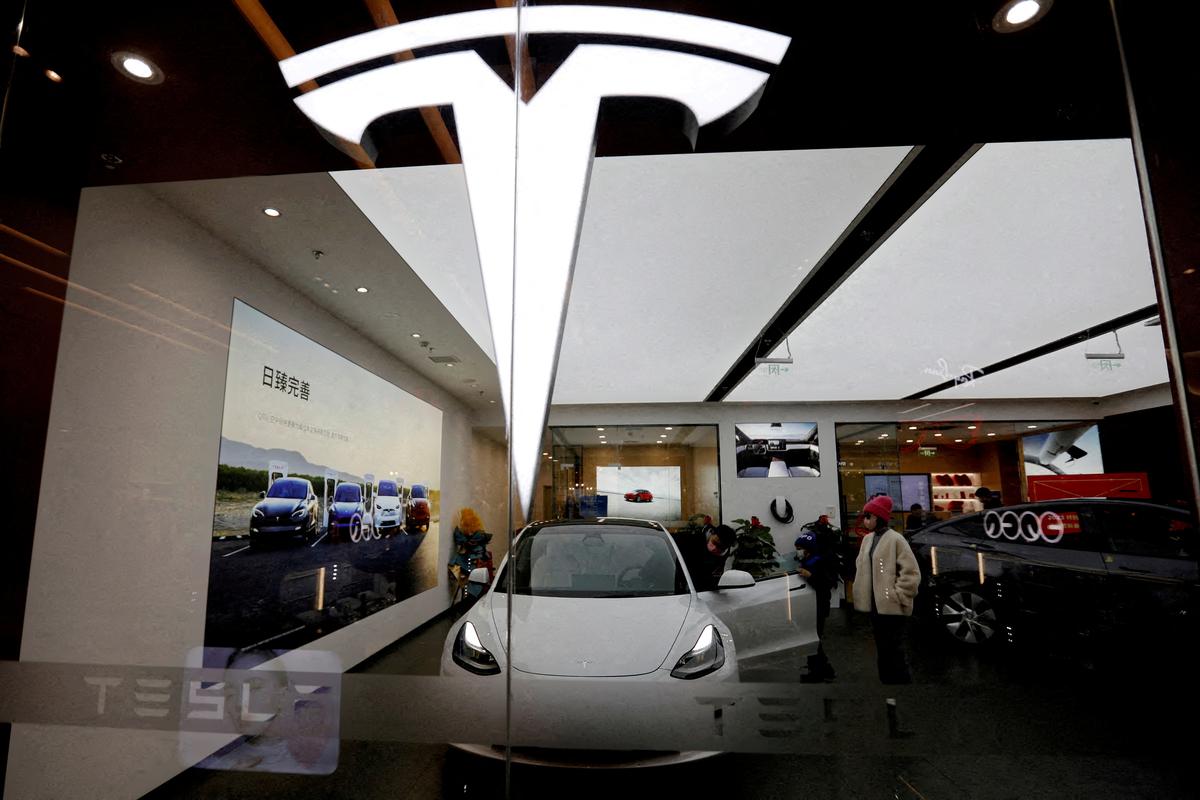
Tesla (TSLA.O) has invited a small group of users to participate in a limited test of its robotaxi service in Austin, Texas, tentatively scheduled to begin this Sunday, according to social media posts and email screenshots. The invitations indicate that a Tesla employee will accompany riders in the front passenger seat during the trial.

This trial in Austin is a critical step for Tesla as the company faces challenges including declining car sales linked to CEO Elon Musk’s political stances. Tesla has increasingly shifted focus from producing affordable electric vehicles to advancing robotics and artificial intelligence, a strategy that underpins much of its market valuation.

Elon Musk has emphasized safety for the trial, stating that the vehicles will be monitored remotely by humans and expressing confidence in scaling the robotaxi service quickly. The initial deployment will involve about 10 Model Y SUVs equipped with Tesla’s full self-driving driver assistance software.

The rollout could be delayed, and operations may be limited or suspended in poor weather conditions. Riders must be at least 18 years old. Tesla’s cautious approach to the robotaxi launch drew approval from X.com user Omar Qazi (@WholeMarsBlog), who received an invitation and noted, “Tesla is rolling out the Robotaxi service extremely cautiously, which is good. Baby steps.” Musk responded, “Very much so.”

Despite the enthusiasm, commercializing autonomous vehicles remains costly and risky. Tesla, along with competitors like Alphabet’s Waymo (GOOGL.O) and Amazon’s Zoox (AMZN.O), has faced federal probes and recalls linked to crashes involving self-driving cars.

Experts have raised concerns about Tesla’s heavy reliance on cameras and AI, without backup sensors such as lidar or radar, warning that adverse weather like fog, heavy rain, or sun glare could compromise safety.

Recently, a group of Democratic lawmakers from Austin urged Tesla to postpone the rollout until September, when new state regulations on autonomous vehicles will come into effect.

Users in Austin who receive invitations can download Tesla’s Robotaxi app to summon a vehicle. One screenshot shared online stated, “Through this exclusive preview, you’ll have the opportunity to provide valuable feedback on our Robotaxi service.” Reuters was unable to immediately verify the screenshots’ authenticity.

EU Probes Corporate Structure of Elon Musk’s X Months After xAI Acquisition

The European Union announced on Thursday that it is seeking further information from Elon Musk’s social media platform X regarding recent changes to its corporate structure. This inquiry comes months after the platform was acquired by Musk’s xAI in a $33 billion deal.

A spokesperson for the European Commission, the EU’s executive branch, stated, “We are following closely changes in the corporate structure of X, as we would changes in any other designated platform.” However, the spokesperson did not confirm Bloomberg News reports suggesting that regulators are considering potential fines against X under the Digital Services Act (DSA).

Bloomberg reported that the regulator might announce a fine on X before its summer recess in August for alleged violations under the DSA, though such a timeline could be delayed.

Representatives from both xAI and X did not immediately respond to Reuters’ requests for comment.

Under the DSA, companies found in breach can face fines of up to 6% of their global turnover, with repeat offenders potentially banned from operating within Europe.

Earlier this month, X updated its blue checkmark disclaimer to preempt a possible substantial fine from EU antitrust authorities. The European Commission had issued preliminary findings in July last year stating that X violated the DSA’s rules on deceptive design by converting the blue checkmark into a paid verification, thereby misleading users about credibility. X has disputed this assessment.

Australia’s Teen Social Media Ban Faces a New Wildcard: Teenagers

Australia is preparing to implement the world’s first national social media ban for users under 16, but new challenges have emerged from the very group the law aims to protect: teenagers themselves.

Thirteen-year-old Jasmine Elkin from Perth recently tested five different photo-based age verification software products, alongside about 30 other students. While impressed by some systems’ ability to estimate age to the exact month, Elkin doubts the ban’s effectiveness, noting that young users could easily bypass it by asking older siblings to take verification photos.

This concern reflects a broader worry shared by child protection advocates, tech companies, and trial organizers: the technology works, but young people are highly skilled at finding workarounds.

Starting in December, major social media platforms such as Facebook, Instagram, Snapchat, and TikTok will face fines up to A$49.5 million ($32.17 million) if they fail to take “reasonable steps” to prevent users under 16 from accessing their services. Currently, these platforms require users to be at least 13 to create accounts.

How well Australia’s ban succeeds may influence other countries. Britain, France, and Singapore are pursuing similar restrictions, and several U.S. states, including Florida, are challenging free speech laws to impose age limits. Elon Musk, owner of X (formerly Twitter), has criticized the Australian law and regulatory authority, calling it a “censorship commissar.”

Trial organizers say nearly 60 products were considered, with about a dozen tested by teenagers in May. The teenagers demonstrated fast tech skills, leading organizers to increase the number of products tested and shorten testing times. The software mainly used selfies to estimate age, as other methods—such as credit card checks—were impractical for teens, and hand-gesture recognition gave imprecise age estimates near the 16-year cutoff.

The trial’s detailed results will be presented on June 20, with a full report to the government expected by the end of July. This will inform the eSafety Commissioner’s recommendations. The government has cited risks from cyberbullying, harmful body image content, and misogyny as reasons for the law.

Despite the technology’s promise, uncertainties remain about how effective it needs to be and whether it can keep pace with teenagers’ ingenuity. Some trial participants said they would find ways around blocks, while others accepted it as a step toward safer online environments.

Communications Minister Anika Wells’s spokesperson emphasized that age restrictions are “not the end-all be-all” but a positive move to protect young people online.